Overview
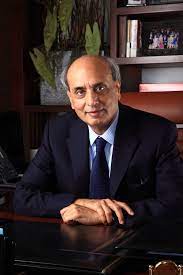
The Nishat Group is one of Pakistan's largest private business groups. It began as a textile mill and now spans spinning, weaving and garments, a major bank, cement, power generation, insurance, car assembly, a shopping mall and hotels. Its chairman, Mian Muhammad Mansha, was for years described as Pakistan's richest man and in 2010 became the first Pakistani on the Forbes billionaires list.
Nishat is not one company. It is a family-controlled web of businesses, several listed on the Pakistan Stock Exchange, that own stakes in one another. Its textile flagship, Nishat Mills, reported consolidated revenue of about Rs213.6 billion and profit after tax of Rs15.6 billion for the year to 30 June 2026, according to a summary of its results filing. Its bank, MCB Bank, earned Rs54.2 billion after tax on a standalone basis in 2025.
History
Nishat Mills was founded in 1951, four years after independence, by Mian Muhammad Yahya and his brothers, members of a trading family from Chiniot in Punjab. When Yahya died in 1969, his son Mansha, then in his late twenties and recently back from studying business in London, took charge of his share of the family business after its assets were divided among relatives.
The early 1970s were a dangerous time to be an industrialist in Pakistan. Zulfikar Ali Bhutto's government nationalised banks, insurers and much of heavy industry. Mansha's response was to build anyway: in 1979 he opened a large textile complex at Nishatabad, near Faisalabad, betting on scale when many manufacturers stayed small for fear of another takeover.
The decisive move came in 1991, when Nawaz Sharif's government began privatising state banks and a Nishat-led consortium bought control of Muslim Commercial Bank. With a bank inside the group, Nishat could fund expansion on terms rivals could not match. It went on to build or buy DG Khan Cement, Adamjee Insurance, independent power plants including Nishat Power, Lalpir and Pakgen, a joint venture with Hyundai to assemble cars, Lahore's Emporium Mall and hotels at home and in London. HustleMemo's article Mian Muhammad Mansha: Nishat, MCB, and the Art of Proximity tells that story in full.
How the business works
The group makes money in several distinct ways, and their fortunes rarely move together, which is part of the design.
Textiles remain the base. Nishat Mills spins yarn, weaves fabric, processes and prints it, and makes finished garments and home textiles, mostly for export. Its standalone sales were about Rs181.6 billion in the year to June 2026, up 2%, but standalone profit fell about 9% to Rs5.48 billion as margins thinned and dividend income from group companies dropped, according to Mettis Global. Energy costs and global tariffs weigh on the whole industry.
Banking through MCB is the most consistent earner and the group's source of capital. Cement follows Pakistan's construction cycle. Power plants sell electricity to the state under long-term contracts that pay for available capacity, a model that gives steady returns but has become politically contentious as Pakistan's power debts have grown. Insurance, cars and property add consumer-facing businesses.
The links between the parts matter. Group companies hold shares in each other, so dividends flow around the group, and the profits of one listed company often include its share of another's.
Ownership and leadership
The Mansha family controls the group through cross-holdings rather than a single holding company. The family and group companies hold about 51% of Nishat Mills, according to the Pakistan Credit Rating Agency, and group companies are among MCB's largest shareholders alongside Malaysia's Maybank.
Mian Muhammad Mansha, now 85, is the group's chairman and chairs MCB. Succession is already visible: his son Mian Hassan Mansha chairs Nishat Mills and his son Mian Umer Mansha is its chief executive, according to the company's board listing.
Controversies
ALLEGED, never proven: the MCB privatisation. Critics argued that MCB was sold to the Nishat consortium too cheaply and that political ties to the Sharif government helped. The sale was upheld and no court found wrongdoing.
STRUCTURAL: concentration and policy-made profits. Much of the group's value has come from businesses whose returns depend on government decisions: protected textiles, a privatised bank and guaranteed power contracts. All were lawful, but critics argue that this kind of concentration crowds out competition and leaves the public carrying costs such as power-sector capacity payments.
DISCLOSED, not a finding: the Paradise Papers. Mansha was named in the 2017 Paradise Papers leak of offshore records. That shows the use of offshore structures; it is not a finding of illegality, and no charges followed. He has also been among Pakistan's largest individual taxpayers.
Why it matters
Nishat is a clear example of how large fortunes are built in economies where the state hands out the biggest prizes. Its founder did not invent a product. He read policy early, owned his own source of capital and spread his bets across industries and governments. That makes the group durable, and it raises fair questions about how much room such groups leave for everyone else.