Hustler profile

Mian Muhammad Mansha

Chairman of the Nishat Group and MCB Bank; long Pakistan’s richest man. A masterclass in reading — and working — the state in a developing economy.

Born in Chiniot, Punjab, in 1941 into a trading family; educated in Faisalabad and London. Took over the family textile business in 1969 and built Nishat Mills into Pakistan’s largest industrial group.

  • Nishat Group / MCB Bank
  • Pakistan
  • Textiles, banking, cement, power
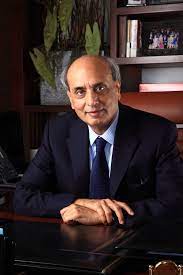
Portrait of Mian Muhammad Mansha.

At a glance

Nishat Group / MCB Bank founded
1969
Company
Nishat Group / MCB Bank
Industry
Textiles, banking, cement, power
Born
1941

The journey

Key milestones in Mian Muhammad Mansha’s life and business journey.

  1. 1941

    Born in Chiniot, Punjab

  2. 1969

    Takes over the family textile business

    Building Nishat Mills.

  3. 1991

    Acquires Muslim Commercial Bank

    In the privatisation.

  4. Cement, power, insurance and autos

  5. 2010

    First Pakistani on the Forbes billionaires list

The business story

Born in Chiniot, Punjab, in 1941 into a trading family; educated in Faisalabad and London. Took over the family textile business in 1969 and built Nishat Mills into Pakistan’s largest industrial group. Acquired Muslim Commercial Bank (MCB) in the 1991 privatisation, then diversified into cement, power, insurance, and autos. The first Pakistani on the Forbes billionaires list (2010).

Early life and background

Mian Muhammad Mansha was born in 1941 in Chiniot, a Punjab town known for its furniture and its Sheikh trading families, and his own family was one of them. He did not start from poverty. He studied at Sacred Heart in Faisalabad and then took a business administration course at a college in London, an option open to very few Pakistanis of his generation.

The economic climate of his youth shaped his thinking. In the 1960s, state-guided industrialisation concentrated wealth among a small set of industrial houses; in the early 1970s, Zulfikar Ali Bhutto's government nationalised banks, insurers and much of heavy industry, wiping out many of those fortunes. The lesson for a young businessman was plain: in Pakistan, government policy was the biggest single factor in whether a business survived.

Building Nishat and MCB

After his father died in 1969, Mansha took charge of the family textile concern his father and uncles had started. In 1979 he built a large textile complex at Nishatabad near Faisalabad, choosing scale at a time when many manufacturers stayed small for fear of another wave of nationalisation. Textiles in Pakistan ran on duties, export rebates and international quotas, and Nishat Mills learned to operate inside that framework.

The pivotal step came in 1991, when Nawaz Sharif's government began privatising banks and a Nishat-led consortium bought Muslim Commercial Bank. Critics alleged the bank went too cheaply and that Mansha's closeness to the Sharif establishment helped; the sale was debated for years but upheld, and no court found wrongdoing. Under Mansha's ownership MCB became one of the country's most profitable and best-run banks.

With a bank inside the group, Nishat expanded into DG Khan Cement, independent power plants including Nishat Power, Lalpir and Pakgen, Hyundai Nishat Motors, Adamjee Insurance, Lahore's Emporium Mall and the St James's Hotel and Club in London. In 2010 he became the first Pakistani on the Forbes billionaires list.

How Mansha operates

  • Mansha's method is less about invention than about precise positioning:

  • Reading policy before it pays.

    Protected textiles, a privatising bank, guaranteed-return power contracts and tariff-shaped auto assembly were all lawful businesses whose value was created largely by government decisions.

  • Owning the source of capital.

    MCB changed how cheaply and quickly the rest of the group could fund itself, letting it take risks most industrialists could not.

  • Spreading political exposure.

    He outlasted military rule, alternating civilian governments and populist eras by relating to the state as an institution rather than tying the group to one patron.

  • Planning for succession.

    His sons Umer and Hassan hold senior roles, and group companies have been listed and professionalised to outlast their founder.

  • The criticism is mainly structural.

    A family that owns a major bank alongside large industrial borrowers faces built-in conflicts of interest, and the power-sector guarantees left a heavy public burden. Mansha appeared in the 2017 Paradise Papers, a disclosure of offshore structures rather than a finding of illegality. He has also been among Pakistan's largest individual taxpayers.

Legacy and lessons

Mansha shows how wealth is built in an economy where the state allocates the largest prizes. His record is not a template most entrepreneurs can copy, but it is an accurate map of how such economies work.

  • Where policy drives returns, understanding government is a core business skill.

  • Controlling a financial institution changes what the rest of a group can attempt.

  • Durability can depend on diversifying political relationships as much as product lines.

  • Lawful concentration can still raise fair questions about competition and capture.

More hustlers

Explore more business builders