Overview
Spotify is the world's largest audio-streaming service and the company that, more than any other, turned recorded music from something people bought into something they rent. In the third quarter of 2026 it had 788 million monthly users, 306 million of them paying Premium subscribers, and revenue of almost €5 billion for the quarter. After nearly two decades of losses it has been solidly profitable since 2024.
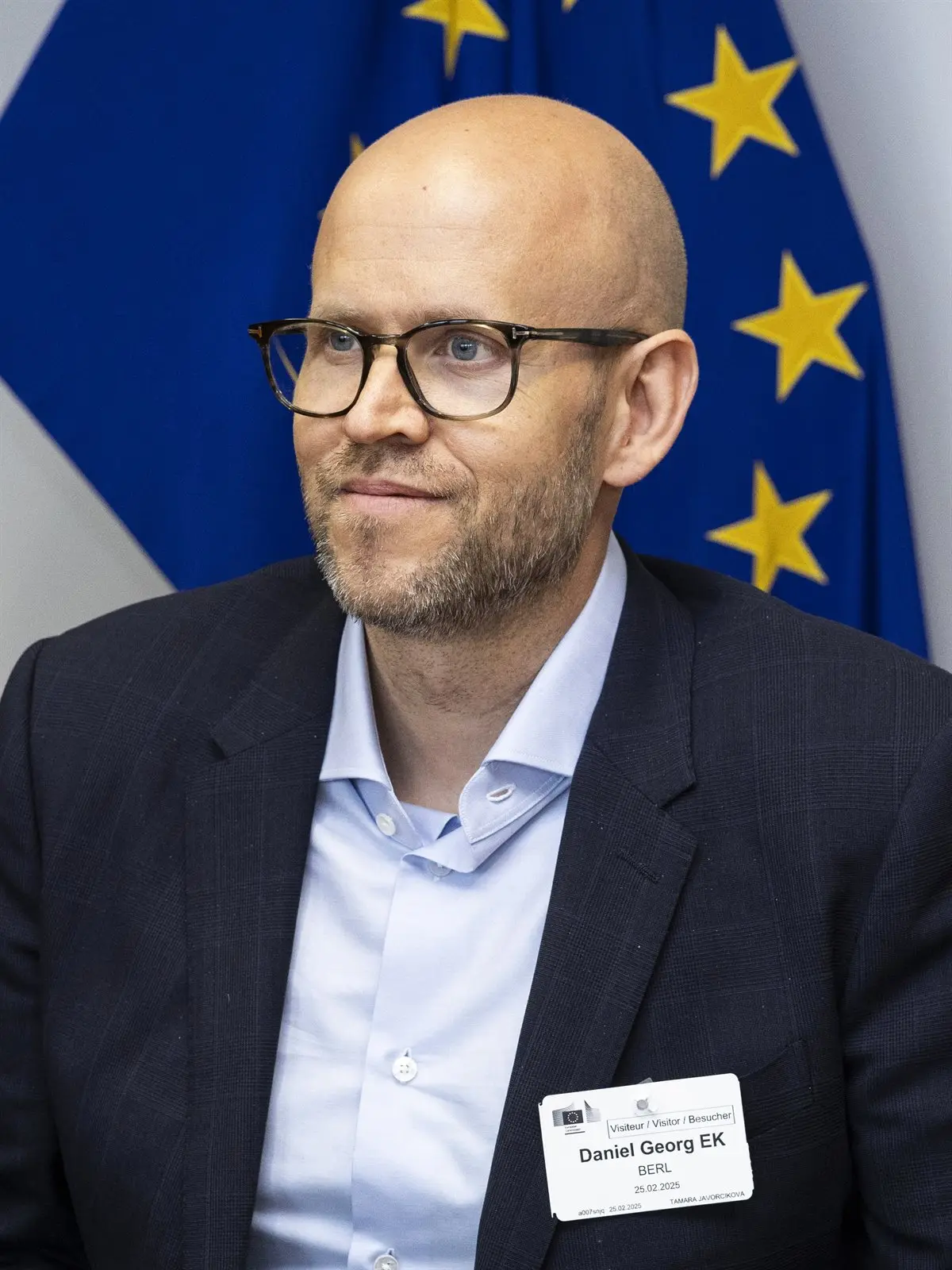
It was founded in Stockholm in 2006 by Daniel Ek and Martin Lorentzon, who between them still control most of the voting power. Since 1 January 2026 day-to-day leadership has passed to two co-chief executives, with Ek as executive chairman.
History
When Spotify began, the music industry was losing a war against piracy. Sales were collapsing, and suing file-sharers and download services had not stopped them. Ek, who had briefly run the µTorrent file-sharing client, drew a different conclusion: people pirated because it was free, instant and had everything, so a legal service would have to be at least as convenient. Lorentzon, who had made money from the online marketing firm TradeDoubler, provided much of the early funding.
The hard part was licences. Spotify spent about two years negotiating with the major record labels, which took equity stakes as part of the deals, before launching in parts of Europe in October 2008. It reached the United States in July 2011. Its free, ad-supported tier competed with piracy on price, while the paid tier removed ads and added offline listening.
Spotify listed on the New York Stock Exchange on 3 April 2018 through a direct listing, an unusual route with no new shares sold and no underwriters. In 2019 it bought the podcast companies Gimlet and Anchor and later signed expensive exclusive deals, including one with Joe Rogan, as it tried to become an "audio" company less dependent on label-owned music. Audiobooks followed in 2022. The full founding story is in Daniel Ek: The Swede Who Beat Piracy by Building Something Better.
How the business works
Spotify runs a freemium model. The free tier, used by most of its audience, earns advertising revenue and acts as a funnel; Premium subscriptions, sold individually and in family, duo and student plans, produce the large majority of revenue. In 2025 total revenue was about €17.2 billion, and operating income about €2.2 billion.
Its biggest cost is royalties. Roughly two-thirds of the money from music streaming is paid to record labels, distributors and music publishers, which in turn pay artists and songwriters according to their own contracts. Spotify says in its Loud & Clear 2026 report that it paid the music industry more than $11 billion in 2025 and nearly $70 billion in total.
Profitability arrived from three changes: repeated price rises, cuts to staff and marketing after 2022, and a shift in podcasts from costly exclusives towards cheaper, ad-supported and video formats. Personalisation remains the product's edge. Discover Weekly, algorithmic playlists, an AI DJ and the annual Wrapped campaign keep users engaged and act as free marketing.
Ownership and leadership
Spotify Technology S.A. is domiciled in Luxembourg and listed on the NYSE, with its operational headquarters in Stockholm. Its founders control it through a mix of ordinary shares and beneficiary certificates, which carry votes but no economic rights. According to the company's investor filings, Lorentzon and Ek together held about 70% of the voting power at the end of 2024, Lorentzon the larger share. Tencent is among the other significant shareholders.
On 1 January 2026 Alex Norström, who ran the subscription and advertising businesses, and Gustav Söderström, the longtime product and technology chief, became co-CEOs. Ek became executive chairman, focused on capital allocation and long-term strategy, while also spending time on Neko Health and his Prima Materia investment firm.
Controversies
DEBATED: artist pay. The most persistent criticism is that streaming pays most musicians very little per play. Spotify replies that it pays out about two-thirds of music revenue and that the split with each artist is set by their label. In 2024 it stopped paying royalties on tracks with fewer than 1,000 annual plays, a change critics said hurt small artists.
ALLEGED: "ghost artists". The journalist Liz Pelly reported in her 2025 book Mood Machine that Spotify placed cheaply commissioned stock music in some playlists to lower its royalty costs. Spotify disputes that characterisation, and no regulator or court has made a finding.
DISMISSED: audiobook bundling suit. The Mechanical Licensing Collective sued Spotify in 2024, alleging that bundling audiobooks into Premium cut songwriter royalties. A US federal judge dismissed the suit in January 2025.
DEBATED: content and investments. In 2022 Neil Young and other artists removed their music over Joe Rogan's podcast and alleged Covid misinformation. In 2025 some musicians left over Ek's investment in Helsing, a European defence-AI company that he chairs.
PROVEN, in Spotify's favour: after Spotify's complaint, the European Commission fined Apple more than €1.8 billion in March 2024 for App Store rules that stopped music-streaming apps telling users about cheaper offers. Apple is appealing.
Why it matters
Spotify proved that a legal service could beat piracy by being more convenient, and in doing so it rebuilt the economics of the music business around subscriptions. That shift helped the industry return to growth but concentrated influence over what gets heard in one company's playlists and algorithms. Its next test is whether it can keep raising prices and margins without new founder-led leadership losing the product instincts that got it here.