Daniel Ek: The Swede Who Beat Piracy by Building Something Better
The music industry tried to litigate its way out of piracy and lost. Daniel Ek did the opposite — he built a legal product so much better than stealing that paying became the easier choice, and turned it into Spotify.
Every founder profile on HustleMemo asks the same two questions: how did they actually do it, and why did it work? Daniel Ek's answer is one of the most counterintuitive in modern business, because he solved a problem the entire music industry had been trying to solve the wrong way for a decade. By the mid-2000s, the record labels were losing a war against piracy — against Napster, Kazaa, and, in Ek's own Sweden, The Pirate Bay — and their strategy was to fight it with lawsuits, suing file-sharers and shutting down services. Ek looked at the same battlefield and drew the opposite conclusion: you do not beat free by making it illegal; you beat free by building something so much better and more convenient that paying becomes the easier choice. Spotify, the company he built on that insight, now reaches more than six hundred and seventy million people and, after nearly two decades, has finally turned the music industry's decline into growth. The real lesson is about competing with "free" — and about the long, brutal patience required to win.
The kid from Rågsved
Daniel Ek was born in 1983 in Stockholm and grew up in Rågsved, a working-class suburb. He was a child of the internet's first generation in a country that was wiring itself faster than almost anywhere else, and he took to computers and code early — by his teens he was building websites and dabbling in software, reportedly earning real money from it before he had finished school. The combination would define him: a genuine engineer's fluency with technology paired with an entrepreneur's eye for where it could be turned into a business.
He enrolled in engineering at the KTH Royal Institute of Technology and lasted, by most accounts, about eight weeks before dropping out to work in technology full-time. What followed was a rapid apprenticeship in startups. He built and worked across a string of ventures — a search-optimisation firm, a senior role at the Nordic auction site Tradera (later bought by eBay), the position of chief technology officer at the browser-based youth community Stardoll, and his own online-advertising company, Advertigo, which he sold to TradeDoubler in 2006. He even served, briefly, as chief executive of µTorrent, the file-sharing client, before it was sold to BitTorrent — an irony given what he would build next. By his early twenties, Ek had made enough money to retire young, and by his own telling he tried it, bought the trappings of success, and found himself miserable and aimless. The emptiness sent him looking for a problem worth dedicating himself to.
The insight that founded Spotify
He found it in the wreckage of the music industry. The backdrop was stark: Napster had detonated the business of selling recorded music, peer-to-peer piracy was rampant, and Sweden in particular was a global epicentre of file-sharing culture, home to The Pirate Bay. The labels' response was litigation — suing services, suing individual downloaders — and it was failing, because it treated a product problem as a legal one. People were not pirating music because they were criminals; they were pirating it because piracy was free, instant, and vast, and the legal alternatives were expensive, clunky, and limited.
Ek's founding insight, which he has articulated many times, was to invert the strategy. You cannot litigate your way past a better free product; you have to out-build it. The way to beat piracy was to make a legal service that was actually superior to stealing — faster to use, instantly gratifying, comprehensive, and either free at the point of use or cheap enough not to matter. The experience had to be so good that the friction of piracy, however small, became not worth it. In 2006 he co-founded Spotify with Martin Lorentzon, a fellow entrepreneur who had done well from the TradeDoubler sale, and they set out to build exactly that: a service where any song was a click and a sub-second wait away.
The two-year war for the catalogue
Here the story becomes a lesson in patience, because the product Ek imagined was illegal without the cooperation of the very industry he was trying to rescue, and that industry was terrified, litigious, and slow. To launch Spotify, Ek and Lorentzon had to license music from the major record labels — Universal, Sony, Warner, and EMI — and those negotiations consumed roughly two years before the service could even open to the public in October 2008.
It is hard to overstate how grinding this was. Ek was a twenty-something Swede with no track record in music, asking the most powerful and most frightened companies in the industry to trust an unproven streaming model after file-sharing had already gutted their revenues. To get the deals done, the labels extracted not just licensing fees but equity — they took ownership stakes in Spotify itself, reported pre-IPO at several percent each. That decision is double-edged, and central to the story: it aligned the labels' interests with Spotify's success, which was essential to launching at all, but it also baked the major labels into Spotify's cap table and economics, and it is one root of the enduring criticism that the streaming system is structurally tilted toward the majors. Both readings are fair. What is not debatable is the patience it took: two years of negotiation to earn the right to launch a product, before a single user could press play.
Why the product won
When Spotify finally launched, it delivered on the thesis with almost startling clarity. The engineering goal was that a track should begin playing in well under a second — fast enough that streaming felt as immediate as a file already on your hard drive, removing the last practical advantage of piracy. The catalogue was vast. And the pricing model was the masterstroke: freemium. There was a free, advertising-supported tier that cost the user nothing and competed directly with piracy on price, funnelling listeners in; and a paid Premium tier that removed the ads and added features, converting the most engaged users into subscribers. The free tier was both the anti-piracy weapon and the top of the sales funnel — it gave people a legal "free" that was better than the illegal one, then nudged them toward paying.
Over time, the product deepened in ways that turned a music player into a habit. Algorithmic and editorial playlists — Discover Weekly, Release Radar, and the rest — became Spotify's retention engine and, increasingly, its leverage over the industry, because the playlists could make or break a song. The annual Wrapped feature, the personalised year-end recap that users compulsively share, became one of the most effective organic marketing engines in technology. Spotify did not just beat piracy; it changed how an entire generation discovers and relates to music.
The direct listing, and the podcast bet
Spotify expanded to the United States in 2011 and, in April 2018, went public in an unusual way: a direct listing on the New York Stock Exchange, with no underwriters and no new shares issued — a then-rare move for a company of its size that signalled both confidence and Ek's instinct for doing things differently. Lorentzon had stepped back from day-to-day leadership in 2016, with Ek as chairman and chief executive.
The next big strategic swing was podcasts. Beginning around 2019, Spotify spent aggressively to move beyond music into audio more broadly — acquiring the podcast studios Gimlet and Anchor in a combined deal worth several hundred million dollars, and, most famously, signing the Joe Rogan Experience to an exclusive arrangement reported at well over two hundred million dollars, later renewed at an even larger figure on non-exclusive terms. The logic was to diversify Spotify's content away from music, where the labels held so much power and took so much of the economics, into audio Spotify could own or control outright. It was an expensive, partly controversial bet, and it dragged Spotify into a content-moderation firestorm it had never faced as a pure music service.
The criticisms, kept honest: PROVEN vs ALLEGED
A neutral profile of Spotify has more to weigh than most, because the company sits at the centre of genuine, unresolved debates.
Artist payments — documented criticism, contested specifics. The longest-running critique is that Spotify pays artists too little, and that its economics favour major labels and superstars over independent and mid-tier musicians. This criticism is real and well-sourced. But a precise point matters: Spotify does not pay a fixed per-stream rate. It operates a pro-rata pool, dividing subscription and ad revenue among rights-holders by share of total streams, so any single "fraction of a cent per stream" figure is an estimate, not a posted price. The flashpoint came in November 2014, when Taylor Swift pulled her catalogue from Spotify, objecting — ahead of her album 1989 — to her music being available on the free tier, and arguing publicly that music should not be free. She returned in 2017. The broader claim that streaming economics are unfair to most artists is a legitimate, ongoing debate with two real sides, not a settled fact; an honest profile presents it as such.
Profitability — documented, and recently resolved. For most of its history, Spotify was not profitable. It grew users and revenue spectacularly while posting losses or only sporadic quarterly profits, and skeptics long questioned whether the streaming model — paying the bulk of revenue back to rights-holders — could ever produce durable earnings. That question was answered in 2024, when Spotify reported its first full year of net profit, around one and a fifth billion euros on revenue of roughly fifteen and a half billion. The skeptics were right about the difficulty and, in the end, wrong about the impossibility — both halves belong in the record.
The Joe Rogan controversy — documented. In early 2022, Neil Young demanded his music be removed from Spotify over COVID-19 vaccine misinformation on Rogan's podcast; Joni Mitchell and others followed in solidarity, and a group of scientists and clinicians had publicly objected. Spotify added content advisories and published platform rules but did not remove Rogan. Whether Rogan's statements constituted "misinformation" is the characterisation of those critics; what is documented is the protest, the artists' departures, and Spotify's policy response.
The 2023 layoffs — documented. In December 2023, Spotify cut around fifteen hundred jobs, roughly seventeen percent of its workforce — the largest of three rounds that year — which Ek framed as a strategic reorientation after over-hiring in the boom. It is a matter of record.
Defense-tech backlash — facts and characterisation, separated. More recently, Ek's investment firm, Prima Materia, became a major backer of the German defence-AI company Helsing, which builds battlefield software and has expanded into strike drones and other military systems; Ek is its chairman, and in 2025 Prima Materia led a roughly six-hundred-million-euro round. This drew a backlash from musicians — acts including Massive Attack and King Gizzard and the Lizard Wizard pulled or protested their music — on the grounds that Spotify's profits, and thus Ek's wealth, were being funnelled into weapons. The investment and the protest are both documented facts. The causal claim that "your streams fund drones" is the artists' characterisation of the money trail, and should be attributed as their argument, not stated as a direct mechanical fact. It is, regardless, a real and revealing controversy about where the fortune built on music is now being directed.
The scale, and the handoff
By the end of 2024, Spotify reached around six hundred and seventy-five million monthly active users and two hundred and sixty-three million paying subscribers — a scale that makes it the dominant force in music streaming worldwide. Ek's net worth, tied to Spotify's stock and his other ventures, has been measured by Forbes around eight to nine billion dollars, though, moving with the share price, it is necessarily a snapshot.
A crucial recent fact reframes how to describe him: in late 2025, Ek announced he would step down as chief executive, and as of the first of January 2026 he became executive chairman, with Gustav Söderström and Alex Norström taking over as co-chief executives. He is no longer Spotify's CEO. His energy has increasingly turned to other bets — Neko Health, the preventive full-body-scanning health company he co-founded; and Prima Materia, the "European moonshots" fund through which the Helsing investment flowed. The founder who spent eighteen years building Spotify has handed off the controls to pursue, in characteristic fashion, the next set of large, contrarian problems.
The playlist economy, and the new power
Beating piracy was only the first act; the deeper change Spotify wrought was to the power structure of the music business itself. In the old world, radio programmers and record-label executives decided what got heard, and physical distribution — getting CDs into stores — was the chokepoint. Streaming dissolved the chokepoint: every song ever recorded sat one search away, which sounds like pure democratisation until you realise that infinite choice creates a new scarcity, the scarcity of attention. Into that gap stepped the playlist. Spotify's editorial and algorithmic playlists — the curated lists a listener follows, and the personalised feeds the system generates — became the new gatekeepers, capable of turning an unknown track into a hit or leaving a major release unheard. Placement on a flagship playlist became one of the most valuable currencies in music, and the entity controlling that placement was Spotify. The company had not just changed how music was distributed; it had quietly seized a slice of the power that labels and radio once held, and artists and labels now had to court Spotify the way they once courted radio.
This is the double edge of what Ek built, and an honest profile names both sides. On one hand, streaming genuinely lowered the barrier for new artists: anyone can put a song on Spotify, and the algorithm can, in principle, surface talent that the old gatekeepers would never have signed. Discovery widened. On the other hand, the economics concentrated rewards at the top — the pro-rata pool tends to funnel the bulk of the money to the most-streamed superstars — and the dependence on playlist placement created a new kind of gatekeeping, less transparent than the old one because it runs partly through proprietary algorithms. The artist-payment debate, the periodic revolts like Taylor Swift's, and the unease about a single platform holding so much sway over what the world hears are all downstream of this one structural fact: in solving distribution, Spotify made itself the new centre of gravity. That is an enormous amount of cultural power for one company to hold, and it is the most consequential, least-discussed part of Ek's legacy — bigger, arguably, than the financial scale, because it reshaped not just an industry's economics but its hierarchy.
Why it actually worked
Strip it down and the engine is the correct theory of how to beat "free." Spotify worked because Ek understood, when an entire industry did not, that piracy was a product problem masquerading as a legal one — and that the answer was not litigation but a legal experience so superior that paying became the path of least resistance. The freemium model was the precise instrument of that theory: a free tier good enough to out-compete piracy on its own terms, and a paid tier good enough to convert the converts. Everything else — the sub-second playback, the vast catalogue, the playlists, Wrapped — was in service of making the legal product unambiguously better than the illegal one.
But there is a second reason, less discussed and just as important: extraordinary patience and a tolerance for years of pain. Spotify took two years to license its catalogue before it could launch, and then roughly sixteen more before it turned a full-year profit. For nearly two decades it grew enormous while the question of whether it could ever durably make money hung over it. Most founders, and most investors, would not have endured that. Ek and Spotify's backers did, betting that scale and an eventually-rationalised cost structure would, in the end, produce profit — and in 2024, finally, it did. The win was not a flash of brilliance that paid off quickly; it was a correct insight executed with almost punishing persistence over an unusually long horizon.
The honest close
Daniel Ek did what the entire music industry had failed to do: he beat piracy, not by fighting it but by out-building it, and in doing so he rebuilt the economics of recorded music around streaming. The "how did he do it" answer is the freemium product — a legal "free" better than the illegal one, with a paid tier to convert the engaged. The "why did it work" answer is a correct theory of competing with free, executed with a patience few founders could sustain through two decades of doubt and loss.
What his story adds to this site is a double lesson. First, the strategic one: when you are losing to "free," the answer is rarely to attack the free thing and usually to build something so much better that free stops winning. Second, the temperamental one: that some of the largest victories require not speed but endurance — the willingness to spend two years just to get to the starting line, and sixteen more before the model finally pays. Ek has now handed Spotify to his successors and turned to health scanning and, more controversially, defence technology — the same restless search for a big problem that pulled him out of his early, hollow retirement. Whatever one makes of where he is pointing the fortune now, the company he built stands as one of the clearest case studies in business of how, and at what cost, you actually beat free.
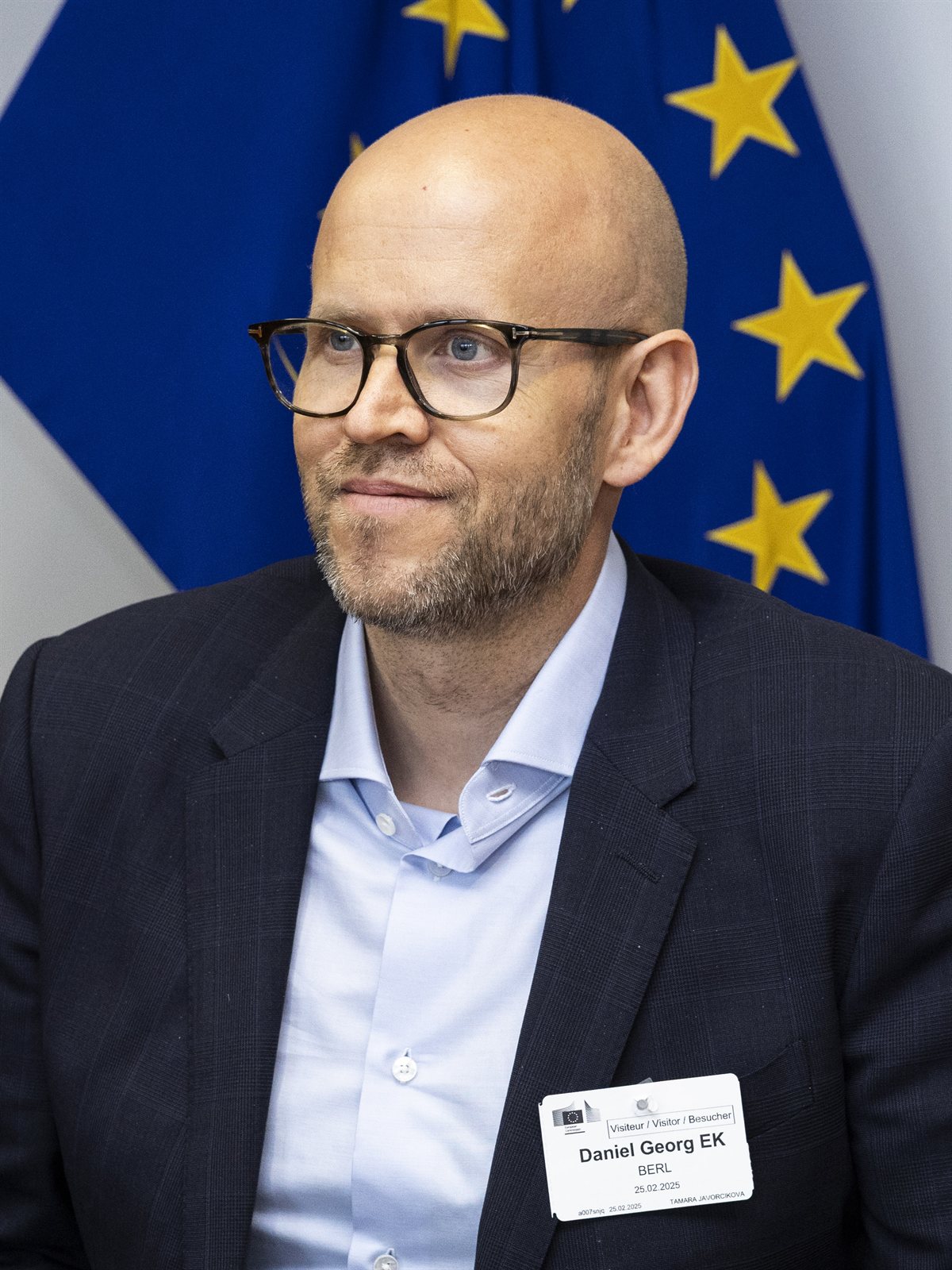
Editor's note: HustleMemo profiles real founders and operators. This is a critically-neutral, fact-checked profile. Corrections and disclosures per the record: Ek's Stardoll role was CTO (not chairman); he is, as of 1 January 2026, Spotify's executive chairman — not CEO (co-CEOs Gustav Söderström and Alex Norström); Spotify was unprofitable for most of its history and reported its first full-year net profit (~€1.14bn) only in 2024; there is no fixed per-stream payout rate (it is a pro-rata revenue pool), so single per-stream figures are estimates; the Taylor Swift pullout (2014) was followed by her return (2017); the Joe Rogan / Neil Young episode (2022) and the 2023 layoffs (~1,500 / ~17%) are documented; the Helsing/Prima Materia investment and the musician protest are documented facts, while the "streams fund drones" causal link is the artists' characterisation. Net worth tied to a volatile stock is approximate. The cover photograph is © European Union 2025 / Photo: Lukasz Kobus, licensed CC BY 4.0 (cropped/resized). Corrections: editorial@hustlememo.com.
Sources
- Biography (born 1983, Stockholm/Rågsved; KTH dropout; early ventures — Tradera, Stardoll CTO, Advertigo sold to TradeDoubler 2006, briefly µTorrent CEO): Wikipedia (Daniel Ek); Britannica.
- Founding Spotify (2006, with Martin Lorentzon); the "beat piracy with a better legal product" thesis; the ~2-year label negotiations and label equity; launch (Oct 2008); US launch (2011); NYSE direct listing (April 2018): Wikipedia; Spotify SEC 424B4 (2018); Fortune; Music Week (label equity).
- Freemium model, sub-second playback, playlists (Discover Weekly/Release Radar), Wrapped: Spotify materials; Fortune.
- Podcasts — Gimlet/Anchor acquisitions (2019,
$340M combined); Joe Rogan deal ($200M+, 2020) and 2024 renewal (up to ~$250M, non-exclusive): TechCrunch; Variety. - PROVEN vs ALLEGED — artist payments / pro-rata pool; Taylor Swift pullout (2014) and return (2017): TIME; NPR. Joe Rogan / Neil Young / Joni Mitchell (2022) and Spotify's response: NPR; Washington Post. 2023 layoffs (~1,500 / ~17%): Axios; TIME. Helsing/Prima Materia (Ek chairman; ~€600M round 2025) and musician backlash: FT (via MusicTech reporting).
- Scale and profitability — 675M MAUs / 263M subscribers / ~€15.67bn revenue / first full-year net profit ~€1.14bn (2024); Ek net worth (Forbes); leadership change to executive chairman effective 1 Jan 2026 (co-CEOs Söderström & Norström); Neko Health and Prima Materia: Spotify FY2024 results; CNBC; Wikipedia.
More from this category
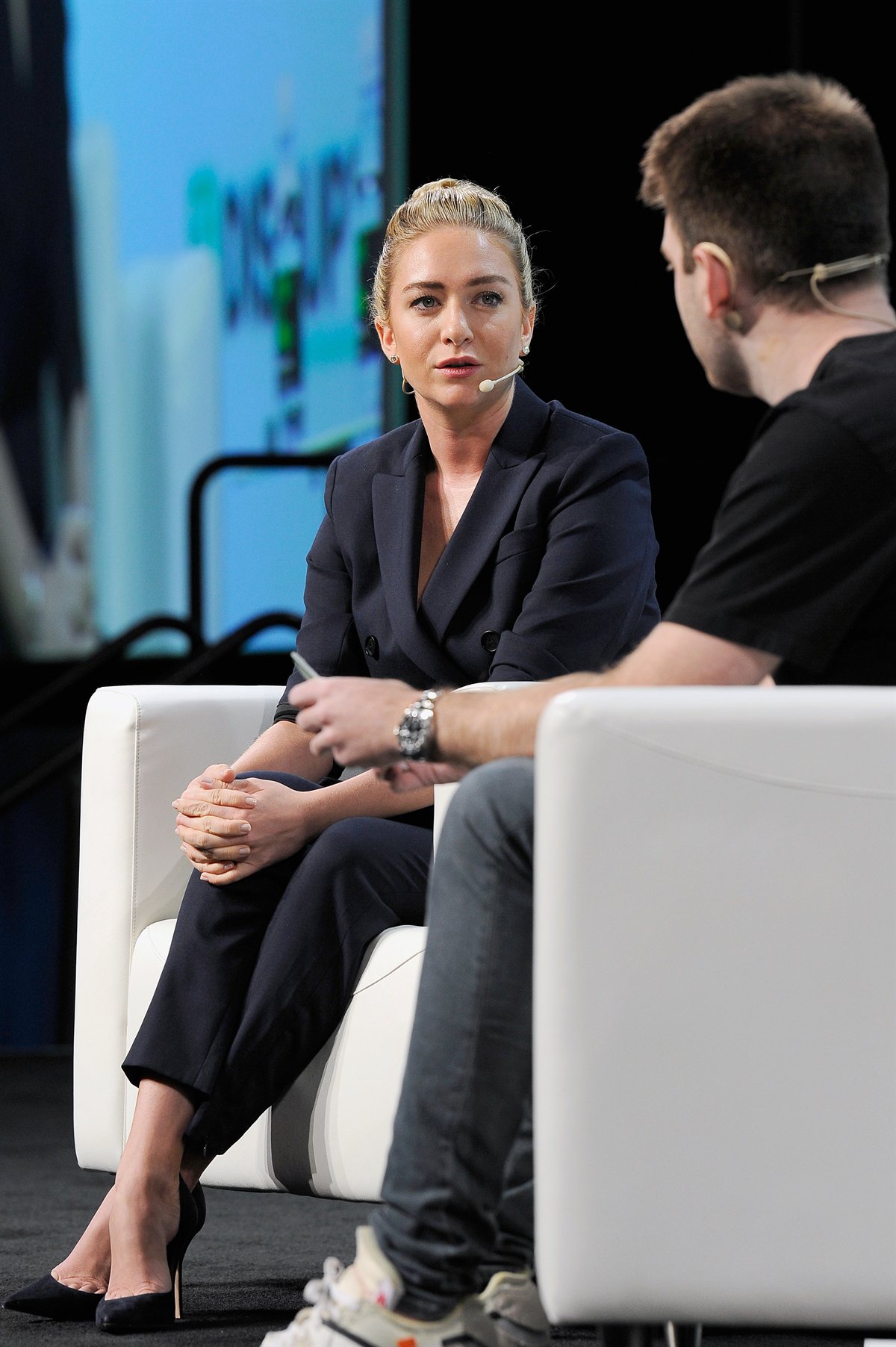
Whitney Wolfe Herd: The Founder Who Turned Being Pushed Out Into Bumble
A critically-neutral profile of Bumble’s Whitney Wolfe Herd: how she converted her ordeal at Tinder into the "women make the first move" thesis, took Bumble public at 31, and now fights to sustain it through a ~94% stock decline — the founding triumph and the hard aftermath, held honestly together.
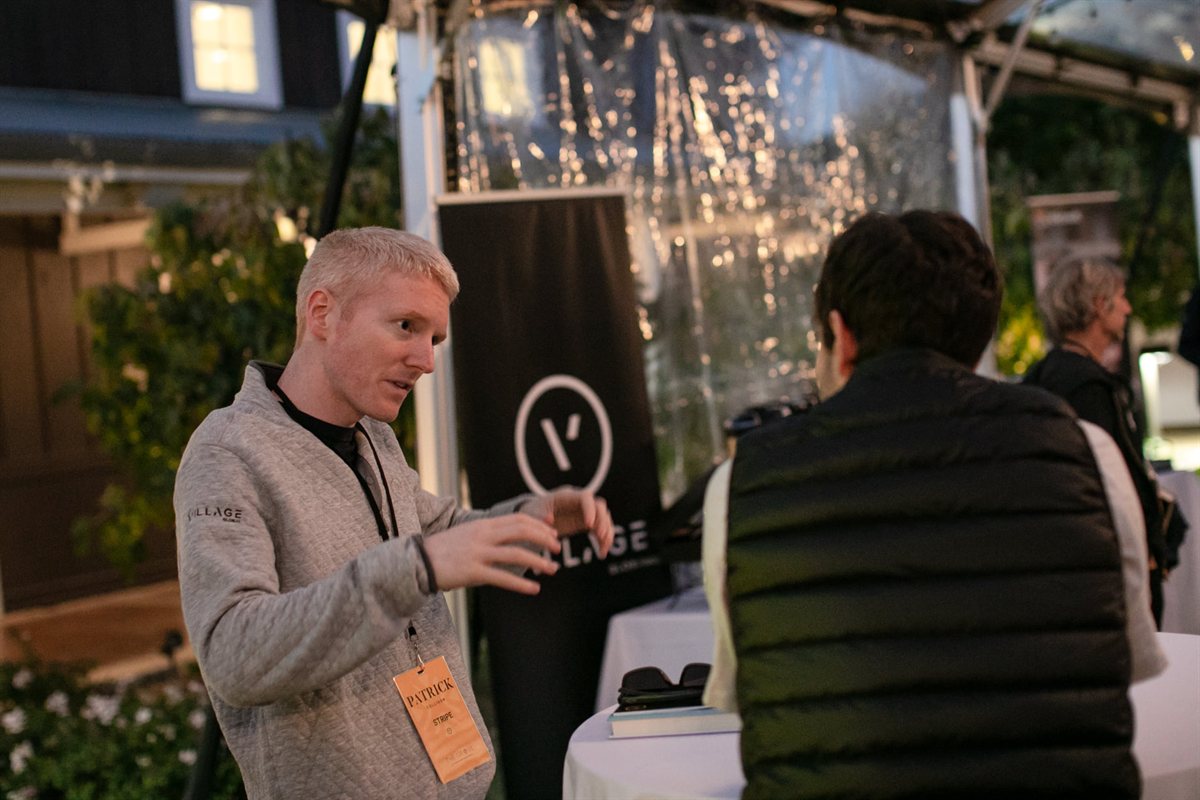
Patrick Collison: The Irish Teenager Who Built the Internet’s Payment Rails
A critically-neutral profile of Stripe’s Patrick Collison: the teenage prodigy who sold his first startup at 19, reduced online payments to a few lines of developer code, and built the financial infrastructure of the internet — through a bubble, a markdown, and a full recovery past its old peak to ~$159B.
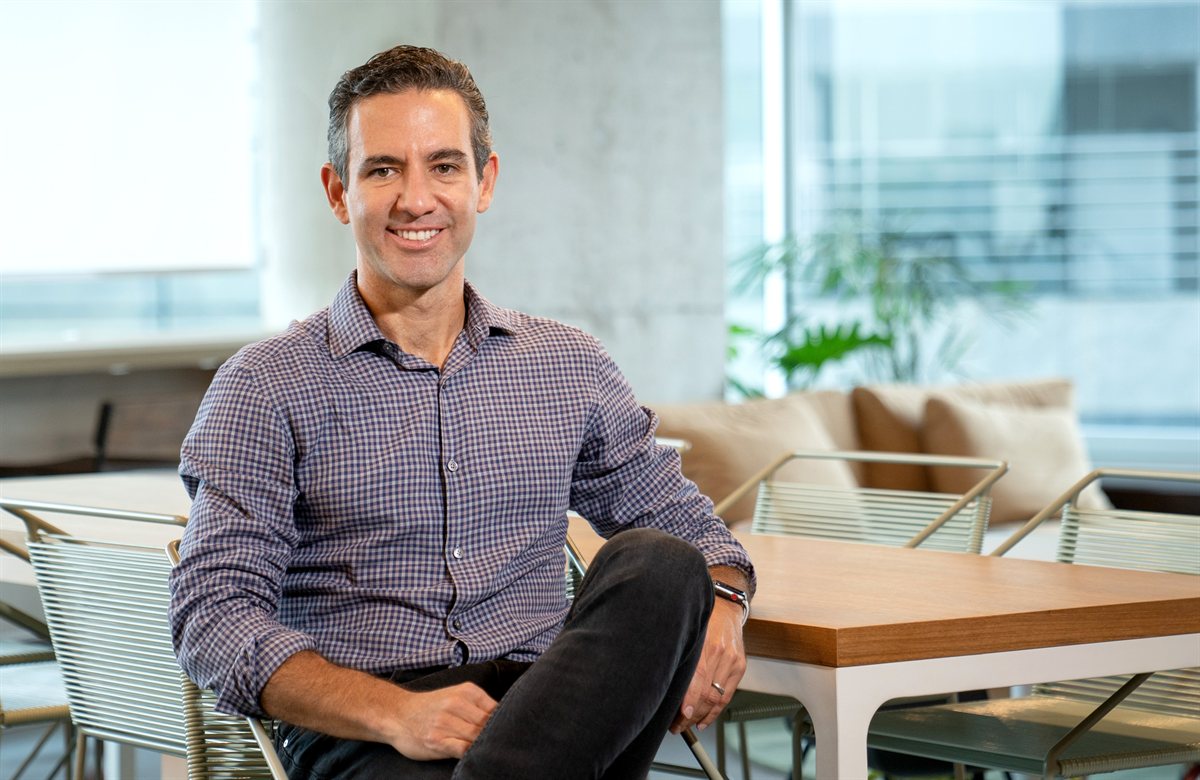
David Vélez: The Banker Who Attacked Brazil’s Banking Oligopoly
A critically-neutral profile of Nubank’s David Vélez: the outsider venture capitalist who read Brazil’s broken banking oligopoly as a roadmap, built a no-fee phone-first bank that incumbents couldn’t copy, scaled to 100M+ customers and an NYSE listing — and answered the profitability skeptics by 2023.