Overview
Amul is India's largest dairy brand and one of the most unusual large businesses anywhere. It has no founder-owner, no venture investors and no share price. It is owned by about 3.6 million dairy farmers in Gujarat, most of whom keep a handful of cows or buffaloes. In FY2025–26 its marketing arm, the Gujarat Co-operative Milk Marketing Federation (GCMMF), reported turnover of ₹73,450 crore, and total sales under the Amul brand passed ₹1 lakh crore, about $12 billion, for the first time.
Its name is so familiar in India that it stands in for butter itself. How a protest by farmers became that brand is one of the best case studies in who captures value in a supply chain.
History
In the 1940s farmers in Kaira district sold their milk to Polson Dairy, which held the main contract to supply Bombay. Milk spoils within hours, so a farmer who refused the morning price had sour milk by evening, and the buyer set the terms. Led by Tribhuvandas Patel and advised by Sardar Vallabhbhai Patel, the farmers stopped supplying Polson and formed their own organisation. The Kaira District Co-operative Milk Producers' Union was registered in Anand on 14 December 1946.
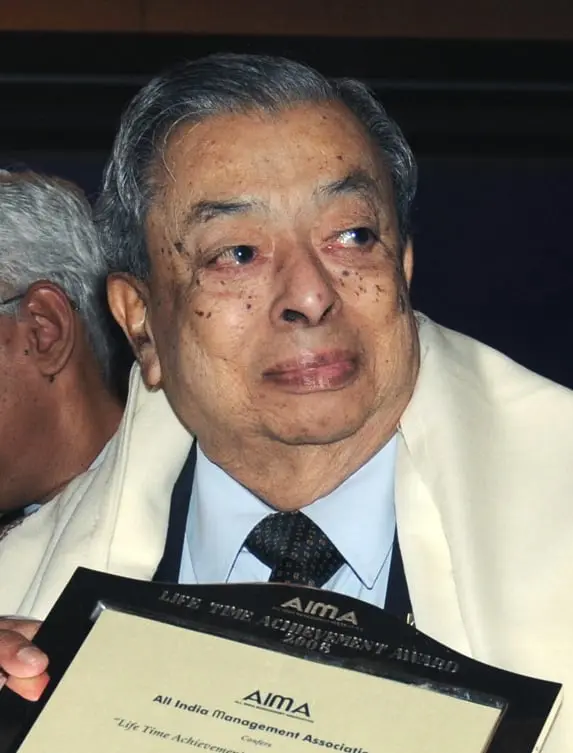
In 1949 a young engineer, Verghese Kurien, was posted to a government creamery nearby under a scholarship bond he intended to serve out and leave. He began fixing the cooperative's equipment, Patel persuaded him to stay, and he became its general manager. His friend Harichand Megha Dalaya, a dairy technologist, then found a way to turn buffalo milk into powder and condensed milk, which experts had thought impractical. That let the cooperative store its winter surplus and keep buying from farmers all year. The union adopted the Amul name in 1955, usually traced to the Sanskrit word amulya, meaning priceless.
National scale followed a 1964 visit by Prime Minister Lal Bahadur Shastri, who asked Kurien to copy the model. The National Dairy Development Board was set up in 1965 with Kurien as chairman, and Operation Flood, launched in 1970, linked rural milk producers to city markets across India. In 1973 Gujarat's unions created GCMMF to sell everything under one brand. By 1998 India was the world's largest milk producer, a position it still holds. Kurien chaired GCMMF until 2006, when he resigned after losing the support of its board, and died in 2012.
How the business works
The structure, known as the Anand pattern, has three layers. Farmers sell milk twice a day to a village society, which tests it for fat content and pays them quickly on the basis of quantity and quality. Societies own district unions, which process milk in their own plants and provide veterinary care, cattle feed and breeding services. The unions own GCMMF, which handles the brand, marketing and national distribution so that the unions do not compete with one another on the shelf. Today 18 unions collect about 30 million litres of milk a day from roughly 18,600 villages.
The economic purpose is different from a company's. Amul is designed to pass as much as possible back to farmers through the milk price rather than to maximise retained profit; it says farmers receive around 80% of what consumers pay, a figure that depends on how costs are counted. Growth has come from moving up the value chain, from liquid milk into butter, cheese, ice cream, chocolate and high-protein products, and from advertising that has kept the brand current. The Amul girl, created in 1966 with the agency of Sylvester daCunha, still comments on the news on billboards.
Abroad, Amul has largely followed the Indian diaspora. Rather than build plants overseas, it partners with local cooperatives: the Michigan Milk Producers Association in the United States from 2024 and COVAP in Spain from 2025 produce Amul-branded fresh milk to its specifications.
Ownership and leadership
Ownership runs from farmers to societies to unions to the federation, and elected union chairmen sit on GCMMF's board. Ashokbhai Chaudhary is GCMMF's chairman. Professional managers run daily operations: Jayen Mehta has been managing director since January 2023, when R. S. Sodhi left abruptly after more than a decade in the post, a reminder that a cooperative's board can make sudden decisions too.
Controversies
Ice-cream advertising (PROVEN court ruling). In 2017 the Bombay High Court granted Hindustan Unilever an injunction against Amul television ads that disparaged "frozen desserts" made with vegetable oil. Amul later aired edited versions.
The Nandini row (political dispute). In April 2023 Amul's plan to sell milk online in Bengaluru, shortly before Karnataka's state election, set off a campaign to protect the state's Nandini brand. Opposition claims of a plan to merge Nandini into Amul were denied, and there was no finding of wrongdoing.
Tirupati ghee (FALSE claims). In 2024 social-media posts claimed Amul had supplied adulterated ghee to the Tirumala temple. Amul said it had never supplied the temple trust and filed a police complaint over the misinformation.
Operation Flood's legacy (contested analysis). Researchers such as Shanti George argued that the programme's gains favoured better-off farmers and that its use of donated European dairy commodities was questionable. Defenders point to millions of new rural cash incomes. Neither view is a legal finding.
Why it matters
Amul shows that the most effective response to a monopoly buyer is not a better negotiation but a different structure, in which producers own collection, processing and the brand. It also shows that ownership alone is not enough: the cooperative succeeded because it paired farmers' control with professional managers, real technology and first-rate marketing. In 2024 Brand Finance named it the strongest food brand in the world, and in 2026 the strongest dairy brand. Its overseas business, by contrast, is only beginning.
For the full story, read Amul: From a Milk Strike in Anand to the World's Strongest Food Brand.