Every case study on HustleMemo asks the same two questions: how did they actually do it, and why did it work? Amul is an unusual subject for those questions, because there is no single founder, no venture capital, no stock price and no exit. The business that today sells more than ₹1 lakh crore of milk, butter, cheese, ice cream and chocolate a year under one brand is owned by roughly 3.6 million dairy farmers in Gujarat, most of whom own a handful of buffaloes or cows. It began in 1946 as an act of protest by farmers who were tired of being paid whatever a private dairy chose to pay them. Eighty years later, a British brand-valuation consultancy named it the strongest food brand in the world.
The popular version of the story says Amul "conquered the globe." The accurate version is more interesting and more useful. Amul conquered India first, so completely that its name became a synonym for butter. It then turned that domestic dominance into a brand that a global ranking named the strongest food brand in the world in 2024, on measures of trust, familiarity and loyalty. But in sales outside India it is still at the very beginning, and its overseas business largely follows the Indian diaspora. This is the story of how a cooperative of small farmers built that position, the institutions and the people who made it possible, the critiques that followed it, and what its global ambitions really look like in 2026.
The problem: milk, a monopoly, and a city that needed both
To understand why Amul exists, start with the geography. Kaira district (today's Kheda and Anand districts) in central Gujarat has fertile land and a long tradition of keeping buffaloes, whose milk is rich in fat. About 400 kilometres to the south sat Bombay, a fast-growing city that consumed far more milk than its surroundings could produce.
In the 1940s, the link between the two was controlled by a private company. Polson Dairy, a well-known firm of the period that also made butter, collected milk across Kaira and supplied it to Bombay under the government-backed Bombay Milk Scheme. In practice that gave Polson an effective monopoly on the farmers' main market. Farmers sold to Polson or to middlemen working on its behalf, at prices set by the buyer, with little bargaining power. Milk is perishable: a farmer who refuses an offer in the morning has sour milk by evening. That perishability was the source of the buyer's power.
The farmers' grievance was not unique to Kaira. What made Kaira different was the political moment and the people involved. India was a year away from independence. The freedom movement had built a culture of collective action in Gujarat, and the farmers had access to one of its most powerful leaders.
The strike that started it
The farmers, led by a local leader named Tribhuvandas Kishibhai Patel, took their complaint to Sardar Vallabhbhai Patel, the Congress leader from Gujarat who would become independent India's first deputy prime minister. His advice was not to plead for better prices but to stop needing the buyer: form a cooperative, own the collection and processing yourselves, and sell directly to the Bombay scheme. He sent Morarji Desai, later himself a prime minister, to help organise the farmers.
The cooperative's founding is inseparable from a strike. After a meeting at the village of Chaklasi, the farmers resolved to stop supplying Polson. In the version usually told, Kaira's milk stopped flowing to Bombay for about two weeks, the city felt it, and the authorities agreed to buy from the farmers' own organisation instead. Like many founding stories, the details have been smoothed in the retelling. The outcome, however, is documented: on 14 December 1946 the Kaira District Co-operative Milk Producers' Union was registered in Anand. By June 1948 it was pasteurising milk for the Bombay Milk Scheme.
It started small. Daily collection was a few hundred litres from a couple of village societies. That small scale matters, because it shows the cooperative's main advantage was never capital. It was a structure that let farmers capture value that had previously gone to someone else.
The engineer who did not want to be there
The person most associated with Amul arrived by accident. Verghese Kurien was born on 26 November 1921 in Calicut, in what was then the Madras Presidency. He studied physics at Loyola College and mechanical engineering at the College of Engineering, Guindy, and then won a government scholarship to study in the United States. The scholarship was meant for dairy engineering; by his own later account, Kurien had little interest in dairying and focused his studies at Michigan State University on metallurgical and nuclear engineering, which he considered more useful to a newly independent India. The scholarship came with a bond: he owed the government years of service.
In 1949 the government posted him to its experimental creamery in Anand. Kurien later described his early months there as a period of waiting out his bond. Next door was Tribhuvandas Patel's young cooperative, struggling with machinery it did not understand. Kurien began helping repair equipment. Patel then persuaded him to stay on, and that decision shaped the rest of his life. He became the cooperative's general manager, and over the following six decades he became the chief architect of the institutions built on the Anand model.
There is a well-known irony that Kurien himself enjoyed telling: the man later called the "Father of the White Revolution" did not like drinking milk. The story is a useful reminder that Amul was not built on a passion for dairy. It was built by an engineer and an organiser who saw a system that could be improved, and by farmers who had decided they would no longer accept the old one.
The Amul trinity and the buffalo-milk problem
Amul histories often speak of a "trinity": Tribhuvandas Patel, the farmers' leader and the cooperative's first chairman, who kept the members together; Verghese Kurien, the manager and institution-builder; and Harichand Megha Dalaya, a dairy technologist and Kurien's friend from his time in the United States, who solved the cooperative's most important technical problem.
The problem was seasonal. Buffaloes produce far more milk in the cool winter months than in summer. Bombay's demand did not follow that pattern, so each winter the cooperative had more milk than it could sell, and each summer it had less than it needed. The solution in the dairy industries of Europe and New Zealand was to convert surplus milk into powder that could be stored. But the established view at the time held that buffalo milk, with its higher fat content and different properties, could not be spray-dried into commercial milk powder or turned into condensed milk using the methods developed for cow's milk.
Dalaya developed a process that did it. That breakthrough changed the economics of the cooperative: winter surplus became shelf-stable product, the cooperative could keep buying from members all year, and farmers no longer faced a collapse in demand every flush season. A new and larger dairy was built at Anand in the mid-1950s, and from 1955 the union held the brand name under which it would sell its products: Amul, a name usually traced to the Sanskrit word amulya, meaning priceless.
The lesson here is often missed in accounts that focus on ideology. Amul's cooperative model did not succeed simply because it was a cooperative. Many cooperatives failed. It succeeded because it combined that ownership structure with real technical capability, which allowed it to make products that private competitors and importers could not easily match.
The Anand pattern: who owns what
Amul's structure is the heart of the case study, and it is simpler than it sounds. It has three tiers.
At the bottom is the village dairy cooperative society. Farmers in a village bring milk to a collection centre twice a day. The milk is measured and tested for fat content, and the farmer is paid on the basis of quantity and quality. Payment is made quickly and transparently, which was a direct response to the delays and opaque deductions of the old middleman system. The village society is owned by its members, and they elect its management.
In the middle is the district union, such as the original Kaira union (today known as Amul Dairy). The union collects milk from hundreds of village societies, processes it in its own plants, and provides services back to farmers: veterinary care, artificial insemination, cattle feed, and training. The village societies own the union.
At the top is the state federation. In 1973, as several district unions across Gujarat adopted the Kaira model, they created the Gujarat Co-operative Milk Marketing Federation (GCMMF) to market their products jointly. The Kaira union transferred the Amul brand to the federation, so that every union in Gujarat could sell under one name. Kurien chaired GCMMF from its creation until 2006.
This structure solved several problems at once. Farmers kept ownership and a voice in governance. The unions achieved processing scale that no individual farmer could. The federation provided a single national brand and a single sales and distribution system, so the unions did not compete against each other on the shelf. Today GCMMF's members include 18 district unions covering around 18,600 villages and roughly 3.6 million farmers, collecting about 30 million litres of milk a day.
The model is now called the "Anand pattern," and it was copied across India. Its most important feature is not the ownership structure alone, but the way the value chain is organised so that the farmer is the owner of the brand. Amul has long said that farmers receive a very large share of what consumers pay, often cited as around 80 per cent of the consumer rupee. That figure is the company's own claim and depends on how costs are counted, but the broader point is not disputed: the cooperative was built to pass value back to milk producers rather than accumulate it for outside shareholders.
From one district to a nation: NDDB and Operation Flood
The second phase of the story moved from Anand to the whole of India, and it began with a visit. On 31 October 1964, Prime Minister Lal Bahadur Shastri visited Anand and spent time with farmers. Impressed, he asked Kurien to help reproduce the Anand pattern across the country. In 1965 the government set up the National Dairy Development Board (NDDB), with Kurien as its chairman, a post he held until 1998.
NDDB's major programme was Operation Flood, launched in 1970 and run in three phases until 1996. Its idea was to link milk-producing rural areas ("milksheds") to large cities through cooperatives, chilling centres, processing plants and rail tankers, creating a "national milk grid." The first phase connected 18 milksheds to India's four major cities. The second extended the network to hundreds of towns. The third focused on making the cooperatives financially self-sustaining.
The financing of Operation Flood is one of its most interesting and most debated features. Its first phase was funded largely by selling dairy commodities donated by the European Economic Community, skimmed milk powder and butter oil, through the World Food Programme. Instead of distributing the donated product directly, India recombined it into milk, sold it in the cities, and used the proceeds to build the dairy infrastructure. Later phases also drew on large World Bank loans.
The results were substantial. By 1985 the programme reported more than four million milk producers organised in tens of thousands of village cooperatives. By 1998, India had become the world's largest milk producer, a position it still holds. The "White Revolution" became one of the most celebrated development stories of independent India, and Kurien received the Ramon Magsaysay Award, the World Food Prize in 1989, and the Padma Vibhushan in 1999.
The critiques of Operation Flood
Operation Flood also attracted serious criticism, and a fair account should include it. These are analytical and political critiques, not legal findings, and they remain contested.
The most cited is the work of the researcher Shanti George, whose 1985 book on Indian dairy policy questioned several of the programme's claims. Critics in this vein argued that the benefits were skewed toward farmers who already had more animals and better access to the cooperatives, rather than the poorest and landless households. They argued that pulling milk from villages to supply cities could reduce milk consumption by rural families, including children. They also questioned how much of the production growth could be attributed to the programme itself rather than to broader agricultural trends.
A second line of criticism concerned the food aid. Writers such as Bharat Dogra argued in the 1980s that donated European dairy products risked undercutting Indian producers and creating long-term dependence on imports, and that the donors were partly motivated by the need to dispose of the surpluses created by Europe's own farm subsidies. A joint EEC and World Bank review of the programme in the mid-1980s reportedly raised concerns about continued dairy aid, although the Indian government said in Parliament that the consultants' suggestions did not represent the official view of the World Bank or the EEC.
Defenders of Operation Flood respond that the aid was used as capital rather than as a permanent supply, that India did eventually become self-sufficient and then the world's largest producer, and that cooperatives created a reliable cash income for millions of small farmers, many of them women, who had previously had none. The honest summary is that the programme achieved its headline goals while leaving genuine questions about how evenly its gains were distributed.
Building a brand without a brand budget
A cooperative of small farmers does not usually become one of the most recognised brands in a country of 1.4 billion people. Amul did, mainly because of a decision made in 1966. That year, Amul hired the advertising professional Sylvester daCunha to rethink the marketing of Amul Butter. The result was the Amul girl, a chubby, blue-haired child in a polka-dot dress, and a tagline that became part of everyday Indian English: "Utterly Butterly Delicious."
What made the campaign extraordinary was not the mascot but the format. From the late 1960s the Amul girl began to appear on hoardings commenting on current events: politics, cricket, films, scandals, and public controversies, always with a pun and a slice of buttered bread. The ads changed frequently, sometimes weekly, so people looked for the new one. The campaign has run for nearly six decades, and it is widely described as one of the longest-running advertising campaigns in the world.
The topical format had a business logic. Amul could not outspend multinational food companies on television. A cheap, constantly refreshed outdoor campaign that the press would talk about gave it reach and relevance at a fraction of the cost. It also built an unusual kind of trust: the brand seemed to share its audience's sense of humour and its view of the news.
The campaign has not been without risk. Over the years some ads have angered their targets, including an often-told episode in which Indian Airlines reportedly threatened to stop serving Amul butter after an ad about a strike by its staff. In 2020 an ad featuring the vegan actor Joaquin Phoenix drew criticism from vegan groups. Amul has generally treated these episodes as the price of a campaign that is willing to have a point of view.
There was another, quieter brand decision: Amul priced for the mass market. It kept margins thin, used its scale and distribution network to keep products affordable, and expanded into categories such as ice cream, cheese, chocolate, ghee and, later, fresh dairy beverages. In each case the logic was the same: use the existing milk supply and distribution to offer a product that a large share of Indian households could afford.
The institution builder and his exit
Kurien was not only a manager. He built institutions designed to outlast him. In 1979 he founded the Institute of Rural Management Anand (IRMA) to train professional managers for cooperatives, a recognition that farmer ownership alone would not run a complex business. He also supported Manthan, Shyam Benegal's 1976 film about a dairy cooperative, which was financed by about 500,000 farmers who each contributed two rupees, making it one of India's earliest crowd-funded films.
His style was also widely described as forceful and centralised, and his final years at the institutions he built were marked by conflict. In 1998 he recommended Amrita Patel as his successor at NDDB. He later disagreed sharply with some of her policies, particularly moves that, in his view, would hand marketing functions to private companies and weaken the cooperative structure. In 2006, after losing the support of GCMMF's board, he resigned as its chairman. Contemporary reporting linked the dispute to wider tensions with Gujarat's political leadership; those accounts reflect the views of the participants and are best read as contested.
Kurien died on 9 September 2012 at Nadiad, near Anand, aged 90. His autobiography, I Too Had a Dream (2005), remains the most detailed first-hand account of the Anand story, though, like any memoir, it presents events from his own perspective.
Leadership changes at Amul continued to attract attention after his death. In January 2023, R. S. Sodhi, who had served as GCMMF's managing director for more than a decade, left the post abruptly, and Jayen Mehta took over. The change was a reminder that a cooperative's governance, controlled by elected union chairmen, can produce sudden decisions just as a corporate board can.
Scale in 2026: how big is Amul really?
By its own reporting, Amul is now among India's largest food businesses by revenue. For the financial year 2024–25, GCMMF reported a turnover of ₹65,911 crore, up about 11 per cent. For 2025–26, it reported ₹73,450 crore, and said that total sales under the Amul brand, including products sold directly by its member unions, passed ₹1 lakh crore for the first time, roughly US$12 billion. Management has attributed recent growth mainly to volume rather than price increases.
Two cautions are needed when reading these numbers. First, "GCMMF turnover" and "Amul brand turnover" are different figures, and coverage often mixes them; the brand figure includes sales by the 18 unions that are not counted in GCMMF's own accounts. Second, a cooperative's revenue is not directly comparable to a company's profit. Amul is designed to pay out as much as possible to farmers through milk prices, not to maximise the surplus it retains.
Internationally, the most cited recognition comes from Brand Finance, the UK-based valuation consultancy. In its 2024 Food & Drink report it named Amul the world's strongest food brand, with a Brand Strength Index score of 91 out of 100 and an AAA+ rating, and valued the brand at about US$3.3 billion. In its 2026 report Amul's brand value had risen to about US$5 billion and its strength score to 93, and it retained the title of the world's strongest dairy brand, while the overall strongest food brand title went to Brazil's Sadia. The International Farm Comparison Network has also ranked GCMMF among the ten largest dairy processors in the world by milk volume.
These rankings are real, but they measure particular things. Brand "strength" is a score of familiarity, consideration, loyalty and reputation, and Amul scores extremely well because it is close to universal in India. It does not mean Amul sells more than the global giants. Companies such as Lactalis and Nestlé generate several times Amul's revenue from dairy and food, and they do it across dozens of countries.
The global question: has Amul conquered the world?
The honest answer is: not yet, and the shape of its international expansion suggests it is not trying to conquer the world in the way a multinational would.
Amul has exported products such as ghee, milk powder, cheese and sweets for decades, and the company says its products are sold in around 50 countries. Much of that demand comes from the Indian diaspora in the Gulf, North America, the UK, Australia and parts of Africa and Southeast Asia. Indian shoppers abroad recognise the brand and trust it, so the products can sell without a large local marketing budget.
The newer and more ambitious step is fresh milk. Fresh milk cannot be shipped across oceans, so Amul has used a model that mirrors its own origins: partnerships with local farmer cooperatives. In 2024 it announced a partnership with the Michigan Milk Producers Association, a dairy cooperative founded more than a century ago, to produce and sell Amul-branded fresh milk in the United States, starting with markets with large Indian-American populations. In June 2025 it launched fresh milk in Spain, its first fresh-milk market in Europe, through a partnership with the Spanish cooperative COVAP. In both cases the local cooperative collects and processes milk to Amul's specifications, and Amul supplies the brand and the product formats familiar to Indian consumers.
This approach is clever and limited at the same time. It avoids building plants abroad, it fits Amul's cooperative identity, and it gives diaspora consumers the taste they remember. But it relies largely on a single demographic, and moving beyond the diaspora would require competing with entrenched local brands on their home ground, with a name that means little to most non-Indian shoppers. That is a much harder task than anything Amul has yet attempted abroad.
So the accurate version of the "global conquest" is this: Amul has built a brand that global analysts rank among the strongest in the food world, on the back of near-total dominance in the world's largest milk-producing country. Its international business is still small relative to its domestic one, and it is growing carefully through partnerships rather than through acquisitions or aggressive entry.
Controversies and disputes
Amul's scale has also brought disputes. They are listed here with the distinction between what has been established and what remains contested.
The ice-cream advertising case (proven court ruling). In 2017 Hindustan Unilever, which makes Kwality Wall's, sued GCMMF over Amul television ads that contrasted its "real milk" ice cream with "frozen desserts" made with vegetable oil. The Bombay High Court granted an injunction, finding that the ads disparaged the frozen-dessert category as a whole. Amul was later allowed to air modified versions after removing the disparaging portions. Ice cream and frozen desserts are legally distinct categories under Indian food regulations, but the court held that Amul's ads went beyond comparison into disparagement.
The Bengaluru and Nandini row (political dispute). In April 2023, shortly before the Karnataka state election, Amul announced it would sell milk and curd in Bengaluru through online channels. The announcement triggered a campaign under slogans such as #GoBackAmul and #SaveNandini, in defence of the Karnataka Milk Federation's Nandini brand. Opposition parties alleged a plan to weaken or merge Nandini into Amul; the state's ruling party and Amul rejected this. The episode is best understood as a political controversy about state cooperative brands, not as a finding of any wrongdoing.
The Tirupati ghee rumours (false claims). In September 2024, during a controversy over the quality of ghee used in the laddus offered at the Tirumala Tirupati temple, posts on social media claimed that Amul had supplied the ghee. Amul stated publicly that it had never supplied ghee to the temple trust and filed a police complaint against several social media users for spreading misinformation. The claim against Amul was false; the underlying controversy concerned other suppliers.
Plant-based milk and the PETA exchange (documented debate). In 2021, the animal-rights group PETA India urged Amul to move into plant-based milk. Amul's then managing director publicly rejected the suggestion, arguing that it would threaten the livelihoods of millions of small dairy farmers who depend on milk income. The exchange reflects a real long-term question for the dairy industry, but neither side's argument has been tested in any formal forum.
What Amul teaches
Amul is often treated as a feel-good story about farmers beating a monopoly. It is that, but the more useful lessons for builders are structural.
Change who captures the value, not just the price. The Kaira farmers did not win by negotiating a better price from Polson. They won by building their own collection, processing and selling system, so the value that used to go to the buyer went to them. The cooperative was a structural answer to a structural problem.
Ownership alone is not enough. Amul's model worked because it was combined with technical capability (Dalaya's buffalo-milk powder), professional management (Kurien and later IRMA graduates), and marketing that matched the best private companies. Many cooperatives with similar ownership structures failed because they lacked those things.
A brand can be built cheaply if it is distinctive. The Amul girl campaign shows that a long-running, low-cost, culturally sharp idea can outperform larger budgets. Consistency over decades turned a butter advertisement into a national institution.
Institutions outlast founders only if they are designed to. Kurien built NDDB, GCMMF and IRMA so that the Anand model would not depend on him. The fact that Amul kept growing after his bitter exit in 2006 and his death in 2012 is evidence that the design largely worked, even if governance disputes have continued.
"Global" can mean many things. Amul's international expansion is real, but it is a careful, partnership-led push that mainly serves the diaspora. The strongest global claim it can make is about the quality of its brand, not the size of its overseas sales. For founders, that is a useful reminder to define "conquering the world" precisely before trying to do it.
The honest close
Amul began with a refusal: farmers in one district of Gujarat decided they would no longer sell their milk on someone else's terms. What turned that protest into one of the largest food businesses in Asia was a combination of things that rarely appear together: political support at the right moment, a reluctant engineer who became an institution builder, a technologist who solved a problem experts said could not be solved, a structure that gave ownership to millions of small producers, and an advertising idea that has kept the brand fresh for nearly sixty years.
Its achievements are large and well documented. India became the world's largest milk producer, millions of farm families gained a reliable cash income, and the brand they own is now ranked among the strongest in the world. Its critiques are also real: questions about how evenly the White Revolution's gains were shared, about the role of foreign food aid, and about the governance of a cooperative that sometimes behaves like any other powerful corporation. And its global story is only beginning. Amul has not conquered the world. What it has done is arguably harder: it showed that a business owned by millions of people with a few animals each can compete with, and in some measures outperform, the largest food companies on earth.
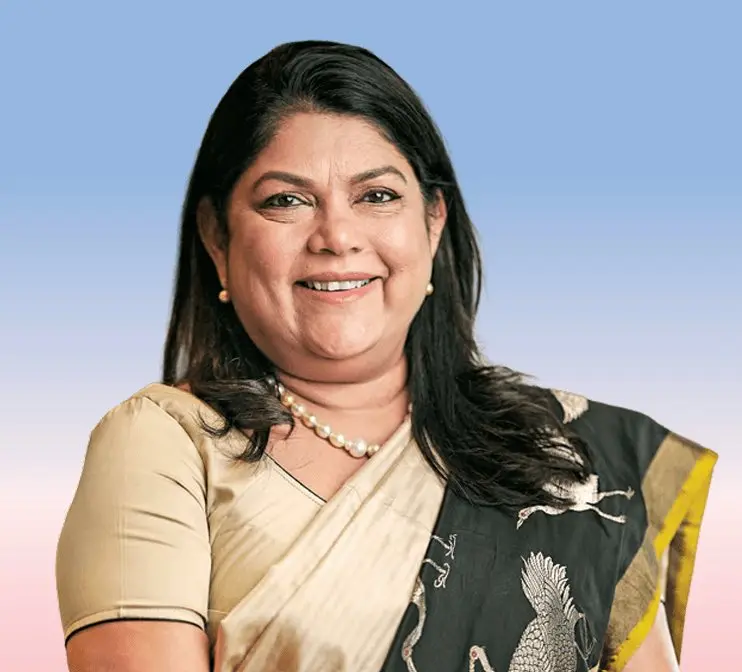
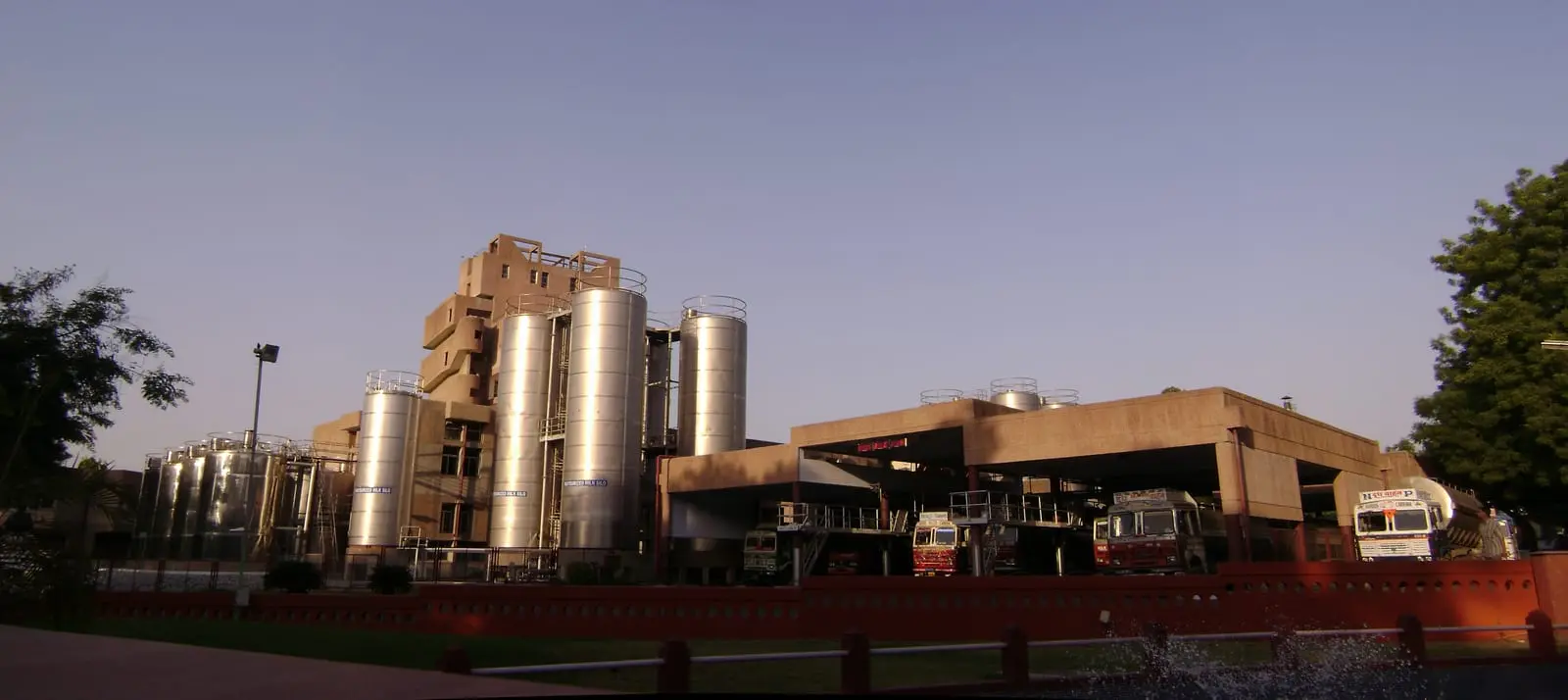
Editor's note: HustleMemo writes founder-led case studies grounded in public reporting. Amul is a cooperative owned by its farmer-members, not a founder's company; Verghese Kurien is profiled as its most influential builder alongside Tribhuvandas Patel and H. M. Dalaya, and the 1946 strike is presented with the caveat that its popular retelling has been simplified. Turnover figures are as reported by GCMMF, and "GCMMF turnover" and "Amul brand turnover" are distinguished. Brand Finance rankings measure brand strength, not sales, and are reported for the specific editions cited. The critiques of Operation Flood are presented as contested analysis, not findings. The 2017 Bombay High Court ruling is a proven court decision; the 2023 Karnataka dispute is presented as a political controversy; the 2024 Tirupati claims against Amul were false. Kurien's 2006 exit is described from documented facts, with accounts of the political context treated as contested. The cover photograph ("Amul Plant at Anand") is by Notnarayan, licensed CC BY-SA 3.0 via Wikimedia Commons (resized). The photograph of Verghese Kurien (2009) is from the Press Information Bureau, Government of India, used under the Government Open Data License – India. Corrections: editorial@hustlememo.com.
Sources
Sources
- Founding of the Kaira District Co-operative Milk Producers' Union (14 December 1946), Polson's monopoly, the Bombay Milk Scheme, the roles of Tribhuvandas Patel, Sardar Vallabhbhai Patel and Morarji Desai; brand held since 1955; GCMMF formed in 1973: Wikipedia (Amul); Amul corporate history; GCMMF.
- Verghese Kurien biography (born 26 November 1921, Calicut; Loyola, Guindy, Michigan State; posted to Anand 1949; NDDB chair 1965–1998; GCMMF chair until 2006; IRMA 1979; died 9 September 2012), procurement growth 1948–1952, Manthan (1976) crowd-funding, awards: Wikipedia (Verghese Kurien); Britannica; Kurien, I Too Had a Dream (2005).
- H. M. Dalaya and buffalo-milk powder; the "Amul trinity": Wikipedia (Amul); Amul and IRMA historical materials.
- Shastri's visit (31 October 1964), NDDB (1965), Operation Flood phases (1970–1996), EEC food aid via the WFP, World Bank funding, India as the largest milk producer (1998): Wikipedia (Operation Flood); NDDB; Lok Sabha debates (1991) on Operation Flood III funding.
- Critiques of Operation Flood: Shanti George, Operation Flood: An Appraisal of Current Indian Dairy Policy (Oxford University Press, 1985); Bharat Dogra, "Milk Imperialism" (1984); Durham University thesis on EU dairy aid and Operation Flood; IDS Bulletin on EEC food aid.
- Amul girl campaign (1966, Sylvester daCunha) and topical advertising: Wikipedia (Amul girl); afaqs; Economic Times.
- GCMMF turnover FY2024–25 (₹65,911 crore) and FY2025–26 (₹73,450 crore); Amul brand turnover above ₹1 lakh crore; ~3.6 million farmers, ~18,600 villages, 18 member unions: PTI via The Week; Free Press Journal; AgroSpectrum; Daily Excelsior.
- Brand Finance Food & Drink 2024 (strongest food brand, BSI 91, AAA+, ~US$3.3bn) and 2026 (strongest dairy brand, BSI 93, ~US$5bn): Brand Finance press releases; Storyboard18; exchange4media.
- International expansion: Michigan Milk Producers Association partnership (2024); Spain launch with COVAP (June 2025); exports to ~50 countries: Dairy News Today; Dairy Business MEA; ThePrint; Deccan Herald.
- Controversies: HUL v. GCMMF, Bombay High Court (2017): Bar & Bench; SpicyIP; Business Standard. Bengaluru / Nandini row (April 2023): The Hindu; Indian Express. Tirupati ghee FIR (September 2024): Deccan Herald; Business Standard; The Week. PETA plant-based appeal (2021): PTI; Hindustan Times. R. S. Sodhi's exit (January 2023): Economic Times.