
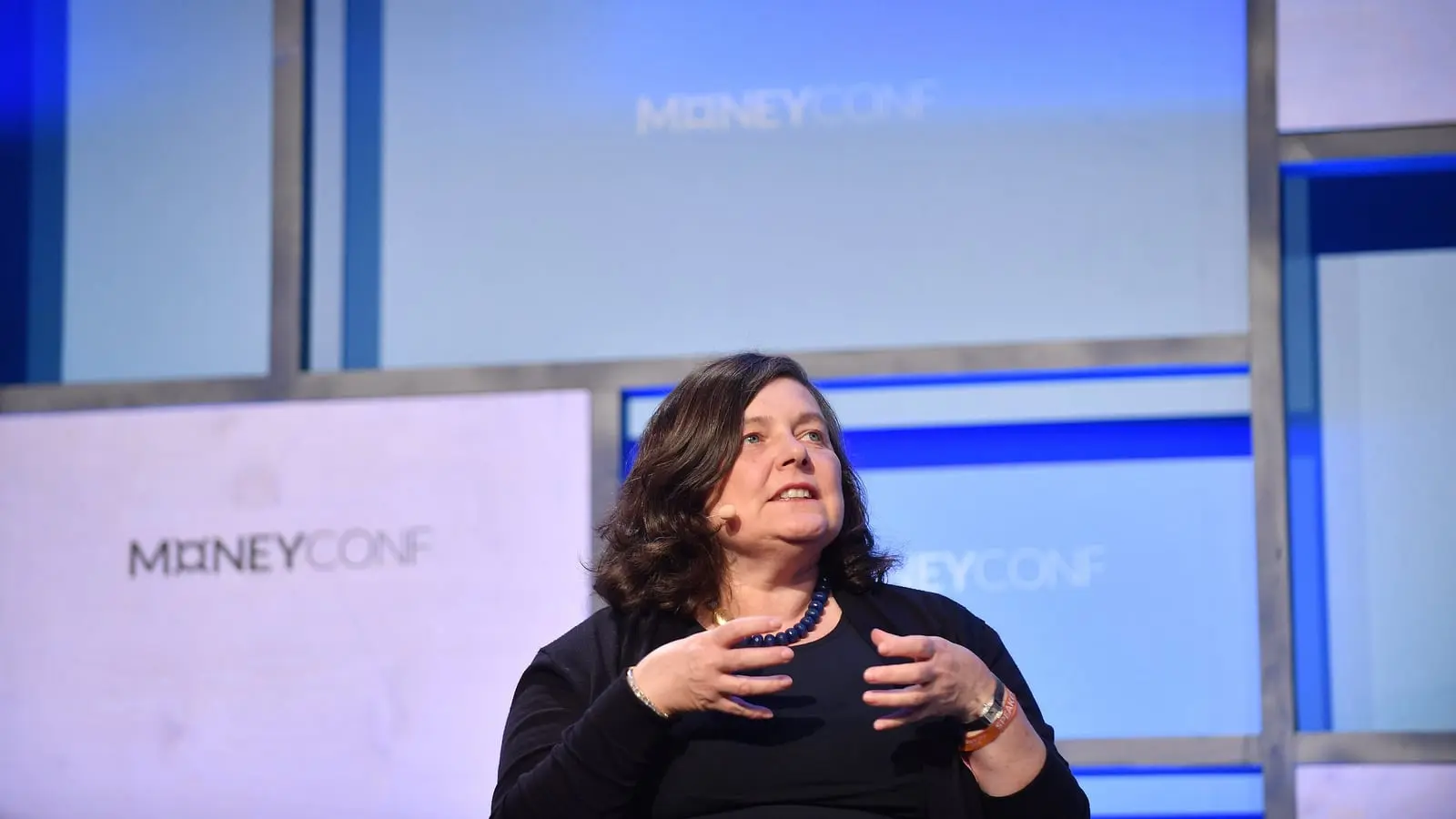
In 2014, Anne Boden, the Welsh banker who would found Starling Bank, was 54 years old, had spent more than three decades inside some of the biggest banks in the world, and had just walked away from a senior job to start one of her own. She had no co-founders who would stay, no investors who would commit, and no product. What she had was a conviction, formed watching the 2008 crash from the inside, that the way Britain banked was broken and that the people running the system would not be the ones to fix it.
Twelve years later, Starling Bank is one of Britain's most profitable digital banks, with 6.2 million accounts, £12.7 billion of customer deposits and a software business that licenses its technology to banks abroad. Boden is often described as the first woman to found a bank in the UK. She has also left it: stepping down as chief executive in 2023 after a reported clash with investors, leaving the board in 2024, and selling her last shares in October 2026. This month she announced her next act, a bank built for AI agents.
Her story is not a fairy tale of a garage start-up. It is something rarer, and more useful to study: what happens when a deeply experienced insider decides to rebuild an industry from scratch, gets almost everything about the product right, and still has to answer for what the fast-growing machine got wrong.
In brief
Key takeaways
- She started late and from the inside. Boden founded Starling in June 2014, at 54, after senior roles at Lloyds, Standard Chartered, UBS, ABN AMRO, RBS and Allied Irish Banks.
- The founding team walked out. In February 2015 her co-founder Tom Blomfield left to start Monzo, and the other four directors went with him.
- One backer kept her alive. Austrian-born investor Harald McPike's money, released in tranches as Starling cleared regulatory hurdles, carried the bank through its licence in 2016 and its app launch in 2017. He became its majority owner.
- The business worked. Starling turned its first full-year profit in the year to March 2022 (£32.1 million) and peaked at £301.1 million two years later.
- So did the problems. The FCA fined Starling £29 million in 2024 over "shockingly lax" financial crime controls, and the bank later gave up the government guarantee on £28 million of its Covid-era loans.
- She is starting again. Having sold her final 2.7% stake at an implied £1.7 billion valuation, Boden is building Lockwood, a bank designed for customers who let AI agents spend for them.
1. Swansea, a steelworker's daughter and a computer
Anne Elizabeth Boden was born in January 1960 in Bon-y-maen, a suburb of Swansea in south Wales. Her father was a steelworker and her mother worked in a department store. She went to Cefn Hengoed Comprehensive and, by her own account, spent much of her childhood reading.
In 1981 she graduated from Swansea University with a degree in chemistry and computer science, an unusual pairing at the time and an early sign of the instinct that would define her career: she was always more interested in how systems work than in the institutions that run them. She intended to go into information technology. Instead she accepted a place as a graduate trainee at Lloyds Bank, and stayed in banking for the next three decades.
That accident matters. Boden is not a technologist who later learned banking, nor a banker who dabbled in technology. She is both, and she spent thirty years watching how badly the two fitted together inside the institutions she worked for.
2. Thirty years inside the machine
Boden's career reads like a tour of global finance. After Lloyds she joined Standard Chartered, earning an MBA from Middlesex University in 1990 while working there. She moved to UBS, became chief information officer at the insurance broker Aon, and later joined ABN AMRO and the Royal Bank of Scotland group, where she ran a global transaction banking business, the plumbing of payments and cash management, across 34 countries.
In 2012 she joined Allied Irish Banks as chief operating officer. AIB had been rescued by the Irish state after the 2008 crisis, and her job was to help a broken bank recover. It gave her a front-row seat to the aftermath: the legacy systems, the patched-together technology, the cost of decades of underinvestment, and the anger of customers who had paid for it.
She had spent her career making old banks run better. In her mid-fifties she concluded the better answer was a new one.
The diagnosis she formed was simple. Customers' lives had moved onto their phones; their banks had not. Incumbents bolted apps onto decades-old core systems, and every new feature fought the old architecture underneath. A bank built from the ground up in modern software, she reasoned, could be faster, cheaper and more honest with its customers. The question was whether anyone could get permission to build one.
3. Starting again at 54: Possible, Monzo and the walkout
Boden left AIB and founded the company in June 2014. It was originally called Possible Financial Services, with the tagline "Bank Possible". To keep it going in the early months, she has said, she sold her house in Swansea to raise money and hire staff.
The first crisis came quickly. In February 2015 her co-founder and chief technology officer, Tom Blomfield, left to start a rival digital bank, Mondo, which later became Monzo. The other four directors left with him. In the space of a few weeks Boden lost almost her entire founding team to a competitor that would go on to become Starling's best-known rival.
She has written about that period candidly in her memoir, Banking On It. It is the part of the story most founders would rather skip, and the part most worth studying. A founder in her position had every reason to stop. She had no team, a product that existed only on paper, and an industry that rarely granted new banking licences. She kept going, rebuilt the team and rebranded the company as Starling Bank in January 2016.
4. The backer, the licence and the bank
What saved Starling was a single investor. Harald McPike, an Austrian-born trader who runs the Bahamas-based investment firm QuantRes, agreed to fund the bank in 2016. Reports put the commitment at around $70 million, released in tranches as Starling cleared each regulatory hurdle; at one point McPike was described as the sole backer of a £48 million round.
The money bought time to do the hardest part: getting regulated. Starling received its UK banking licence in July 2016, and its mobile current account went live in May 2017. It was one of the first digital challengers to connect directly to the Faster Payments system rather than renting access through an incumbent (the same rails problem Patrick Collison attacked at Stripe), a technical choice that let it control its own infrastructure.
The product was what Boden had been promising: an account opened from a phone in minutes, instant spending notifications, no foreign transaction fees, and tools to sort spending into categories. Customers came. So did a business-banking proposition aimed at small firms that felt ignored by the big banks.
The funding came at a price. McPike kept investing, and in 2019, after a large Series C round, Boden lost her position as majority shareholder. By then he had put in about £75 million for a stake of around 60%. It was the trade most founders eventually make, control for survival, and it would shape how the story ended.
5. The pandemic that made Starling, and the loans that haunted it
Covid-19 turned Starling from a promising challenger into a serious lender. When the UK government launched the Bounce Back Loan Scheme in 2020, offering small firms loans of up to £50,000 with a 100% state guarantee, Starling moved fast. Its lending book grew from about £23 million before the pandemic to £1.6 billion of Bounce Back loans by March 2021.
The loans transformed the bank's balance sheet and helped carry it into profit. In the year to March 2022 Starling made a pre-tax profit of £32.1 million, after a loss of £31.3 million the year before. It was one of the first British digital banks to make money consistently.
Profits peaked in the year to March 2024. The FCA fine and Covid-loan provisions weighed on the year to March 2025.
Source: Starling Bank annual results
View the data
| FY22 | £32.1m |
|---|---|
| FY23 | £194.6m |
| FY24 | £301.1m |
| FY25 | £223.4m |
| FY26 | £217.1m |
The speed came with questions. Starling faced criticism over how thoroughly it checked Bounce Back borrowers, and Boden rejected it at the time. Years later, in 2025, the bank disclosed that its own reviews had found its checks fell short of the scheme's criteria on a limited number of loans, and that it would give up the government guarantee on about £28 million of them, booking a provision of £28.2 million.
6. Why Starling Bank was fined £29m
The more serious reckoning came from the regulator. In October 2024 the Financial Conduct Authority fined Starling £28,959,426 for failings in its financial crime systems and controls. It would have been nearly £41 million without a 30% discount for settling.
The FCA's findings are blunt, and they are proven: this was a regulatory finding that Starling accepted, not an allegation.
- A 2021 FCA review of challenger banks found serious concerns about Starling's anti-money-laundering and sanctions framework. Starling agreed to stop opening accounts for high-risk customers, then repeatedly breached that requirement.
- In January 2023 the bank discovered that, since 2017, its automated sanctions screening had checked customers against only a fraction of the relevant sanctions list.
- The regulator described Starling's controls as "shockingly lax", and its final notice said senior management as a whole had lacked the necessary anti-money-laundering skills and experience.
Starling said it had cooperated fully, accepted that its financial crime controls had not kept pace with the growth of the business, and had since invested heavily in fixing them. Most of the failings happened on Boden's watch as chief executive, though the fine landed after she had gone.
It is the uncomfortable centre of her story. The same conviction that built Starling, move fast, build your own systems, don't wait for the old way, also produced a bank whose growth outran its defences. That is not unique to Starling; the FCA found similar weaknesses at other challengers. But it is the cost of the model, and any honest account of her achievement has to include it.
7. Why Anne Boden left Starling: a valuation fight and a quiet goodbye
In May 2023 Boden announced she would step down as chief executive. Her public explanation was governance: as the holder of about 4.9% of the shares, she said, it was no longer appropriate for her to be both a major shareholder and the person running the bank. Starling's chair, David Sproul, said the decision was hers, taken with the board's support.
The Financial Times reported a less tidy backstory. Earlier in 2023 the fund manager Jupiter had sold its roughly 6% stake at a price that implied Starling was worth between £1 billion and £1.5 billion, far below the £2.5 billion valuation of 2022. According to the FT, citing people familiar with the matter, Boden clashed with investors over that sale, worried about what it did to the value of her own holding and the shares owned by staff. Starling denied she had been forced out. Both versions are on the record; the board's stated reason is the official one.
She was succeeded by Raman Bhatia, formerly chief executive of the energy supplier OVO. Boden stayed on the board until mid-2024, then left to work on an earlier artificial-intelligence venture, AI By Boden.
The final break came in October 2026. Sky News reported that she had sold her remaining 2.7% stake privately to existing shareholders, reportedly including McPike, at an implied valuation of about £1.7 billion, raising around £45 million. A year earlier, Starling had sought a valuation of £3.5 billion to £4 billion in a secondary share sale. Neither Boden nor Starling commented. Weeks later, Bhatia announced he too would step down at the end of 2026.
8. The bank she built is now selling its engine
Boden's most durable decision may turn out to be the one customers never see. From the start, she insisted Starling write its own core banking software rather than license an incumbent's. That choice is now a business in its own right: Engine by Starling, which sells Starling's technology to banks in other countries.
In the year to March 2026, Starling reported a profit before tax of £217.1 million on revenue of £887.4 million, its fifth consecutive profitable year, with 6.2 million accounts across the group and £12.7 billion of deposits. Engine's revenue grew by 25% as its client base doubled. Profits are below their 2024 peak, and the bank still faces restrictions linked to its financial-crime remediation, but the core claim Boden made in 2014, that a bank built on modern software could be both better and profitable, has been tested and largely proven.
- accounts across the Starling group, March 2026
- 6.2m
- Starling Bank FY26 results
- of customer deposits
- £12.7bn
- Starling Bank FY26 results
- profit before tax, year to March 2026
- £217.1m
- Starling Bank FY26 results
- consecutive years of profit
- 5
- Starling Bank FY26 results
9. Lockwood: Anne Boden's new bank for AI agents
In November 2026, in an interview with the Sunday Times, Boden revealed her next venture: Lockwood, a bank designed for customers who let AI agents manage their money. Customers will set limits on what each agent can buy and how much it can spend. Her example: a shopping assistant allowed £100 a month for groceries would have a £200 fuel payment declined.
Lockwood will offer a current account but, unlike Starling, no lending or savings. Boden plans to seek an electronic money licence first and convert to a full bank later, with reports pointing to 2027 and 2028. She is funding it herself for now, from the proceeds of her Starling shares, and has said she wants a million customers within a year of launch. How it will make money without lending, and how the industry will handle liability when an agent pays for the wrong thing, are open questions.
She is 66. She was 54 the last time she did this.
10. Why it worked, and what it cost
Boden's achievement is easy to overstate and easy to undersell. A balanced reading has four parts.
Credibility was her real capital. Regulators do not hand banking licences to strangers. Thirty years at the top of the industry gave Boden the standing to be taken seriously by the Bank of England and the FCA when a younger founder might not have been, and that, more than any feature, was Starling's first advantage.
She bet on owning the technology. Building its own platform was slower and more expensive than buying one. It is also why Starling can now sell that platform to others, and why it reached profit when many rivals did not.
Persistence did the rest. Losing an entire founding team to a competitor in the first year would have ended most start-ups. Boden rebuilt, found a single backer willing to fund the long road through regulation, and kept the company independent through the hardest years.
But speed has a price. The FCA fine and the Bounce Back loan provisions are not footnotes. They show what happens when a bank grows faster than its controls, and they happened under her leadership. Starling's critics are right to say that its growth was partly financed by risks it did not manage well enough. Its defenders are right that it fixed them, accepted responsibility and kept making money.
What remains is a founder who, at an age when most bankers retire, proved that an outsider's bank could be built inside the most regulated industry in Britain, and who is now trying to do it a second time.
Her late start has a parallel in Falguni Nayar, the banker who started over at fifty to build Nykaa, and her bet on a phone-first bank in David Vélez's Nubank.
Questions readers ask
Frequently asked questions
Who is Anne Boden? Anne Boden is a Welsh entrepreneur and former banker who founded Starling Bank in 2014 and was its chief executive until 2023. She was appointed MBE in 2018 for services to financial technology and is often described as the first woman to found a bank in the UK.
When did Anne Boden start Starling Bank? She founded it in June 2014 as Possible Financial Services. It was renamed Starling Bank in January 2016, received its UK banking licence that July and launched its app in May 2017.
Why did Anne Boden leave Starling? She stepped down as chief executive in 2023, saying it was no longer appropriate for her to be both a major shareholder and CEO. The Financial Times reported that she had clashed with investors over a stake sale at a lower valuation; Starling said the decision was hers. She left the board in 2024 and sold her remaining shares in October 2026.
What is the connection between Starling and Monzo? Monzo's founder, Tom Blomfield, was Starling's co-founder and chief technology officer. He left in February 2015 to start Mondo, later renamed Monzo, and the other four directors left with him.
Why was Starling Bank fined? In October 2024 the FCA fined Starling £28,959,426 for financial crime failings, including sanctions screening that had checked customers against only a fraction of the sanctions list since 2017, and repeated breaches of an agreement not to open accounts for high-risk customers.
What is Anne Boden doing now? She is building Lockwood, a bank for customers who let AI agents make payments on their behalf, which she announced in November 2026. She has written three books: The Money Revolution, her memoir Banking On It and Female Founders' Playbook.
What is Anne Boden's net worth? No reliable current figure exists. Her last reported Starling holding, a 2.7% stake, was sold in October 2026 for about £45 million at an implied £1.7 billion valuation, according to Sky News. Earlier rich-list estimates predate that sale and are out of date.
Sources
Sources
- Wikipedia: Anne Boden
- Wikipedia: Starling Bank
- Swansea University: Anne Boden MBE
- Finance Magnates: Harald McPike backs Starling with $70M investment
- FinTech Futures: Starling Bank first digital challenger to join Faster Payments
- Fintech Global: Starling CEO responds to Bounce Back Loan criticism (May 2020)
- Bloomberg: Starling books provision after finding issues with Covid loans (May 2025)
- FCA: FCA fines Starling Bank £29m for failings in its financial crime systems and controls (October 2024)
- Starling Bank: response to FCA Final Notice
- Irish Times: Boden to step down as Starling chief to avoid potential conflict of interest (May 2023)
- Irish Times: Ex-AIB executive stepped down as Starling chief after investor clash (June 2023)
- Finextra: Starling CEO Boden stepped down following investor row, FT
- Sifted: Starling founder Anne Boden sold final stake at cut-price £1.7bn valuation (October 2026)
- Starling Bank: Starling delivers fifth year of profitability (FY26 results)
- Starling Bank: Starling Group achieves third year of profitability (FY24 results)
- Sifted: Starling CEO to step down (November 2026)
- Payment Expert: Lockwood, Starling founder Anne Boden builds AI agent bank (November 2026)
- FinTech Futures: Starling founder Anne Boden unveils new banking venture Lockwood
Editor's note: The FCA fine is a regulatory finding accepted by Starling. Accounts of the 2023 investor dispute come from press reports citing unnamed sources; Starling said Boden's departure was her own decision. Valuations from private share sales are implied prices, not market valuations.