David Vélez: The Banker Who Attacked Brazil’s Banking Oligopoly
He couldn’t open a bank account in São Paulo without armed guards, bulletproof glass and four months of paperwork — so the Colombian venture capitalist built a branchless bank that was both better and cheaper, and grew it to 100 million customers.
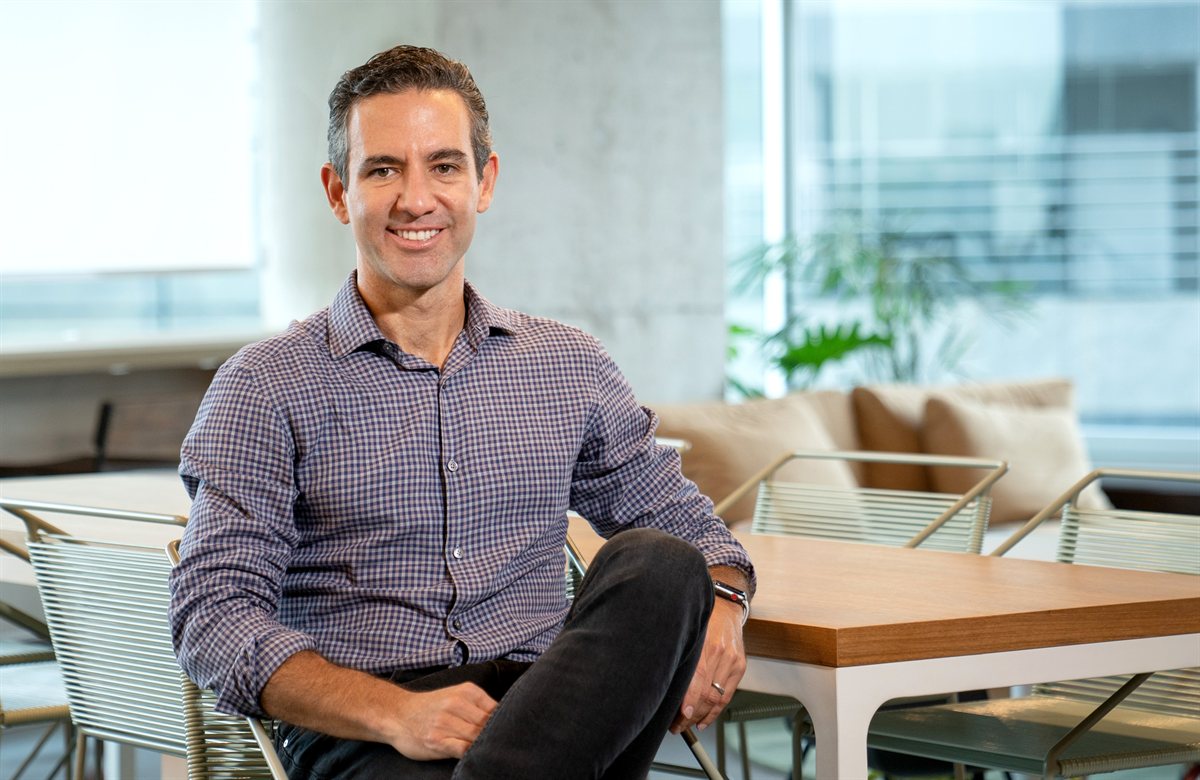
Every founder profile on HustleMemo asks the same two questions: how did they actually do it, and why did it work? David Vélez offers an unusually clean answer, because the thing he attacked was so visibly broken that the only mystery is why no one had attacked it sooner. Brazil's banking system was an oligopoly: five giant banks controlled the overwhelming majority of it, charged some of the highest fees and interest rates in the world, made some of the fattest profits in global banking, and delivered service so hostile that opening a simple account could take months and a walk past armed guards and bulletproof glass. Vélez, a Colombian-born venture capitalist who could not open his own bank account in São Paulo without enduring exactly that ordeal, decided the contradiction was a company. That company, Nubank, is now one of the largest digital banks on earth, serving more than a hundred million people across Latin America. The real lesson is about reading a market's anger as a roadmap.
The outsider's advantage
Vélez was born in 1981 in Medellín, Colombia, during the most violent years of that country's history. His family had an entrepreneurial bent, and amid the cartel-era danger they spent part of his childhood in Costa Rica before he made his way, eventually, to one of the great launchpads of modern technology: Stanford. He earned an undergraduate degree in management science and engineering and, later, an MBA from the Graduate School of Business. In between and around it he built the résumé of a textbook financier — Morgan Stanley, Goldman Sachs, the growth-equity firm General Atlantic — before landing as a partner at Sequoia Capital, one of the most storied venture funds in the world.
It was Sequoia that sent him to Brazil. Around 2011 the firm wanted to build a Latin American investing practice, and Vélez was dispatched to find the region's best startups to fund. The mission failed on its own terms: Sequoia ultimately shelved the plan, in part because the local technical talent it wanted to back was too thin at the time. But the failure was the setup for everything that followed. Vélez had spent months immersed in the Brazilian market looking for a great company to invest in and had not found one worth Sequoia's money. Then he ran headlong into a problem so enormous that the company he could not find, he would have to build himself.
His outsider status was the asset. A Brazilian banker would have accepted the system as simply the way things were; the dysfunction was invisible through familiarity. Vélez, arriving fresh, experienced it as an outrage — and an outrage that millions of people shared was, to a trained venture capitalist, an enormous and obvious market.
The bulletproof-glass story
The founding anecdote, which Vélez has told many times, is worth recounting in his own framing — as his account, not an audited record. Trying to open a personal bank account in São Paulo, he encountered a branch with bulletproof doors and armed guards, was asked to lock his backpack away, waited the better part of an hour, drowned in paperwork, and had to return again and again — by his telling, something like ten visits over four or five months — only to be offered an account that charged around thirty dollars a month and credit at interest rates north of four hundred percent a year. Sit with that combination: appalling service, punishing fees, and usurious rates, all delivered by an institution making world-class profits.
The contradiction was the thesis. Five banks controlled roughly ninety percent of the market, by Vélez's characterisation; they competed so little that they had no incentive to improve service or cut prices, and they extracted some of the highest banking margins anywhere on the planet. In a normal market, fat margins and terrible service invite competitors. In Brazil's protected, concentrated system, they had not — the barriers to starting a bank, the regulatory thicket, the assumed need for branches, had kept challengers out. Vélez's insight was that technology had quietly dissolved those barriers. You no longer needed branches. And without branches, the entire cost structure that justified the fees collapsed.
Building Nubank
In 2013, at thirty-one, Vélez founded Nubank in São Paulo. Crucially, he did not build it alone, and the choice of co-founders is part of why it worked. He recruited Cristina Junqueira, a Brazilian with deep credit-card and banking experience from Itaú — exactly the local market and regulatory knowledge the outsider lacked — and Edward Wible, an American engineer who would build the technology. The trio paired an outsider's clarity about the problem with an insider's knowledge of the system and the engineering to route around it.
The wedge product, launched in 2014, was deliberately narrow: a purple Mastercard credit card with no annual fee, managed entirely through a smartphone app. No branches. No paperwork theatre. No fees on the things customers most resented paying for. It attacked the single most hated point of contact between Brazilians and their banks, and it did so with a product that felt, by comparison, like science fiction: you applied on your phone, you managed everything on your phone, and a human being treated you like a customer rather than a supplicant.
The no-branch model was not a cost-saving detail; it was the entire strategic foundation. A bank without a physical branch network has a structurally lower cost to serve each customer than an incumbent paying for thousands of branches and the staff inside them. That lower cost is what let Nubank offer no-fee products and still build a business — and it is a cost advantage the incumbents could not easily match without cannibalising the branch networks their own models depended on. Vélez had found the rare position an attacker dreams of: a way to serve customers better and more cheaply at the same time, against opponents who could not copy him without dismantling themselves.
The growth, and the reasons behind it
What followed was one of the fastest expansions in financial-services history. Nubank grew from the purple credit card into a full digital bank — accounts, debit, lending, investments, insurance — and it grew by word of mouth, because the product was so much better than the alternative that customers recruited each other. By 2019 it had passed twelve million customers. It expanded into Mexico and then Colombia, Vélez's home country. By 2024 it had crossed a hundred million customers, a scale that puts it among the largest digital banking franchises in the world.
Two forces drove this. The first is the one already named: a genuinely better, cheaper product in a market starved of both. The second is the narrative of financial inclusion. Across Latin America, vast numbers of people were unbanked or barely banked — excluded by the incumbents' fees, paperwork, and indifference. Nubank's low-cost, phone-first model could reach them profitably where branch-based banks could not be bothered to. This is, fairly noted, also a marketing frame the company leans on; but it rests on a real foundation, and bringing tens of millions of previously excluded people into the formal financial system is a substantive achievement whatever the marketing gloss.
The capital followed the growth. Backers came to include Sequoia — Vélez's old firm, which got to fund the company he could not find for them, an irony that became one of venture capital's great paydays — along with Tencent, DST Global, Tiger Global, and others. The seal came in 2021, when Berkshire Hathaway invested five hundred million dollars ahead of the IPO. Warren Buffett's vehicle is famously allergic to unprofitable technology bets; its presence was a signal that Nubank was a real bank, not a story.
The IPO and the contested years
In December 2021, Nubank listed on the New York Stock Exchange at an implied valuation around forty-one billion dollars, making Vélez, on paper, the richest person from Colombia. It was a triumphant moment that immediately collided with a hard question that had trailed the company for years: was it actually a good business, or just a fast-growing one?
The skepticism was earned. Nubank lost money in 2020 and again in 2021 — real losses, hundreds of millions of dollars, as it spent to acquire customers and build its lending book. Critics argued it was a classic growth-at-all-costs story that had never proven it could turn scale into profit. That critique deserves to be recorded because, for a time, it was legitimate.
It also deserves to be marked resolved, because the numbers since have answered it. Nubank turned profitable, posted its first full-year profit in 2023, and reported around two billion dollars of net income in 2024 on revenue above eleven billion. The growth-at-all-costs story became a profitable-at-scale story. The early skeptics were not wrong about the risk; they were wrong about the outcome, and the honest thing is to say both.
The criticisms, kept honest: PROVEN vs ALLEGED
A neutral profile separates documented concerns from interested attacks. In Nubank's case the distinction is sharp.
Documented, and a genuine risk — credit quality. As Nubank scaled its lending to tens of millions of customers, many of them previously unbanked and thus harder to underwrite, its book of bad loans grew. Reporting has put its rate of loans more than ninety days overdue meaningfully above the Brazilian banking-sector average in some periods. This is not wrongdoing; it is the normal, structural risk of lending fast to a population the incumbents avoided. But it is real, and it is the single most legitimate question about the durability of the business: whether the loan losses stay manageable as the book matures. A reader should watch that number, not the marketing.
Alleged, and from an interested party — the cost of credit. Brazil's banking federation, FEBRABAN — that is, the lobby of the very incumbents Nubank disrupted — has claimed that Nubank charges very high rates on unsecured personal loans, by one figure around a hundred and eleven percent a year, with higher default rates than the big banks. This claim surfaced amid a fight over taxing fintechs, and it should be read as exactly what it is: a competitor's argument in a policy battle, not a neutral finding. It is fair to note the criticism; it is unfair to launder a lobby's talking point into established fact.
Anecdotal — customer service. As with any bank serving a hundred million people, there are complaints: account access issues, disputed transactions, slow support. These exist and are worth acknowledging, but they are anecdotal and have not been shown to be systematically worse than the incumbents Nubank replaced. Treat them as the background noise of scale, not a scandal.
There is no fraud here, no governance blow-up, no regulatory sanction for wrongdoing on the record. Nubank's open questions are business questions — loan losses, competition, whether the growth can continue — not ethical ones. A profile owes readers that distinction.
The scale, and the pledge
Nubank today serves more than a hundred million customers across Brazil, Mexico, and Colombia, and trades as a public company worth many tens of billions of dollars — a valuation that has at times been reported well north of its IPO mark. Vélez's net worth, concentrated in his Nubank stake, has been measured by Forbes in the range of ten billion dollars, the largest fortune in Colombia, though like any number tied to a volatile stock it moves.
What he has said he will do with it is worth recording, because it is rarer than the fortune. In August 2021, Vélez and his wife, Mariel Reyes, signed the Giving Pledge, committing to give away the majority of their wealth, and they later launched a philanthropy platform focused on education and entrepreneurship in Latin America, funded in part by selling some of his shares. Whether one is moved by such pledges or skeptical of them, it is a more substantive commitment than the genre usually produces, and it points the fortune back at the region that made it.
The inclusion engine, and the regional prize
It is worth dwelling on what Nubank's growth actually did, because the scale is easy to state and hard to feel. Latin America is home to hundreds of millions of people who, a decade ago, had no meaningful relationship with a bank — no card, no credit history, no way to save or borrow except through cash and informal lenders. The incumbents had little interest in them: serving low-balance customers through expensive branches was unprofitable, so they simply did not bother. Nubank's branchless, smartphone-first model inverted that calculus. Because its cost to serve each additional customer was so low, it could profitably bank people the incumbents had written off — extending a first credit card, a first savings account, a first investment product to families who had never had one. Whatever one thinks of the company's marketing, the substance underneath it is significant: pulling tens of millions of people into the formal financial system is the kind of development outcome that governments and development banks spend decades and fortunes chasing, achieved here as a byproduct of a profit-seeking business model that happened to align with inclusion.
That alignment is also the strategic prize, and it explains why Nubank's ambitions stretch far beyond Brazil. The company has pushed into Mexico, a market of similar size and similar banking dysfunction, and into Colombia, Vélez's home country — and the logic is that the same playbook that worked against Brazil's oligopoly should work anywhere incumbents are fat, complacent, and branch-bound, which describes much of the developing world. The risk is equally clear: each new country means a new regulator, a new competitive landscape, and a new loan book to underwrite among customers with thin credit histories, which is precisely where the company's hardest questions live. Nubank is, in effect, trying to become the default bank for a continent, one underbanked market at a time. If it succeeds, the forty-one-billion-dollar IPO will look like an early milestone rather than a destination; if the loan losses or the competition catch up with it in the new markets, the regional story is where that strain will first show. Either way, the bet Vélez is making now is no longer "can we beat five Brazilian banks" but "can we bank Latin America" — a vastly larger prize, and a vastly harder one.
Why it actually worked
Strip it down and the engine is almost embarrassingly clear. Nubank worked because Vélez found a market where the incumbents were simultaneously extracting enormous profits and delivering miserable service, in a system so concentrated that no one had punished them for it — and he arrived with a technology, the branchless smartphone bank, that let him serve those same customers far better and far more cheaply at once. The fat margins gave him room to undercut; the terrible service gave him an opening to win on quality; and the no-branch cost structure gave him an advantage the incumbents could not copy without destroying their own economics. Better and cheaper, against opponents who could not respond — that is the rarest and strongest position in business, and he occupied it for a decade.
But there is a subtler reason, and it is about the outsider's eye. Vélez succeeded partly because he had not grown up inside the system he attacked. A Brazilian banker would have rationalised the dysfunction; Vélez saw it as the obvious, unconscionable opportunity it was. Then — and this is the part outsiders usually botch — he hired the insiders. By pairing his own outside clarity with Cristina Junqueira's deep local and regulatory knowledge, he got both the willingness to see the problem fresh and the competence to navigate a brutally complex banking environment. Many outsiders see the opportunity and crash on the execution. Vélez saw it and then surrounded himself with the people who knew how to build it.
There is a final, underrated ingredient: capital, and the credibility to raise it. Vélez was not a scrappy unknown pitching a deck; he was a former Sequoia partner who knew the venture world from the inside and could summon the kind of money required to build a bank — a business that, unlike a software startup, needs deep capital to fund its loan book before it earns a cent of profit. That fluency in capital markets, paired with the genuine quality of the opportunity, let Nubank raise enormous sums from the best investors in the world and spend years building scale before profitability. An identical idea, in the hands of a founder without his access, might never have cleared the runway. His insider's knowledge of how venture capital works was not incidental to the story of disrupting banking; it was one of the conditions that made it possible at all.
The honest close
David Vélez did not invent a new technology or discover a new market. He looked at one of the most visibly broken systems in global finance — a banking oligopoly that gouged a hundred million people because it could — and he had the nerve, the capital, and the team to attack it. The "how did he do it" answer is a branchless, phone-first bank whose lower costs let it be both better and cheaper than the incumbents. The "why did it work" answer is that he read the market's anger as a map and then hired the locals who could execute on it.
What his story adds to this site is a reminder that the largest opportunities are often not hidden at all — they are sitting in plain sight, disguised as the things everyone has learned to tolerate. The genius is not always in seeing what no one can see. Sometimes it is in refusing to accept what everyone else has decided to accept, and being willing to build the alternative. The open question for Nubank's next chapter is whether the loan book stays sound and the growth keeps coming as it pushes deeper across Latin America — but the company has already done the hard, rare thing: it made an oligopoly compete.
Editor's note: HustleMemo profiles real founders and operators. This is a critically-neutral, fact-checked profile. Disclosures per the record: the bulletproof-glass / >400%-interest / $30-a-month account details are Vélez's own recollection, presented as his account; early losses (2020-21) were real and the business reached its first full-year profit in 2023 ($2bn net income in 2024); customer figures move (48M at the 2021 IPO, 100M+ by 2024); the FEBRABAN "~110.9% APR" claim is a competitor lobby's argument in a tax dispute, not a neutral finding; credit-quality (NPL) concern is a documented business risk, not wrongdoing. Net worth tied to a volatile stock is approximate. The cover photograph is from Wikimedia Commons (uploader Eduardo.andrade29 / Nubank), licensed CC BY-SA 4.0. Corrections: editorial@hustlememo.com.
Sources
- Biography, Stanford (BS '05, MBA '12), career (Morgan Stanley, Goldman, General Atlantic, Sequoia), and the shelved Brazil practice: Wikipedia (David Vélez); Stanford GSB alumni profile; Sequoia "Crucible Moments: Nubank".
- The founding insight (bulletproof glass, >400% interest, ~$30/month, ~10 visits) — Vélez's own account: Sequoia "Crucible Moments"; Endeavor; Ranjay Gulati (HBS).
- Founding (2013) with Cristina Junqueira and Edward Wible; the no-fee purple card (2014); expansion to Mexico and Colombia; growth (12M by 2019, 100M+ by 2024): Wikipedia (Nubank); company materials.
- IPO (Dec 2021, ~$41bn), backers (Sequoia, Tencent, DST, Tiger; Berkshire Hathaway $500M); profitability (losses 2020-21, first full-year profit 2023, ~$2bn net income 2024): CNBC; Bloomberg; Crunchbase; Finextra; Crowdfund Insider; Statista.
- PROVEN vs ALLEGED — NPL/credit-quality concern (documented risk): Kapronasia. The FEBRABAN "~110.9% APR" claim (competitor lobby, amid a tax fight): Rio Times. Customer-service complaints are anecdotal.
- Net worth (Forbes, richest Colombian) and the Giving Pledge (Aug 2021) + VelezReyes+ philanthropy: Wikipedia citing Forbes; Bloomberg Línea; Philanthropy News Digest.
More from this category
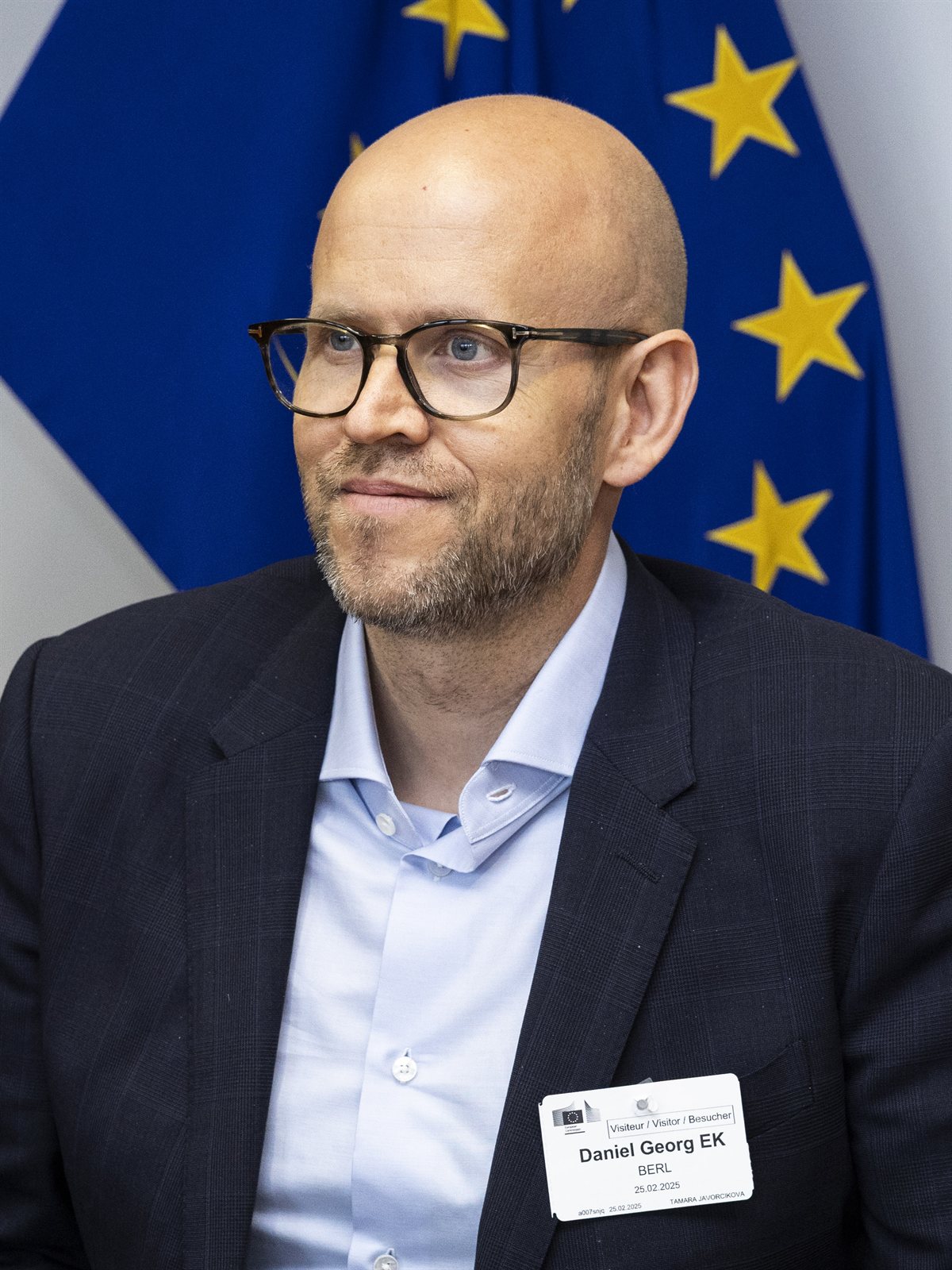
Daniel Ek: The Swede Who Beat Piracy by Building Something Better
A critically-neutral profile of Spotify’s Daniel Ek: how he beat music piracy not with lawsuits but with a freemium product better than free, endured two years of label negotiations and sixteen more before profit, and built a 675M-user streaming giant — alongside the artist-payment, Rogan and defence-tech controversies.

Whitney Wolfe Herd: The Founder Who Turned Being Pushed Out Into Bumble
A critically-neutral profile of Bumble’s Whitney Wolfe Herd: how she converted her ordeal at Tinder into the "women make the first move" thesis, took Bumble public at 31, and now fights to sustain it through a ~94% stock decline — the founding triumph and the hard aftermath, held honestly together.
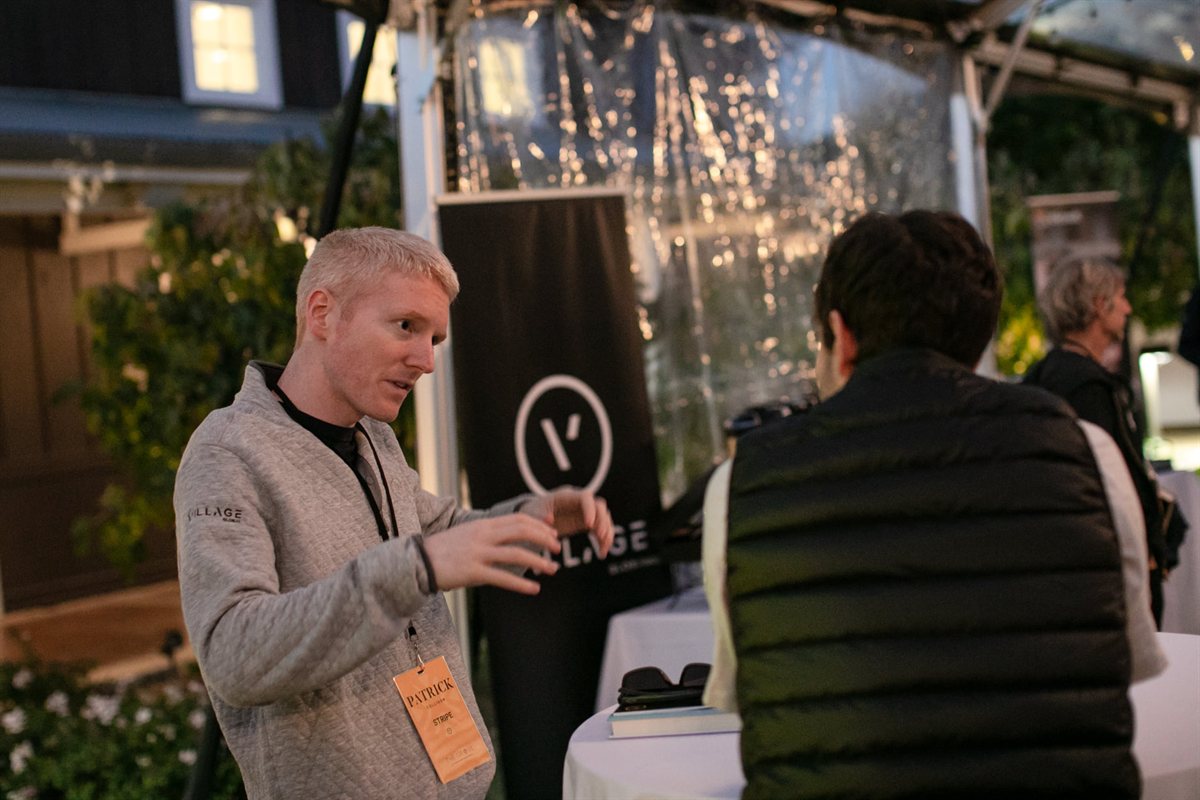
Patrick Collison: The Irish Teenager Who Built the Internet’s Payment Rails
A critically-neutral profile of Stripe’s Patrick Collison: the teenage prodigy who sold his first startup at 19, reduced online payments to a few lines of developer code, and built the financial infrastructure of the internet — through a bubble, a markdown, and a full recovery past its old peak to ~$159B.