
Two days after Americans voted on 3 November 2026, the broad result of the 2026 US midterm elections is clear even though the count is not finished. Democrats have won control of both the House of Representatives and the Senate, ending the period of unified Republican government that began when President Donald Trump returned to the White House in January 2025. From 3 January 2027, Washington will have a Republican president and a Democratic Congress.
For businesses, the question is not who won but what changes. The honest answer is: less than the headlines suggest in some areas, and more than people expect in others. Most of the president's economic agenda, from tariffs to deregulation, has run through executive power, and a new Congress cannot easily take that power back while the president holds a veto. But Congress controls money, investigations and deadlines, and those levers will shape the business environment in 2027 and 2028.
Midterm election results 2026 at a glance
- Senate: Democrats, counting independents who caucus with them, have at least 54 of 100 seats, up from 47, after gaining seven Republican-held seats. Alaska and Mississippi were not called.
- House: Democrats flipped at least 24 Republican-held districts and Republicans flipped none. Nine races were uncalled; CBS News estimated a final Democratic range of 251 to 268 seats.
- Governors: Democrats flipped five governorships and now hold a majority of them for the first time since 2010.
- For business: the president keeps the veto and most tariff powers, while Congress controls spending bills, the debt limit and investigations.
2026 midterm election results: what happened on 3 November
These are the results as reported up to late on Wednesday 4 November (US Eastern time). Some races are still being counted.
The Senate. The Associated Press called the Senate for Democrats shortly before midnight Eastern time on election night. By Wednesday evening, CBS News and CNBC reported that Democrats, counting the independents who caucus with them, had at least 54 of the 100 seats, up from 47. They gained seven Republican-held seats: Iowa, Kansas, Maine, North Carolina, Ohio, South Carolina and Texas. Two races were not called:
- Mississippi: Democrat Scott Colom led Republican Senator Cindy Hyde-Smith by 1,138 votes with about 96% of the expected vote counted, according to AP figures reported on Wednesday evening. Both campaigns say thousands of ballots are outstanding.
- Alaska: Democrat Mary Peltola led Republican Senator Dan Sullivan by 626 votes early on Wednesday, according to the AP. The lead changed hands more than once overnight.
Either way, Democrats will hold 54 to 56 seats: control of the chamber, but short of the 60 votes needed to overcome a filibuster.
The House. AP called the House for Democrats at about 1:25 a.m. Eastern time on 4 November, according to TIME. By late Wednesday, CNBC reported that Democrats had flipped at least 24 Republican-held districts, Republicans had flipped none, and nine races were uncalled. The final size of the majority is not known; CBS News estimated Democrats would finish with between 251 and 268 of the 435 seats. House Democratic leader Hakeem Jeffries is expected to become Speaker.
Governors and states. Democrats won five governorships previously held by Republicans: Texas, where Gina Hinojosa defeated Governor Greg Abbott; Georgia; Iowa; Ohio; and Nevada. Two governor races were uncalled. According to CNBC, Democrats now hold a majority of governorships for the first time since 2010.
Turnout. No national turnout figure has been published yet. Nearly 60 million people voted early, according to the University of Florida Election Lab, close to half of the roughly 122 million who voted in the 2022 midterms. Minnesota's preliminary estimate of about 66.5% of eligible voters is a state midterm record.
The economy voters were judging
Midterm elections usually go against the president's party. This one took place against a particularly difficult economic background.
- Energy prices. The war with Iran, which began on 28 February 2026, disrupted shipping through the Strait of Hormuz and pushed up oil prices. AAA put the national average price of gasoline at $4.15 a gallon on Election Day, the highest ever recorded on an election day, and up about 46% since the start of the year.
- Inflation. Consumer prices rose 3.7% in the 12 months to September, according to the Bureau of Labor Statistics. Core inflation, which excludes food and energy, was 2.6%.
- Interest rates. The Federal Reserve, now chaired by Kevin Warsh, raised rates in September for the first time since July 2023 and held its target range at 3.75% to 4% on 28 October. Two policymakers voted for another increase. Ten-year Treasury yields were above 4.9% going into the election.
- Government shutdowns. The federal government went through a record 43-day shutdown in October and November 2025, followed by further funding lapses in 2026, including a long standoff over funding for the Department of Homeland Security.
Democrats campaigned on living costs, health care, the war and tariffs. Republicans emphasised the 2025 tax cuts, immigration and crime.
Midterms impact on business: what divided government changes on 3 January, and what it doesn't
The new Congress is sworn in on 3 January 2027. Until then, the Republican-led Congress remains in charge for a "lame-duck" session. From January, the rules of divided government apply:
- Legislation needs both sides. The president can veto bills, and overriding a veto needs two-thirds of both chambers, which Democrats do not have.
- The filibuster still matters. Even with 54 to 56 Senate seats, most bills need 60 votes to advance.
- Congress controls the money. Every spending bill, and any increase in the debt limit, must pass Congress. This is where Democrats gain the most leverage.
- Congress controls investigations and confirmations. Committee chairs can subpoena documents and witnesses, and the Senate can slow or block nominees, including Federal Reserve governors.
In practice, analysts expect gridlock on most major legislation. "Markets like gridlock — they don't like a party with too much power," Andrew Slimmon of Morgan Stanley Investment Management told CNBC. Others are less sure the change matters much. Jesper Koll of Monex Group told Reuters he expects the president to keep governing through an "imperial presidency that operates by executive orders," limiting the effect of the new Congress on actual policy.
Tariffs and trade: Congress wants a say, but the president still sets the rates
In 2025, the president imposed sweeping "reciprocal" tariffs using the International Emergency Economic Powers Act (IEEPA). On 20 February 2026, the Supreme Court ruled 6–3 in Learning Resources v. Trump that IEEPA does not authorise tariffs. The administration responded with a 10% global surcharge under Section 122 of the Trade Act of 1974, which is limited to 150 days and ran from 24 February to 24 July 2026, and then with new tariffs under Section 301, which are being challenged at the Court of International Trade. Section 232 tariffs, such as those on steel and aluminium, were not affected. Importers have been claiming refunds of IEEPA duties through US Customs and Border Protection, but only the importer of record can claim them, and parts of the process are still being litigated.
Democrats say they will act. CNBC reported that House Democrats plan an early bill to reverse the president's tariffs and restore Congress's role in setting import taxes, and CBC reported that senior Democrats hope to remove tariffs on Canada within the first 100 days. The president has said he would veto such measures.
The limit is structural. As the Council on Foreign Relations noted, the tariffs rest on authorities Congress has already delegated to the president. "Like foreign policy, trade is another power the president can wield unilaterally without Congress," James Smith, an economist at ING, told Euronews. What Congress can do is raise the political cost through hearings, conditions in spending bills and pressure for transparency on refunds. For importers, tariff policy will remain uncertain and largely in the hands of the White House and the courts.
Taxes: the 2025 law is largely locked in
The One Big Beautiful Bill Act, signed on 4 July 2025, is the main tax framework for American businesses. It made permanent the individual tax rates from the 2017 tax law, restored full expensing for equipment and domestic research costs, made the 20% deduction for pass-through business income permanent, cut Medicaid spending, phased out many clean-energy tax credits created in 2022, and raised the federal debt limit by $5 trillion.
Because most of these provisions are now permanent, they do not expire in a way that would force a new negotiation, and the president would veto any attempt to raise taxes. The 2025 framework is very likely to remain in place at least until after the 2028 presidential election.
What may change is the debate. Senator Ron Wyden, expected to chair the Senate Finance Committee, said it will focus on "making billionaires pay their fair share," on the health care industry and on trade authority. That points to hearings and proposals rather than new law. A smaller year-end tax package is possible in the lame-duck session, according to the law firm Holland & Knight.
Voters in several states also changed state tax rules, which can matter as much to a local business as federal policy:
- Colorado voters narrowly favoured Amendment 87, which would replace the flat 4.4% income tax with a graduated system with a top rate of 8.4%. The measure was not yet called on 4 November, according to the Tax Foundation.
- California voters appear to have rejected a proposed wealth tax on billionaires.
- Florida approved a $250,000 homestead exemption from non-school property taxes.
- Iowa now requires a two-thirds legislative majority to raise income taxes, and North Carolina capped its income tax rate at 3.5%.
Health care, energy and technology regulation
Health care. The enhanced subsidies for Affordable Care Act insurance expired under the current Congress, raising premiums for many self-employed people and small employers who buy coverage on the exchanges. CNBC reported that House Democrats plan early votes to restore those subsidies and to reverse the Medicaid cuts in the 2025 law. Passing the House will be easy; becoming law will not, because of the filibuster and the veto. Tai Hui of J.P. Morgan Asset Management told Reuters he expects reversing the 2025 health care cuts to be difficult. Senator Wyden named insurers and pharmaceutical executives among his committee's targets.
Energy. Clean-energy stocks rallied: Ørsted rose 7.3% and Vestas 5.2%, according to Euronews, and US solar stocks gained, according to CNBC. But repealing the 2025 law's cuts to clean-energy credits would need the president's signature. The bigger near-term change may come from the states. Democrats won the governorships of Texas and Georgia, which, according to Tapas Strickland of Moomoo, account for about a third of US spending on AI data centres, and Texas governor-elect Gina Hinojosa has called for a moratorium on data centres in the state, CNBC reported.
AI and big tech. "A Democratic sweep of Congress would put pressure on tech," Jake Dollarhide of Longbow Asset Management told Reuters, citing possible regulatory pressure on AI. On 4 November, Nvidia fell about 3% while Apple, Amazon and Microsoft rose. A comprehensive federal AI law was already unlikely and is now less so, leaving the field to executive orders, state laws and hearings.
Crypto. The 2025 stablecoin law remains in force, but broader legislation on crypto market structure is now less likely to pass soon. "All of these factors leave the crypto market facing strong headwinds," Tim Sun of HashKey told Reuters.
Antitrust and finance. Enforcement sits with agencies controlled by the administration, so day-to-day policy will not change much. Oversight will: Senator Wyden has also named banks among the industries he intends to examine.
Deadlines: shutdowns, the debt limit and investigations
The most concrete business risks over the next year come from deadlines, not new laws.
- 11 December 2026. Current government funding expires, along with the National Flood Insurance Program and surface-transportation programmes. Holland & Knight notes that the House has passed only three of the 12 annual spending bills and the Senate none, so another short-term extension into 2027 is widely expected. A shutdown cannot be ruled out.
- 31 December 2026. Several health care payments expire, including a temporary increase in Medicare physician payments.
- 2027: the debt limit. The 2025 law raised the limit to $41.1 trillion. There is no official estimate of when it will be reached, but analysts including Tai Hui expect a deadline in 2027, negotiated between a Republican president and a Democratic Congress. Past fights, notably in 2011 and 2023, unsettled markets for a time.
- 2027: spending bills. Every funding bill will need agreement between the president and a Democratic House, raising the risk of shutdowns that delay federal contracts, permits, payments and loan approvals.
Oversight is the other big change. Representative Robert Garcia, the top Democrat on the House Oversight Committee, has said he plans to examine corporate corruption and the president's family business interests, among other issues. Democrats have also proposed an ethics package that could include a ban on stock trading by members of Congress and senior officials. Companies with large government contracts or close ties to the administration should expect more requests for documents and testimony. Republicans argue that such investigations are politically motivated and distract from policies that support growth.
Stock market after the midterms: how markets reacted, and what history does and doesn't tell us
Markets rose after the result. On Wednesday 4 November, the S&P 500 gained 1.58% to close at 7,688.62, and the Dow Jones Industrial Average rose 3.03% to 53,356.12, its best day since April 2025, according to CNBC. The Nasdaq rose 1.44%. Oil prices fell more than 8% after Vice President JD Vance linked Republican losses to the Iran war, and traders bet on greater pressure to end the conflict. Gold rose to about $4,035 an ounce, according to Euronews.
The rally reflected lower oil prices, the end of election uncertainty and, for some analysts, a welcome for gridlock.
History offers some context, but it should be read as history, not as a forecast:
- The post-midterm pattern. According to studies summarised by U.S. Bank and others, the S&P 500 has been higher 12 months after each of the 19 midterm elections since 1950. Average gains range from about 12% to 17% depending on the start date and method.
- The longer record. A Motley Fool analysis going back to 1874 found the market rose in the year after a midterm about 84% of the time, not every time.
- Bonds. Luca Bindelli of Lombard Odier told Euronews that 10-year Treasury yields have historically fallen by about 20 to 25 basis points in the three months after midterm elections.
These patterns come from a small number of elections in very different economies. In 2026, energy prices, the Iran war, inflation, the Fed and AI investment probably matter more. Tai Hui told Reuters he sees AI, rather than politics, as the main driver of recent market moves.
What it means for small businesses
- Tax rules are stable. The 2025 law's provisions, including the permanent 20% deduction for pass-through income and full expensing of equipment, are very unlikely to be reversed before 2029.
- Health insurance costs remain a problem. Restoring the expired ACA subsidies is a Democratic priority, but passage is uncertain. Self-employed owners and small employers should not assume relief in 2027.
- Tariffs are still set by the White House. Importers should track IEEPA refund claims and the litigation over replacement tariffs.
- Shutdowns are a practical risk. Some Small Business Administration loan processing, permits and federal contract payments can stall during a shutdown. Firms that depend on them should build in a buffer around 11 December and later deadlines.
- Interest rates follow the Fed, not Congress. The election matters only indirectly, for example through oil prices.
- State rules matter more than usual. New governors and legislatures in states such as Texas, Georgia, Ohio and Arizona may change state-level rules on energy, data centres, labour and taxes. On wages, Oklahoma voters rejected a $15 minimum-wage proposal (State Question 832) by about 55% to 45% in a June vote.
What it means for businesses outside the United States
Trade. Because the president controls most tariff tools, exporters to the US should not expect an immediate reduction in tariffs; ING did not rule out new tariffs aimed at Europe. A Democratic Congress offers trading partners a second channel for lobbying and more scrutiny of tariff decisions.
India. Indian exporters had already seen some relief: on 6 February 2026, the president signed an order removing an additional 25% duty on Indian goods that had been linked to India's purchases of Russian oil, according to KPMG. But a full trade agreement has not been concluded. Indian officials described the result as easing some trade pressure while adding a new layer of uncertainty, according to Business Standard.
H-1B visas and IT services. Indian IT companies such as Tata Consultancy Services and Infosys rely heavily on H-1B visas for skilled workers. The administration's restrictions, including a $100,000 fee on new H-1B petitions announced in September 2025, were set by executive action. A Democratic Congress may hold hearings, but changing them would need the administration's agreement or a law the president signs, so businesses should plan on current rules staying in place.
Europe and defence. European defence companies fell, with BAE Systems down 5.2%, Rheinmetall 3.2% and Thales 4.5%, as investors weighed slower growth in US military spending, according to Euronews. The dollar weakened slightly, though ING's Francesco Pesole said it still responds mainly to the Federal Reserve.
A sector-by-sector watch list
| Sector | What could change | What probably won't |
|---|---|---|
| Importers and retailers | More hearings on tariff costs; pressure for refund transparency | The president's control over tariff rates |
| Health care and insurance | Votes to restore ACA subsidies; scrutiny of insurers and drug makers | The 2025 Medicaid cuts, without a deal with the White House |
| Clean energy | Friendlier rhetoric; possible state-level support | The 2025 law's phase-out of federal credits |
| AI and data centres | State limits (e.g. Texas); more congressional scrutiny | A comprehensive federal AI law |
| Crypto | Slower progress on market-structure rules | The 2025 stablecoin law |
| Defence contractors | Tougher budget negotiations; war-powers votes | Large programmes already funded |
| Government contractors | Shutdown risk in December 2026 and in 2027 | Agencies' existing contract authority |
| Banks and financial firms | Committee investigations | Rules set by the administration's regulators |
Conclusion
The bottom line
The 2026 midterms produced a clear shift in power, though two Senate races and several House races were still being counted at the time of writing. For business, the likely result is not a sudden change in policy but a different kind of uncertainty. The 2025 tax law is likely to stay. Tariffs remain in the hands of the president and the courts. What changes is that Congress can now block, investigate and negotiate, which makes the next two years less about new laws and more about deadlines: government funding in December, the debt limit in 2027 and every spending bill in between.
Businesses that plan for those deadlines, track tariff litigation and pay attention to new state governments will be better prepared than those waiting for Washington to settle on a single direction. Before 2029, it probably won't. For more on markets and money, see our finance coverage.
Frequently asked questions about the 2026 midterms and business
Who won the 2026 midterm elections? The Associated Press called both the Senate and the House for Democrats. Democrats have at least 54 Senate seats, with Alaska and Mississippi uncalled, and flipped at least 24 House districts, with nine races still uncalled as of late 4 November.
What do the midterm results mean for business? Less than the headlines suggest on tax and tariffs, and more on deadlines. The 2025 tax law is very likely to stay and the president still sets most tariffs, but Congress now controls spending bills, the debt limit and investigations.
How did the stock market react to the midterms? On 4 November the S&P 500 rose 1.58% to 7,688.62 and the Dow rose 3.03% to 53,356.12, while oil fell more than 8%. The S&P 500 has been higher 12 months after each of the 19 midterms since 1950, which is history, not a forecast.
Will Congress change the tariffs? House Democrats plan an early bill to reverse the president's tariffs, but he has said he would veto it. Because the tariffs rest on authorities Congress already delegated, the White House and the courts are likely to keep deciding tariff policy.
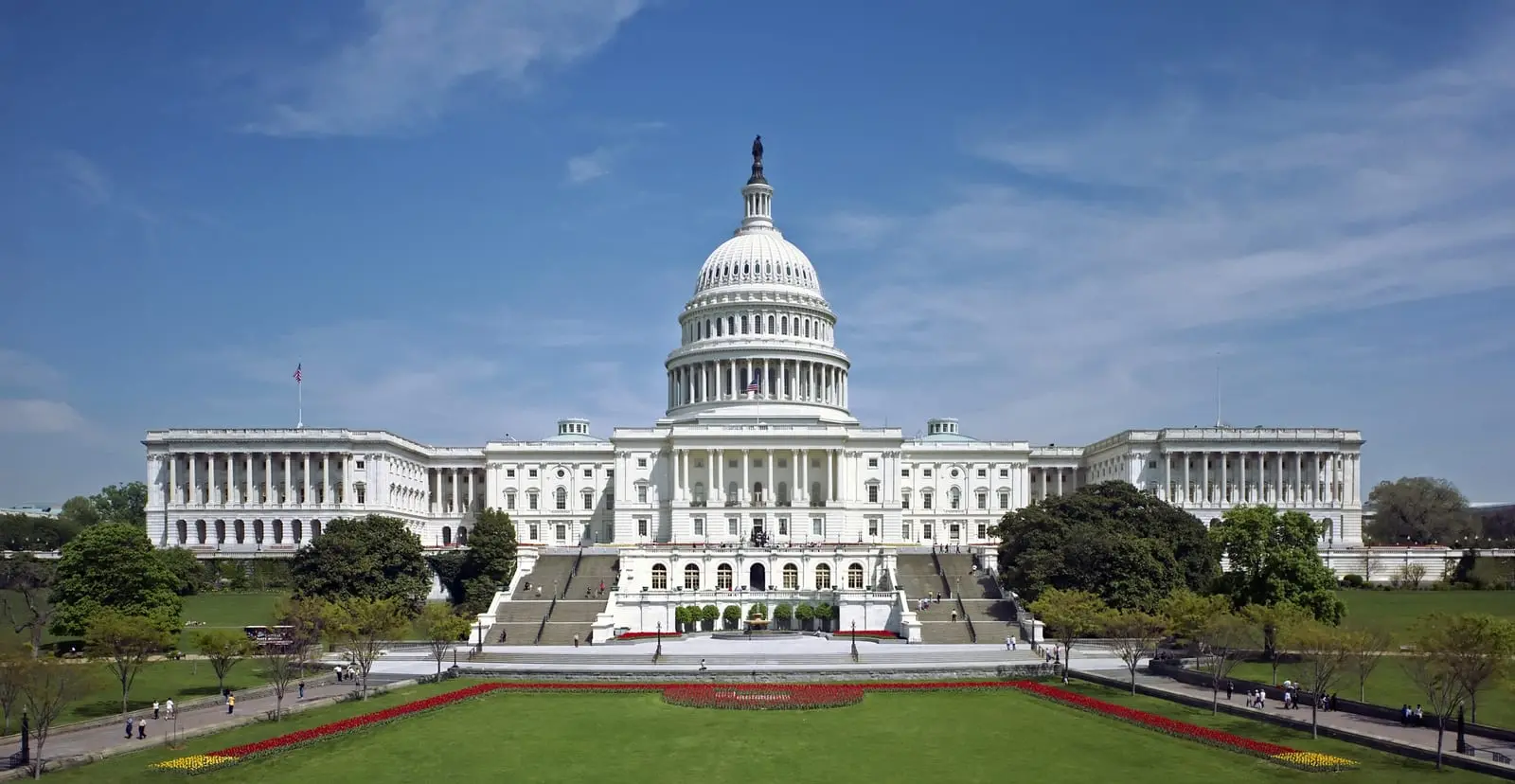
Editor's note: Results are as reported by the Associated Press, CBS News, CNBC and TIME up to late Wednesday 4 November 2026 (US Eastern time), checked on 5 November 2026. The Alaska and Mississippi Senate races, nine House races, two governor races and some ballot measures (including Colorado's Amendment 87) were uncalled at the time of writing, and figures may change as counting finishes. Analysts' views are their own; historical market data describe the past, not the future. This is not investment, tax, legal or political advice. Cover photo: Architect of the Capitol, public domain, via Wikimedia Commons. Corrections: editorial@hustlememo.com.
Sources
Sources
- Democrats flip dozens of GOP seats; Republicans fail to flip a single seat — CNBC, 4 Nov 2026
- Election Day 2026 midterms live updates — CBS News
- Midterm elections 2026: key races, live results — TIME
- U.S. House elections 2026 live results — NBC News
- Mississippi Senate race too close to call — The Hill
- Alaska US Senate race too close to call — Boston 25 News
- Minnesota sets new state record for midterm participation — KARE 11
- How tax policy fared on the 2026 ballot — Tax Foundation
- Democrats map out an agenda on affordability and oversight — CNBC, 4 Nov 2026
- Market analysts react to Democratic sweep in US midterms — Reuters via Yahoo Finance
- Stock market news for 4 Nov 2026 — CNBC
- US midterms: what it means for Europe and global markets — Euronews
- Democrats win control of Congress: how that could affect US foreign policy — Council on Foreign Relations
- Senior Democratic congressman says party "going to put an end" to Trump's tariffs — CBC News
- Supreme Court strikes down IEEPA tariffs; Section 122 global surcharge — Troutman Pepper Locke
- IEEPA refunds and Section 122 — Snell & Wilmer
- Beyond the midterms: Congress faces converging year-end deadlines — Holland & Knight
- 2026 Oklahoma State Question 832 — Wikipedia
- Consumer Price Index, September 2026 — US Bureau of Labor Statistics
- Fed holds rates steady ahead of election — Fox Business, 28 Oct 2026
- Stock market performance after midterm elections — U.S. Bank
- Best markets in the 12 months after a midterm election since 1874 — The Motley Fool
- United States removes tariffs on imports from India — KPMG
- India sees some trade relief, new risks after US midterm elections — Business Standard
- Cover image: United States Capitol west front — Wikimedia Commons