
Hustler profile

Paras Chopra

Founder of Wingify (VWO) — bootstrapped a profitable global SaaS from Delhi without venture capital, sold it for ~$200M while still owning ~71%, and now runs the unfunded AI research lab Lossfunk.

Paras Chopra is a self-taught programmer (and biotechnology graduate of DTU) who founded Wingify in 2009 and launched VWO (Visual Website Optimizer) in 2010 — an early visual A/B-testing / conversion-optimization tool. He built it bootstrapped and profitable to ~$50M revenue and 6,000+ clients across 90 countries, with no venture capital, before a 2025 private-equity sale to Everstone Capital (~$200M) in which he held ~71%. A prolific writer (Inverted Passion) and podcaster ("Bold Conjectures"), he stepped down as CEO years earlier and now runs Lossfunk, an unfunded AI research lab in Bengaluru.

  • Founder, Wingify (VWO)
  • India
  • SaaS, conversion optimization
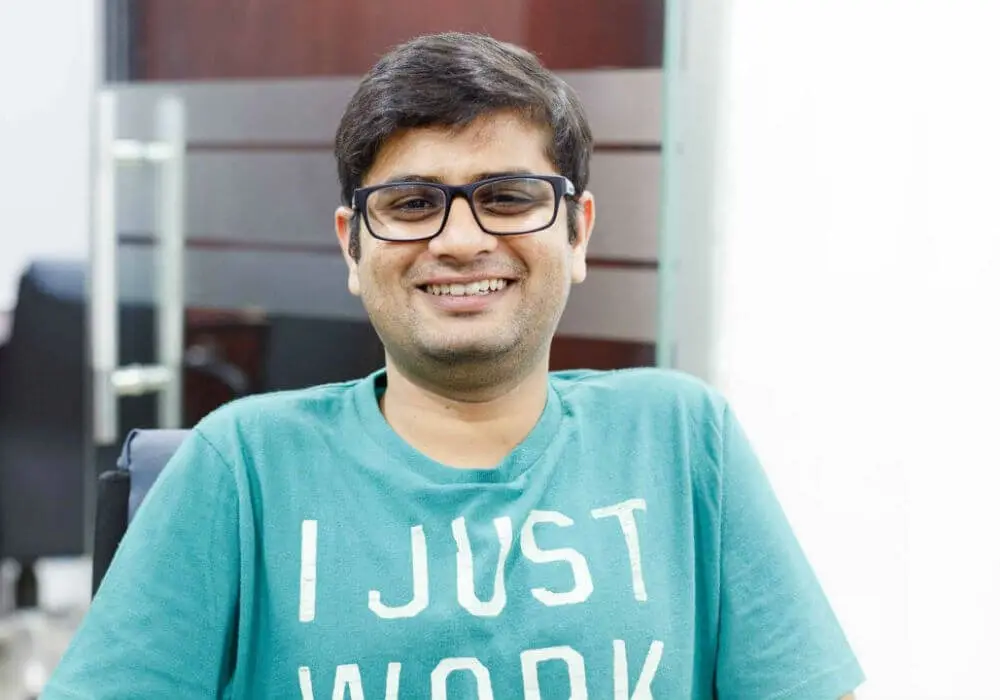
Portrait of Paras Chopra, founder of Wingify/VWO.

At a glance

Wingify (VWO) founded
2009
Founder
Wingify (VWO)
Industry
SaaS, conversion optimization

The journey

Key milestones in Paras Chopra’s life and business journey.

  1. 2009

    Founds Wingify

  2. 2010

    Launches VWO (Visual Website Optimizer)

  3. Steps down as CEO

  4. c. 2024

    Founds Lossfunk

    An unfunded AI research lab in Bengaluru.

  5. 2025

    Sale to Everstone Capital (~$200M)

    He held ~71%.

The business story

Paras Chopra is a self-taught programmer (and biotechnology graduate of DTU) who founded Wingify in 2009 and launched VWO (Visual Website Optimizer) in 2010 — an early visual A/B-testing / conversion-optimization tool. He built it bootstrapped and profitable to ~$50M revenue and 6,000+ clients across 90 countries, with no venture capital, before a 2025 private-equity sale to Everstone Capital (~$200M) in which he held ~71%. A prolific writer (Inverted Passion) and podcaster ("Bold Conjectures"), he stepped down as CEO years earlier and now runs Lossfunk, an unfunded AI research lab in Bengaluru.

Early life and background

Paras Chopra was born in Punjab and taught himself to program after getting access to a computer in eighth grade. He learned Visual Basic and, by ninth standard, was spending his spare hours building neural networks in it, years before machine learning became mainstream. When he chose a degree, he picked biotechnology at Delhi College of Engineering (now DTU), graduating in 2008. He already knew how to code; he wanted a different way of seeing the world.

Before starting his own company he built machine-learning models for employability testing at Aspiring Minds and spent time at a research firm.

Building Wingify and VWO

Chopra founded Wingify in 2009 and launched VWO, the Visual Website Optimizer, in 2010. The product let marketers set up A/B tests through a visual editor instead of asking engineers to code each page variant, which made it one of the early tools in conversion-rate optimisation. Sparsh Gupta co-founded the company and led engineering.

Wingify never took venture capital. Growth came from customer revenue, which forced careful spending and early proof that people would pay. By 2018 it had around $18 million in annual recurring revenue and about 6,000 clients in 90 countries; by the time of its sale it was generating roughly $50 million a year and was highly profitable. Around 2017 to 2018 Chopra handed the CEO role to Gupta and became chairman.

In January 2025 Everstone Capital acquired a majority stake at a valuation of about $200 million. Chopra held roughly 71 percent going in and kept a minority stake and a board seat.
How Paras operates

  • His choices are consistent with someone who treats a company as a means rather than an identity:

  • Ownership over speed.

    Refusing VC likely limited how large Wingify could become, but it meant no dilution, no board pressure and no dependence on fundraising markets.

  • Testing instead of guessing.

    VWO turned design and marketing decisions into measurable experiments, a product that mirrors its founder's habits of mind.

  • Letting go at the right time.

    He stepped back from the CEO role when he judged the company was better served without him in it day to day, and sold when the terms suited him.

  • Thinking in public.

    His blog, Inverted Passion, covers startups, pricing, cognition and philosophy; he wrote The Book of Clarity and hosts the Bold Conjectures podcast.

  • After the sale he focused on Lossfunk, an unfunded AI research lab and community he started in Bengaluru around 2024.

    It aims to give independent researchers an alternative to academia and corporate labs, and its work has been accepted at major machine-learning conferences. His public record contains no scandals; the fair debates are strategic, such as whether bootstrapping capped Wingify's potential.

Legacy and lessons

Chopra shows what bootstrapping can deliver when it works: a profitable global company built from Delhi, sold with most of the equity still in the founder's hands.

  • Not raising capital trades speed for control, and the trade can pay off at exit.

  • Profitability protects a company from frozen funding markets and forced decisions.

  • Founders who separate their identity from the company can make cleaner calls on succession and sale.

  • Financial freedom can be spent on curiosity rather than on building a bigger empire.

More hustlers

Explore more business builders