Paras Chopra: The Bootstrapped Founder Who Chose Curiosity Over Scale
He built a profitable global SaaS from Delhi without a rupee of venture capital, sold it for ~$200M while still owning ~71% of it, and then walked away from the money to run an unfunded AI research lab — because he was more curious than ambitious.
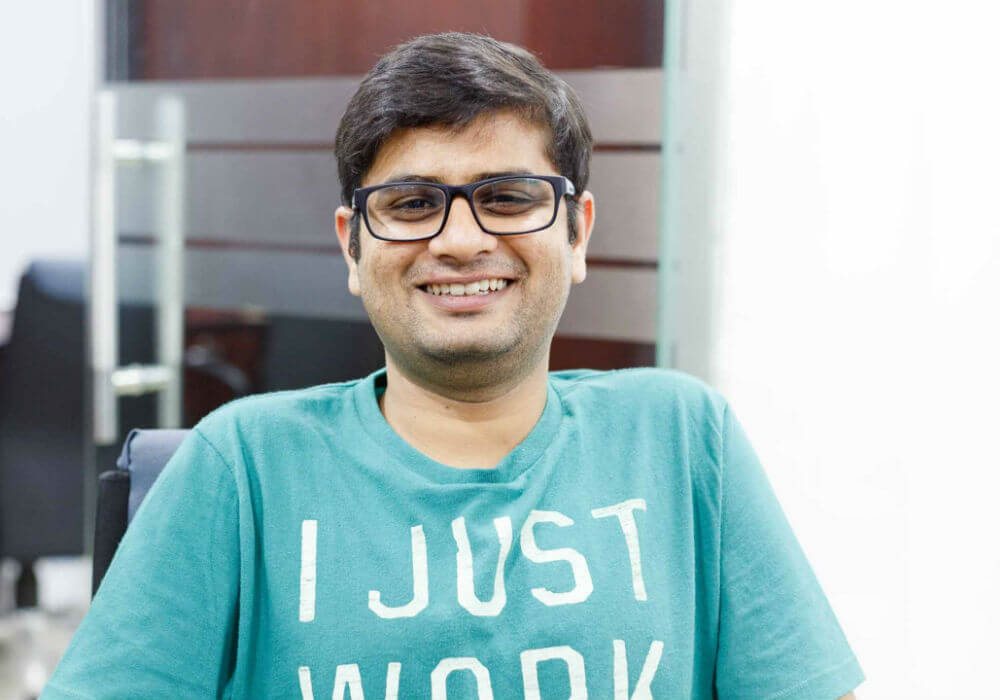
Every founder profile on HustleMemo asks the same two questions: how did they actually do it, and why did it work? Paras Chopra offers a quieter answer than most, and a more subversive one. He built a profitable global software company from Delhi without raising a single round of venture capital, sold it for around two hundred million dollars while still owning the lion's share of it — and then walked away from the money to run an unfunded AI research lab, because he was more curious than ambitious. The real version is a case study in what bootstrapping actually buys you, and in choosing depth over empire.
The exit that proved the point
Begin at the end, because it makes the whole story legible. In January 2025, the private-equity firm Everstone Capital acquired a majority stake in Chopra's company, Wingify, at a valuation of around two hundred million dollars. Going into that deal, Chopra owned roughly seventy-one percent of the business. He kept a minority stake and a board seat.
Sit with that ownership number, because it is the entire argument for bootstrapping in one statistic. A founder who raises multiple rounds of venture capital is typically diluted to a fraction of their company by the time it sells; the investors, by design, take the larger share of the upside. Chopra owned seventy-one percent of Wingify at exit because he never sold a piece of it to a VC. The bootstrapped path is routinely framed as the consolation prize — the road you take when you can't raise. Chopra's exit is the rebuttal: he built something valuable, kept almost all of it, and sold on his own terms when he chose to. The discipline of never raising was not a limitation. It was the thing that made the payday his.
A self-taught programmer who studied biotech on purpose
Chopra was born in Punjab. (His exact birth year is not reliably documented, so this profile won't invent one; he founded his company in his early twenties.) What is well established is that he was a programmer almost from childhood — he got access to a computer in the eighth grade, taught himself Visual Basic, and by the ninth standard was so taken with artificial intelligence that, in his own words, he spent his afternoons and evenings implementing neural networks in Visual Basic, long before machine learning was fashionable.
Then he did something revealing: when it came time for an engineering degree, he chose biotechnology — not computer science — at Delhi College of Engineering (now DTU), graduating in 2008. He could already program; he wanted a different lens on the world. It is a small decision that prefigures the whole arc of his career: a builder who is at least as interested in understanding things as in shipping them, who reaches deliberately for the unfamiliar.
Before founding his company, he worked at Aspiring Minds, building machine-learning models for employability testing, and did a stint at a research firm — early signals of the data-and-curiosity instinct that would define both his business and his life after it.
Wingify and the birth of VWO
In 2009 Chopra started Wingify, and in 2010 it launched the product that made it: VWO, the Visual Website Optimizer. The idea was to make A/B testing — the practice of showing different versions of a web page to different visitors to see which performs better — accessible through a visual editor, so that marketers could run experiments without needing engineers to hand-code each variant. It was one of the early tools in what became the conversion-rate-optimization category, and it found a global audience.
He built it with a co-founder, Sparsh Gupta, who led engineering and would later run the company. And he built it without venture capital — a choice that, as with Zoho's Sridhar Vembu, was deliberate rather than forced. Wingify funded its own growth from its own revenue, which meant it had to be disciplined about spending and honest about whether customers would actually pay. They did. By 2013 the company was doing several million dollars in revenue; by 2018 it had reached roughly eighteen million in annual recurring revenue across some six thousand paying clients in ninety countries. By the time of its sale, it was generating around fifty million dollars a year and was, by all accounts, highly profitable.
That profitability is the unglamorous heart of the story. While venture-funded peers in adjacent categories raised and burned enormous sums chasing growth, Wingify quietly compounded — selling real software to real businesses around the world, from an office in Delhi, at a profit, every year.
The unglamorous craft of conversion
It is worth pausing on what VWO actually did, because the product choice reveals the founder. Conversion-rate optimization is one of the least glamorous corners of software. It does not promise to change the world; it promises to tell you, with statistical rigour, that the green button earned three percent more sales than the blue one. A/B testing means splitting a website's visitors into groups, showing each a different version of a page, and measuring which performs better — turning the dark art of design and marketing into an experiment with a measurable answer.
Chopra's insight was to make that power usable by the people who needed it. Before VWO, running a meaningful web experiment typically required engineers to hand-code each variant and analysts to interpret the results. VWO put a visual editor on top: a marketer could change the page by pointing and clicking, launch the test, and read the outcome without writing code. That democratization of experimentation — taking a capability locked inside big technical teams and handing it to ordinary operators — is a classic software-leverage move, and it travelled. Businesses in ninety countries paid for it because it paid for itself: better conversion is money, directly and measurably. There is something fitting about a curious, data-minded founder building a product whose entire purpose is rigorous experimentation. VWO was, in a sense, his temperament rendered as software — the conviction that you should not guess when you can test.
The discipline of not raising
Refusing venture capital is easy to romanticise and hard to actually do, and it is worth being honest about what it cost and what it bought. The cost was speed and scale: a funded competitor can hire ahead of revenue, buy growth through marketing it cannot yet afford, and absorb years of losses to capture a market. Wingify could do none of that — every hire, every expansion had to be paid for by customers who were already saying yes. That is a slower, narrower way to grow, and it almost certainly capped how big the company could get.
What it bought was everything else. Because Wingify answered only to its customers, it never had to chase vanity metrics for a board, never had to raise a punishing "down round" in a bad year, never faced the existential terror of a fundraise that fails to close. Profitability is a kind of armour: a company that makes more than it spends cannot be killed by a frozen funding market, and its founder cannot be diluted, replaced, or pushed toward an exit he doesn't want. The trade is the same one that runs through every bootstrapped story — control and ownership in exchange for speed and scale — but most founders are never offered the choice cleanly. Chopra was offered it repeatedly, and chose the same way every time. The roughly seventy-one percent he still owned at exit is the receipt.
The founder as writer
Here is what makes Chopra unusual even among bootstrapped founders: he treated building a company as only one of several intellectual projects, and arguably not the one he cared about most.
For years he has written prolifically at his blog, Inverted Passion — long essays on startups, science, cognition, pricing, network effects, rationality, and philosophy, including the ideas of the Bhagavad Gita. He distilled his thinking on company-building into a book, "The Book of Clarity," built around first-principles reasoning, and he hosts a podcast, "Bold Conjectures," in which he interviews thinkers across disciplines. The writing is not marketing for the company; it is its own body of work, the output of a mind that wants to understand how things work and to reason in public.
The range is the tell. He has written about pricing and network effects and startup mental models, but also about cognitive biases, the nature of intelligence, evolution, and the Bhagavad Gita's ideas on action and detachment. He gives much of it away — a free book of mental models for founders preceded the published one — because the writing is a practice, not a funnel. For a generation of Indian founders who grew up reading him, Chopra became something rarer than a successful entrepreneur: a public thinker who happened to have also built a company, proof that you could take ideas seriously and still ship product.
This "founder as writer and thinker" model matters because it reframes what success looks like. For Chopra, the company was a vehicle for learning and a source of freedom, not the totality of the ambition. He was accumulating intellectual capital alongside the financial kind — and when the two pointed in different directions, it became clear which one he valued more.
Stepping back, and stepping away
The first sign came years before the sale. Around 2017 to 2018, Chopra stepped down as Wingify's CEO, handing the role to his co-founder Sparsh Gupta and becoming chairman. His own explanation was characteristically self-effacing: that he did not want to involve himself in places where things would be better without him. For a founder to recognise that the company had outgrown his day-to-day involvement — and to act on it rather than cling to the title — is rarer than it sounds.
The second, bigger step came with the 2025 exit, after which Chopra turned his full attention to something with no obvious commercial logic at all: Lossfunk, an AI research lab and community he founded around 2024, based in Bengaluru. Lossfunk is, by design, unfunded — a "home for independent researchers," a curiosity-driven alternative to both academia and corporate AI labs, focused on foundational questions about artificial and biological intelligence. It runs residencies and programs for researchers and builders, and despite its scrappy, uncommercial nature it has produced real research output, with work accepted at major machine-learning conferences.
Think about what that sequence represents. A founder builds a profitable company, sells it for a fortune while keeping most of the equity, and then uses the freedom that money bought not to start a bigger company or a venture fund, but to run an unfunded lab chasing hard questions for their own sake. It is the clearest possible statement that, for Chopra, the point was never to build an empire. The point was to stay curious, and to buy himself the freedom to follow that curiosity wherever it led.
Lossfunk: betting on independent research
Lossfunk deserves more than a footnote, because it is the clearest expression of what Chopra actually values. Its premise is a critique of how AI research is organised: that the field's best work is increasingly trapped between two unsatisfying homes — universities, slowed by grant cycles and publish-or-perish incentives, and corporate labs, where research ultimately serves a product roadmap and a share price. Lossfunk proposes a third place: a small, independent community of researchers free to chase foundational questions about intelligence, artificial and biological, for their own sake, without a funder's agenda.
What makes it credible rather than a rich man's hobby is that it produces real work. Despite being unfunded and informal, Lossfunk's researchers have had papers accepted at top machine-learning venues and have contributed methods to the live problem of aligning language models. It runs as a residency and a community as much as a lab — a "cosy home for independent researchers," in its own words — and it is deliberately kept small.
The choice to spend his post-exit years on this, rather than on a venture fund or a bigger company, is the thesis of his whole career stated plainly. The money was never the point; it was the means. Having secured the freedom, he spent it on the thing he had been chasing since he was implementing neural networks in Visual Basic as a teenager: understanding how intelligence works. The company, in that light, was a long and profitable detour. The curiosity was always the destination.
The criticisms, kept honest
A neutral profile names the critiques. In Chopra's case, the honest finding is that there are no scandals to report — no fraud, no governance disputes, no litigation, no controversy. He is a genuinely low-drama figure, and it would be dishonest to manufacture a dark side that the record does not support.
What can be examined is strategy, framed as analysis rather than allegation. VWO competes in a crowded conversion-optimization market against tools like Optimizely and AB Tasty; the category matured over the 2010s, and the rise and fall of free options (Google retired its own Optimize tool in 2023, which arguably helped standalone players like VWO rather than hurting them) shaped the competitive landscape. A skeptic could argue that staying bootstrapped capped Wingify's ceiling — that a venture-funded land grab might have built something far larger. Chopra's choices answer that critique implicitly: he was not trying to build the largest possible company; he was trying to build a profitable one he owned and could walk away from. And a skeptic could call walking away from a cash cow to do unfunded research a waste of a rare commercial talent — or could call it exactly the kind of freedom the whole exercise was for. Both readings are fair. Neither is a scandal. They are simply the trade-offs of a founder optimising for something other than scale.
Why it actually worked
Strip away the essays and the lab and the engine is the same one that powered Zoho a generation earlier: profit-funded independence. Wingify worked because it never had to please anyone but its customers. No board pushed it to grow faster than it could profitably grow; no investor's return clock dictated when it should sell. That freedom let it stay disciplined, stay profitable, and compound — and it let its founder keep seventy-one percent of the upside for the day he decided to take it.
That freedom showed up in a hundred small decisions funded companies rarely get to make. Wingify could keep its team lean and its focus narrow rather than hiring aggressively to justify a valuation. It could decline to expand into adjacent products that didn't fit, instead of chasing every possible revenue line to feed a growth target. It could price for profit rather than for market share, and skip the discounting wars that bleed venture-backed rivals. None of these choices is dramatic; cumulatively they are the difference between a company that owns its own economics and one that is perpetually raising the next round to survive the promises of the last. The discipline was not glamorous, but it compounded — quietly, profitably, for fifteen years — into something its founder could sell on his own schedule, for a sum that was almost entirely his.
But there is a second, subtler reason it worked, and it is specific to Chopra: he never confused the company with his identity. Because Wingify was a means rather than an end, he could make the unsentimental decisions — hand off the CEO role when he was no longer the best person for it, sell when the offer and the timing were right, and redirect his energy to what actually fascinated him. Founders who fuse their ego to their company often cannot do any of those things; they hang on too long, refuse good exits, and mistake the vehicle for the destination. Chopra's detachment was a competitive advantage. He built a great company precisely because he was willing, at every step, to let it go.
Set beside Zoho's Sridhar Vembu — the other great Indian advertisement for refusing venture money — Chopra's story rhymes and diverges instructively. Both prove a profitable global software company can be built from India with no VC. But where Vembu kept building the same company for thirty years into a giant, Chopra built a focused product, sold it, and moved on. There is no single "bootstrapper's path"; there is only the freedom that owning your company outright confers, and what each founder chooses to do with it. Vembu chose to keep compounding. Chopra chose to cash out and go learn something new. Both are wins the venture playbook has no column for.
The honest close
Paras Chopra is not a household name, and that is part of the point. He is the quiet archetype the funded-unicorn era tends to overlook: the bootstrapped, profitable, intellectually restless founder who built something real without raising a rupee of venture money, kept almost all of it, and then chose curiosity over the next conquest.
The "how did he do it" answer is profitable discipline and patient ownership. The "why did it work" answer is that bootstrapping kept both the freedom and the equity in his hands. And the part his story adds to this site is a redefinition of what winning can mean: not the biggest valuation or the longest reign, but a profitable company you fully owned, sold on your own terms, traded for the freedom to spend the rest of your life chasing the questions you actually care about. For a certain kind of founder — the kind who is building something real without a war chest — that is not a smaller dream than the unicorn. It might be the more honest one.
Editor's note: HustleMemo profiles real founders and operators. This is a critically-neutral, fact-checked profile. Corrections applied per the record: Chopra's degree is in biotechnology (DTU); his blog is Inverted Passion (invertedpassion.com) and his podcast is "Bold Conjectures"; his exact birth year is not reliably documented and is not stated; the January 2025 Everstone deal is a private-equity buyout (the exit of a bootstrapped company), not a venture round. He is a low-controversy figure; no scandals are invented, and strategic critiques are labelled as analysis. The cover photograph is used with permission. Corrections: editorial@hustlememo.com.
Sources
- Biography, self-taught programming, the biotechnology degree at Delhi College of Engineering (DTU, 2008), and pre-Wingify work (Aspiring Minds, research): Sramana Mitra interview; HandWiki; YourStory profile.
- Founding Wingify (2009) and launching VWO (2010), co-founder Sparsh Gupta, and the A/B-testing/CRO product: VWO's own history; TechCrunch.
- Bootstrapping and scale ($7M revenue 2013; ~$18M ARR / 6,000 clients / 90 countries 2018; FY23 ₹223 Cr revenue / ₹51 Cr PAT; ~$50M and highly profitable by 2025): Sramana Mitra; Inc42; Entrackr; TechCrunch. (Team-size and profit-sharing claims could not be verified and are omitted.)
- The January 2025 Everstone Capital acquisition (~$200M; Chopra held 71%, retains a minority stake and board seat): TechCrunch; Chopra's own public post.
- Writing and thinking (Inverted Passion blog; "The Book of Clarity"; the "Bold Conjectures" podcast): Inverted Passion (about page).
- Stepping down as CEO (~2017–2018; Sparsh Gupta as CEO) and founding Lossfunk (~2024, Bengaluru; unfunded AI research lab/community with conference-accepted work): Inc42 AMA; lossfunk.com and its manifesto; TechCrunch.
More from this category
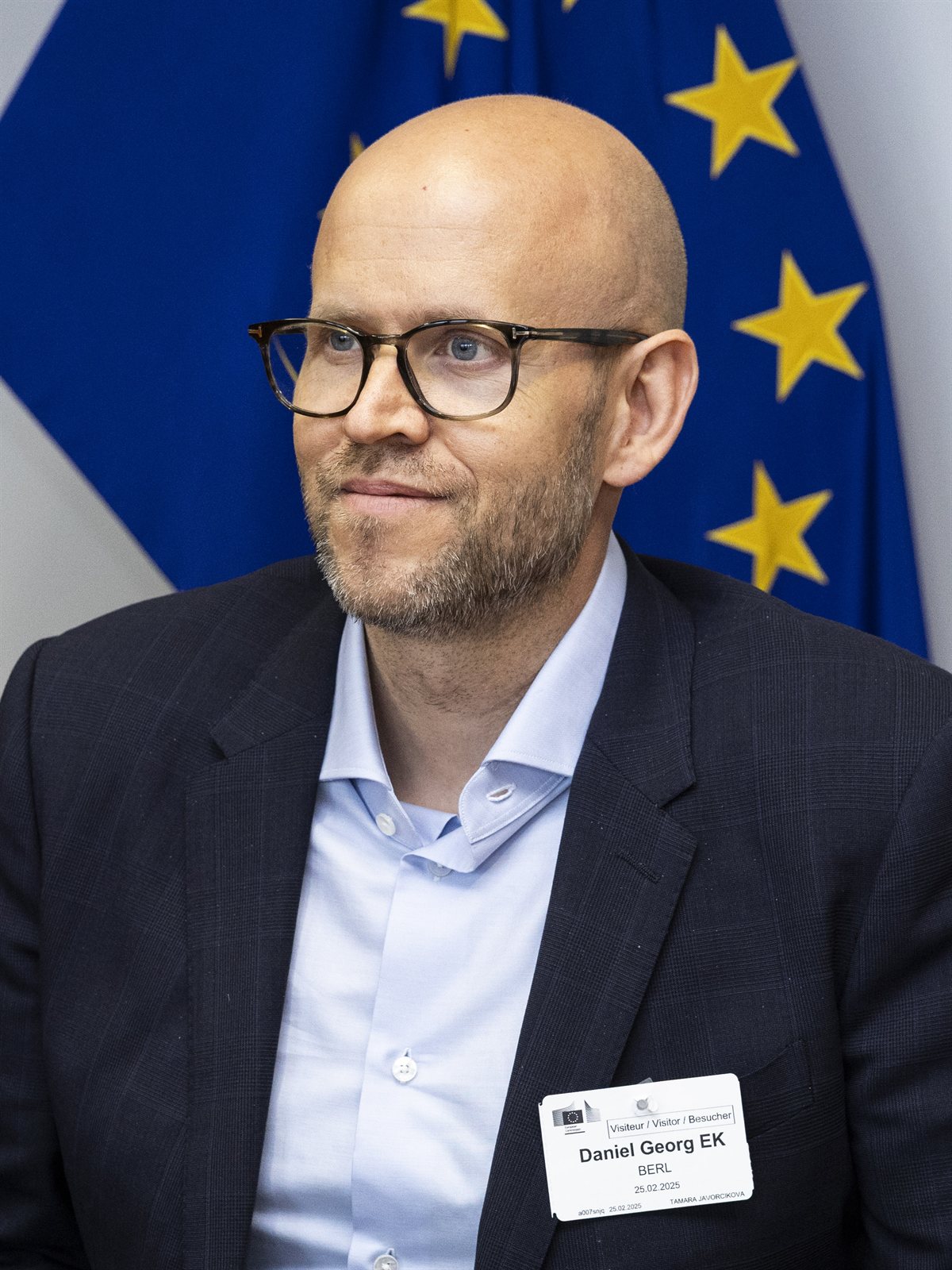
Daniel Ek: The Swede Who Beat Piracy by Building Something Better
A critically-neutral profile of Spotify’s Daniel Ek: how he beat music piracy not with lawsuits but with a freemium product better than free, endured two years of label negotiations and sixteen more before profit, and built a 675M-user streaming giant — alongside the artist-payment, Rogan and defence-tech controversies.
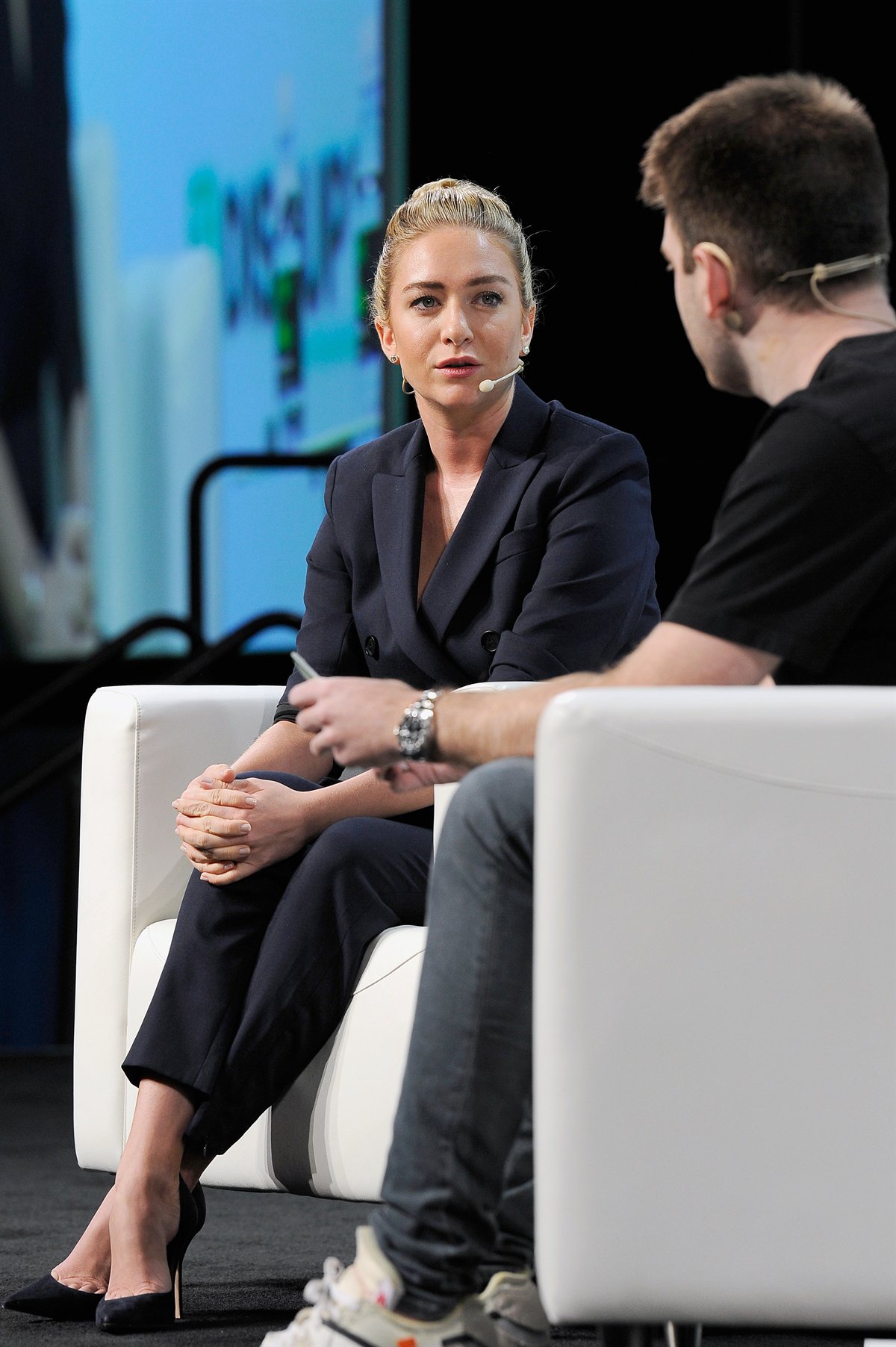
Whitney Wolfe Herd: The Founder Who Turned Being Pushed Out Into Bumble
A critically-neutral profile of Bumble’s Whitney Wolfe Herd: how she converted her ordeal at Tinder into the "women make the first move" thesis, took Bumble public at 31, and now fights to sustain it through a ~94% stock decline — the founding triumph and the hard aftermath, held honestly together.
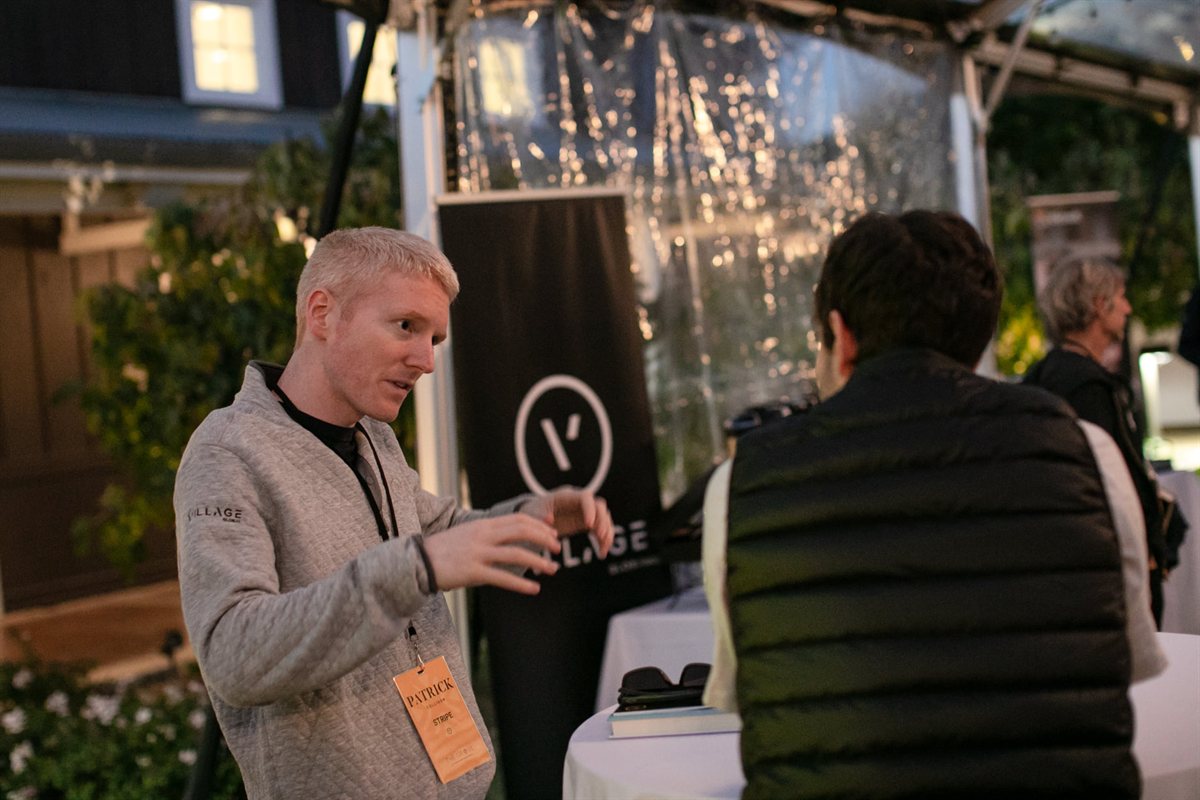
Patrick Collison: The Irish Teenager Who Built the Internet’s Payment Rails
A critically-neutral profile of Stripe’s Patrick Collison: the teenage prodigy who sold his first startup at 19, reduced online payments to a few lines of developer code, and built the financial infrastructure of the internet — through a bubble, a markdown, and a full recovery past its old peak to ~$159B.