
Hustler profile

Patrick Collison

Co-founder and CEO of Stripe — the developer-first payments company that became the financial infrastructure of the internet, valued ~$159B (2026) and processing ~$1.9T a year.

Patrick Collison (born 1988, Limerick, Ireland) is the co-founder and CEO of Stripe. A teenage prodigy who won the 2005 BT Young Scientist and briefly attended MIT, he sold his first startup, Auctomatic, at 19, then co-founded Stripe with his brother John in 2010.

  • Co-founder & CEO, Stripe
  • Ireland
  • Fintech / payments infrastructure
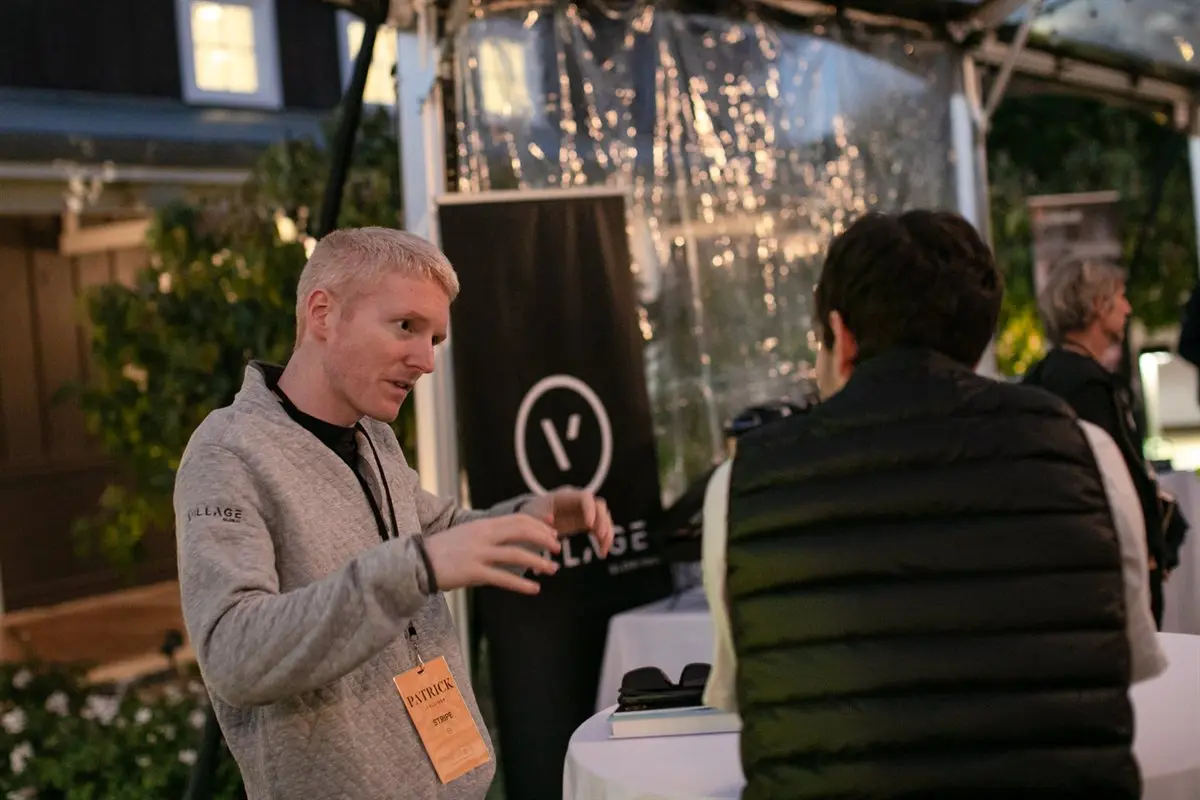
Patrick Collison, co-founder and CEO of Stripe.

At a glance

Stripe founded
2010
Co-founder & CEO
Stripe
Industry
Fintech / payments infrastructure
Born
1988

The journey

Key milestones in Patrick Collison’s life and business journey.

  1. 1988

    Born in Limerick, Ireland

  2. 2005

    Wins the BT Young Scientist

  3. At 19

    Sells Auctomatic

  4. 2010

    Co-founds Stripe with his brother John

  5. 2016

    One of the world’s youngest self-made billionaires

  6. 2019

    Co-coins “Progress Studies”

    With Tyler Cowen.

  7. February 2026

    Stripe valued at ~$159B

The business story

Patrick Collison (born 1988, Limerick, Ireland) is the co-founder and CEO of Stripe. A teenage prodigy who won the 2005 BT Young Scientist and briefly attended MIT, he sold his first startup, Auctomatic, at 19, then co-founded Stripe with his brother John in 2010. Stripe collapsed the ordeal of accepting online payments into a few lines of developer-friendly code and grew into the payment rails beneath much of the internet economy — ~$1.9T in annual volume and a ~$159B valuation (Feb 2026), still privately held. Collison is also a noted advocate of "Progress Studies" and the founder of Stripe Press.

Early life and background

Patrick Collison was born in Limerick in 1988 and grew up in Dromineer, County Tipperary, the eldest of three brothers. His mother, Lily, is a microbiologist who also ran a training business; his father, Denis, is an engineer. He took his first computer course at eight and was programming by ten.

In January 2005, at sixteen, he won Ireland's BT Young Scientist and Technology Exhibition with Croma, a programming language in the Lisp family. He went on to MIT but left soon after.

In 2007 he started a company with his younger brother John, then still at secondary school. After a move to California and a merger with a startup run by Harjeet and Kulveer Taggar, it became Auctomatic, a tool for online marketplace sellers. Live Current Media bought it in March 2008 for a reported $5 million or so, when Patrick was about nineteen. The sale gave the brothers capital, credibility and contacts before either had turned twenty.

Building Stripe

The brothers began their next project in 2010 under the working name /dev/payments. As developers, they had experienced how hard it was to accept money online: merchant-account applications, bank underwriting, awkward gateways and weeks of waiting. Stripe replaced that with a clean, well-documented API, summed up in the promise that a developer could start charging customers with seven lines of code.

From the core API, Stripe added Connect for platforms paying many sellers, Radar for machine-learning fraud detection, Atlas for incorporating a US company online from almost anywhere, and products for billing, in-person payments and card issuing. Patrick serves as CEO; John is president.

The valuation path was uneven. Stripe raised at $95 billion in March 2021, cut about 14 percent of staff in November 2022, and raised at roughly $50 billion in 2023. Employee tender offers then lifted it past the old peak, reaching around $159 billion in February 2026. In 2025 it processed about $1.9 trillion in payments, and it has stayed private.

How Patrick operates

  • His decisions point to a few durable principles:

  • Solving the boring, universal problem.

    Online payments were painful for everyone and accepted as unchangeable, which made them an unusually large opportunity.

  • Selling to the builder.

    Stripe courted engineers instead of finance departments, entering bottom-up in an industry that had always sold top-down, just as the API economy and startup boom were expanding its natural market.

  • Expanding from feature to foundation.

    Each new product took on more of a business's financial plumbing and made Stripe harder to replace.

  • Owning mistakes plainly.

    In the 2022 layoffs he said Stripe had hired for the wrong world and named the errors, rather than blaming the macro environment.

  • Long horizons.

    He has questioned the need for an IPO, preferring self-funding and tender offers, though staying private has created liquidity pressure for employees.

  • Merchant complaints about frozen funds are a recurring criticism, reflecting the risk any processor carries, not regulatory findings.

    Outside Stripe, he co-wrote a 2019 Atlantic essay with Tyler Cowen that helped launch Progress Studies, co-founded Fast Grants and the Arc Institute, and founded Stripe Press.

Legacy and lessons

Collison shows how much value can sit in infrastructure that end users never see. In 2016 he and John became the world's youngest self-made billionaires, and Stripe now underpins a large share of internet commerce.

  • Problems everyone has accepted as fixed are often the biggest openings.

  • Developer experience can be a real competitive advantage, not a cosmetic one.

  • Infrastructure compounds: each added layer deepens customer dependence.

  • A complementary founding pair can share a large job with less friction than most teams.

More hustlers

Explore more business builders