
Hustler profile

Boris Cherny (Claude Code)

Credited creator and head of Claude Code at Anthropic — the agentic coding tool that turned "AI helps you type" into "AI does the task and you supervise."

Boris Cherny is the engineer most credited with creating Claude Code, Anthropic’s agentic, terminal-based coding tool. Previously a principal engineer at Meta (~5 years) and author of "Programming TypeScript" (O’Reilly).

  • Engineer, Claude Code (Anthropic)
  • Developer tools, artificial intelligence
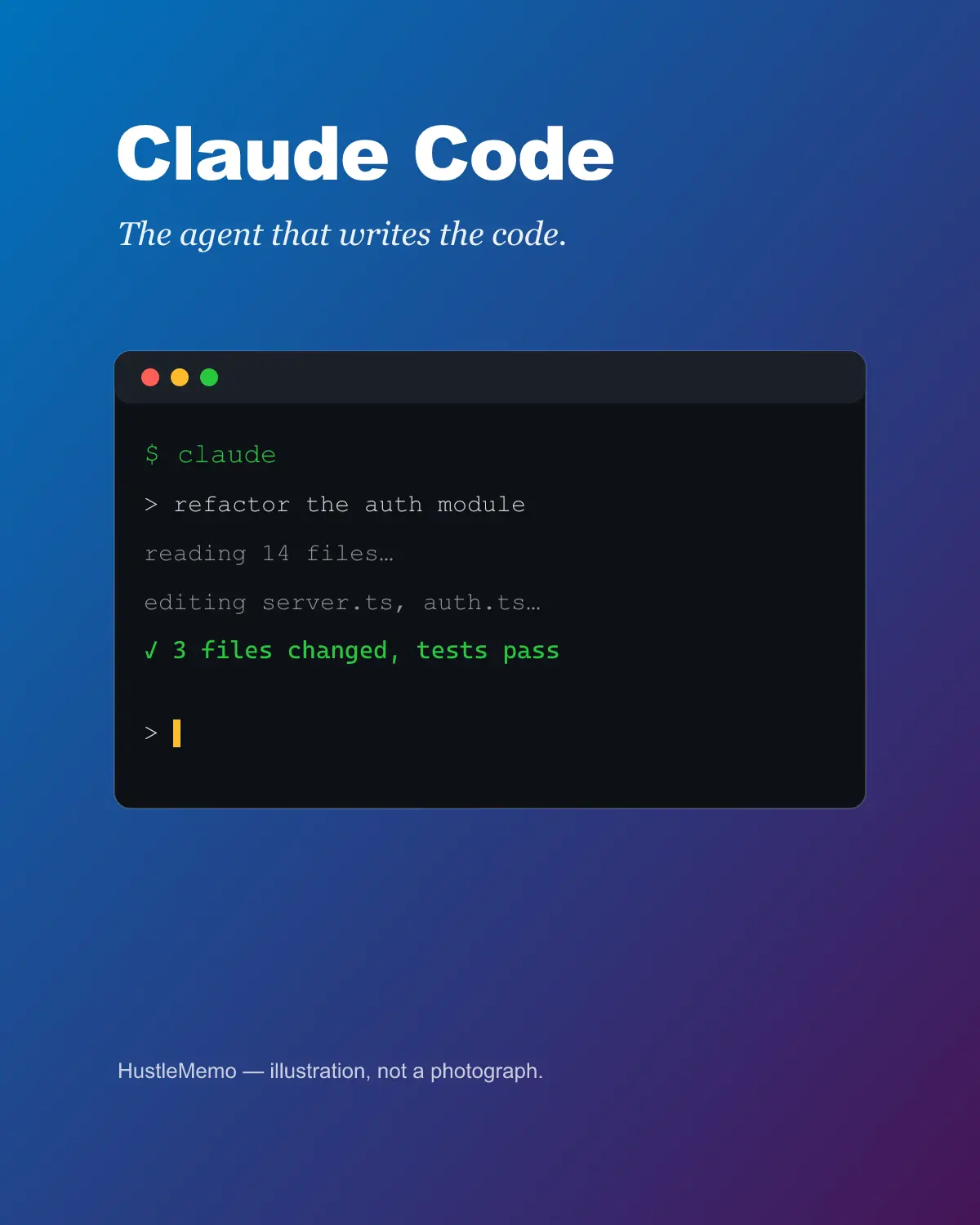
Illustration representing Claude Code, a terminal-based agentic coding tool (not a photograph).

At a glance

Claude Code (Anthropic) founded
2025
Engineer
Claude Code (Anthropic)
Industry
Developer tools, artificial intelligence

The journey

Key milestones in Boris Cherny (Claude Code)’s life and business journey.

  1. Principal engineer at Meta for about five years

  2. Author of “Programming TypeScript” (O’Reilly)

  3. Claude Code begins as an internal prototype at Anthropic

  4. July 2025

    Briefly leaves for Anysphere, maker of Cursor

    He returned to Anthropic about two weeks later.

The business story

Boris Cherny is the engineer most credited with creating Claude Code, Anthropic's agentic coding tool, and he leads it. Claude Code is a product rather than a company, so Cherny is not a founder in the usual sense. His profile is that of a builder who helped move AI-assisted programming from suggesting lines of code to carrying out whole tasks under human review.

Cherny is open about using his own tool heavily.

From the HustleMemo profile

Before Claude Code

Before joining Anthropic, Cherny spent about five years at Meta as a principal engineer. He is also the author of Programming TypeScript, published by O'Reilly and well regarded among developers.

That background is relevant to the tool he went on to build. Years inside large production codebases give an engineer a practical sense of what slows real work down: navigating many files, keeping changes consistent and running the checks that confirm nothing broke. Claude Code reflects those concerns. It is built for working across an entire repository, not for impressing in a short demo.

Building Claude Code

Claude Code started as an internal prototype at Anthropic: a terminal tool that let an engineer point a model at a codebase, describe a goal in plain language and let it read files, make edits and run tests itself. Within roughly a year it grew into one of the most influential developer tools of the period.

The shift it represents is in the unit of work. Earlier assistants, whether autocomplete or chat inside an editor, left the developer approving suggestions one line at a time. Claude Code belongs to the agentic category: given a task, it plans, edits across files, executes commands, checks results and iterates. The human's role moves from writing code to reviewing what the agent produced. It runs in the terminal and works alongside version control.

The tool's success pushed competitors, including GitHub Copilot and Cursor, toward the same agentic model.

In July 2025, Cherny and colleague Cat Wu, the two people most credited with building Claude Code, left for senior roles at Anysphere, the company behind Cursor. About two weeks later both returned to Anthropic. The industry press covered the episode widely, and HustleMemo's article reads it as a sign of how scarce and contested this kind of engineering talent has become, not as a comment on anyone's character.

How Boris operates

  • He has described running several Claude instances in parallel and putting strong emphasis on planning before letting the agent implement.

    The article treats his figures on output as a practitioner's anecdotes rather than audited data. The point is how he frames the tool: as a way to direct and coordinate work, not as a faster way to type.

  • The product also carries real trade-offs, and its design reflects them.

    An agent that can run commands and read files can be misled, most notably through prompt injection, where hidden instructions in a file or web page redirect it. Anthropic's answer has been permission prompts, allow-lists and sandboxing, which keep the agent asking before risky actions. Every safeguard competes with convenience, and that tension is still being worked out.

Legacy and lessons

Cherny's work sits at the centre of a live debate about how software gets built. Claude Code raised the stakes on questions about code quality, the skills of reviewers and the path for early-career engineers, questions that were mostly theoretical before agentic tools worked well.

  • Deep domain experience shapes better tools. Years in large codebases informed a product built for real repositories.

  • Change the unit of work, not just its speed. Moving people from writing to supervising was the real step.

  • Capability and risk arrive together. The autonomy that makes an agent useful also widens its security surface.

  • Scarce builders hold leverage. The brief move to Anysphere showed how intensely this talent is pursued.

More hustlers

Explore more business builders