Overview
Wingify is the Delhi software company behind VWO, one of the longest-running tools for A/B testing and conversion-rate optimisation. For fifteen years it was a textbook bootstrapped business: no venture capital, steady profits and customers in dozens of countries. In January 2025 its founder sold control to the private-equity firm Everstone Capital, and a year later Everstone merged it with the French company AB Tasty. By September 2026 the combined group reported more than $105 million in revenue, more than 4,000 customers and about 700 employees.
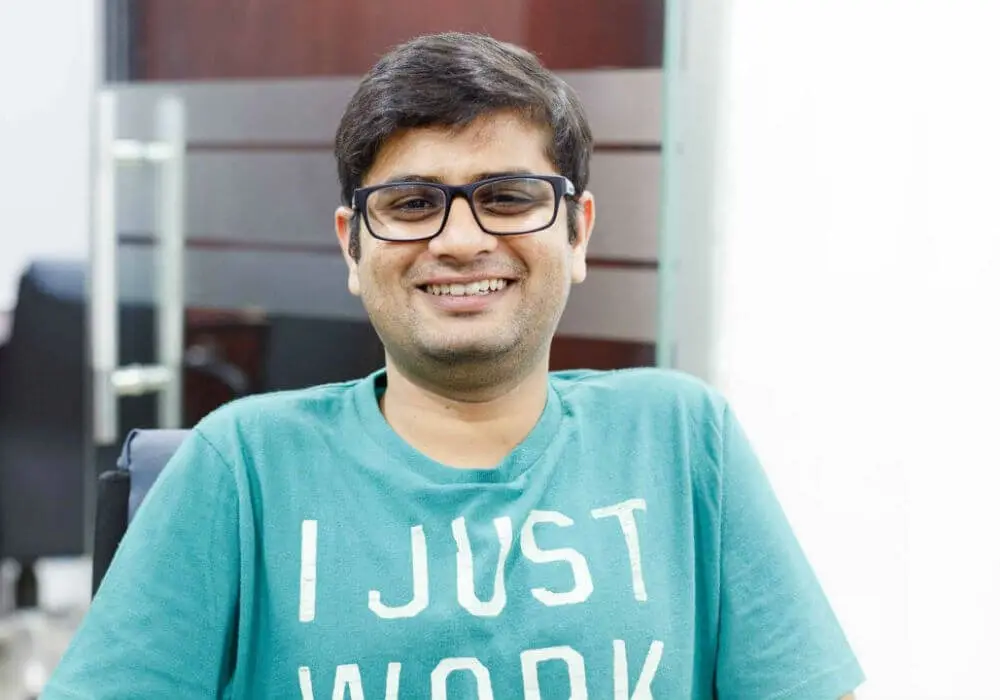
It was founded by Paras Chopra, who built the first version himself and still owns a minority stake.
History
Chopra taught himself to code as a schoolboy, studied biotechnology at Delhi College of Engineering and worked on machine-learning models before starting Wingify in 2009. The product that defined it arrived in 2010. Visual Website Optimizer let a marketer open a web page in a visual editor, change a headline or a button, and run a controlled test against the original without asking an engineer to write a new page. At the time, most testing tools were expensive enterprise products or required code; VWO was cheap, self-serve and sold online to small businesses around the world.
Sparsh Gupta co-founded the company with Chopra and ran engineering. Wingify grew on customer revenue alone, which forced discipline. By 2018 it had about $18 million in recurring revenue and around 6,000 clients in 90 countries, and around then Chopra handed the chief executive role to Gupta and became chairman. VWO expanded from A/B tests into a broader suite: heatmaps and session recordings to show how visitors behave, personalisation, mobile-app testing and server-side feature flags for product teams.
The bootstrapping philosophy behind those years, and why Chopra chose it, is the subject of Paras Chopra: The Bootstrapped Founder Who Chose Curiosity Over Scale.
How the business works
Wingify sells software subscriptions. Customers pay monthly or annually for VWO plans priced mainly by how many visitors or users they test on, with a free starter tier to bring in small sites and larger negotiated contracts for enterprises. Revenue is recurring, and once a company has built its testing programme on a platform it tends to stay, though the market is competitive and price-sensitive.
The category has consolidated. Google shut down its free Optimize tool in 2023, which pushed many small users towards paid products but also showed how thin margins at the low end can be. Larger rivals such as Optimizely and Adobe target big enterprises. Everstone's answer was scale: combining VWO, strong with small and mid-sized digital businesses, with AB Tasty, a Paris-based rival with a strong customer base in Europe. The merger, announced in January 2026, came with about $150 million in fresh investment led by Everstone.
The combined company now markets itself under the Wingify name as an "agentic experience optimisation" platform, with an embedded AI engine called Wingz that is meant to suggest, build and analyse experiments with less human effort. Both product brands continue for existing customers.
Ownership and leadership
Before the sale, Chopra owned roughly 71% of Wingify. In January 2025 Everstone bought a majority stake at a valuation reported at about $200 million, when VWO was generating roughly $50 million a year and was highly profitable. Chopra kept a minority holding and a board seat. After the AB Tasty merger, Everstone remained the largest institutional shareholder of the combined group.
Sparsh Gupta is chief executive of the merged group. Co-founder Ankit Jain is chief product and technology officer, and AB Tasty co-founders Alix de Sagazan and Rémi Aubert are chief revenue officer and chief customer and strategy officer. Chopra has turned his attention to Lossfunk, an AI research lab he started in Bengaluru.
Controversies
Wingify has no record of regulatory penalties, major lawsuits or scandals. The debates around it are strategic.
DEBATED: did bootstrapping cap its size? Some in India's start-up community argue that VWO, an early leader, could have become far larger with venture funding, and that better-funded competitors captured the enterprise end of the market. Chopra's view, shared by many bootstrapped founders, is that staying profitable gave him control and a large share of the sale proceeds.
DEBATED: private equity and consolidation. Customers of both VWO and AB Tasty have asked whether the merger will lead to price rises or product cuts. Gupta said at the time of the deal that no layoffs were planned; whether the two platforms integrate smoothly remains to be seen.
Why it matters
Wingify is one of the clearest Indian examples of a software product built in Delhi and sold to the world over the internet, without outside capital, and then sold on the founder's terms. It shows that bootstrapping can produce a meaningful exit, not just a lifestyle business, and that private equity is now a natural buyer for profitable, slower-growing software companies. Its next chapter tests whether two mid-sized challengers combined can hold their ground against larger platforms as AI changes how websites are built and tested.