Overview
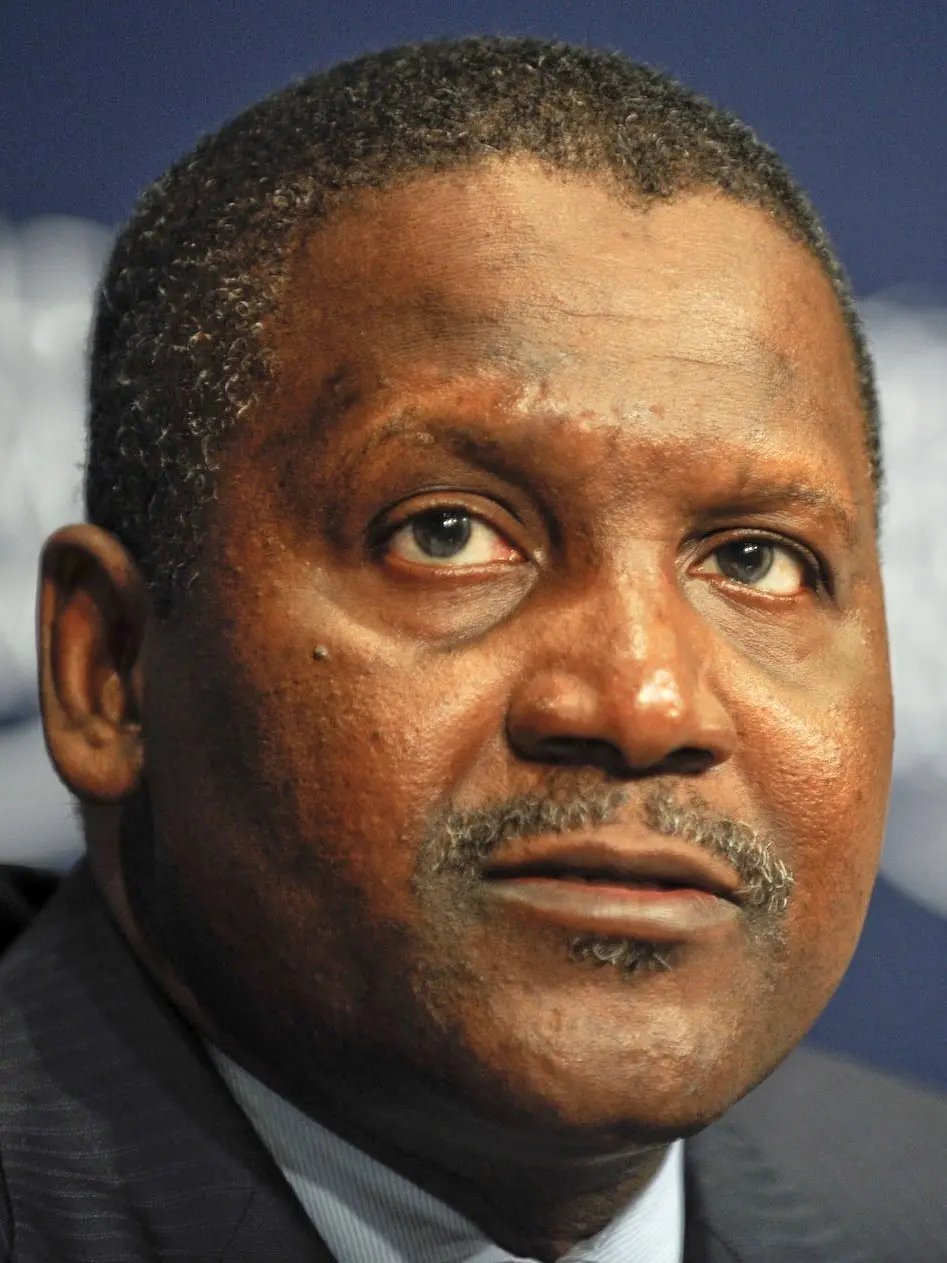
The Dangote Group is the business empire of Aliko Dangote, and it is built on the things a fast-growing country needs in bulk: cement, sugar, salt, flour, fertiliser and, since 2023, refined fuel. Its holding company, Dangote Industries Limited, is private. Its best-known operating company, Dangote Cement, is listed in Lagos and reported 2025 revenue of ₦4.31 trillion and a record profit after tax of just over ₦1 trillion.
The group's newest and largest bet, the Dangote Petroleum Refinery near Lagos, went to the Nigerian stock market in 2026. That turns a family-controlled industrial project into one that millions of Nigerian savers now have a claim on.
History
Dangote was born in Kano in 1957 into the Dantata family, one of West Africa's established trading houses. In 1977, with a loan from his uncle, he began importing commodities that Nigeria consumed but did not make in volume. Trading taught him the size of demand and how much margin was leaving the country with foreign suppliers.
The turn came around 2000, when he started producing instead of importing. He bought Benue Cement through the federal privatisation programme and opened a sugar refinery in Lagos. He acquired the Obajana site in Kogi State in 2002, the same year Nigeria adopted a backward-integration policy of tariffs, import restrictions and incentives for local producers. Obajana was commissioned in 2007 and, at 16.25 million tonnes a year today, is the largest cement plant in Africa. Dangote Cement listed in October 2010 and immediately became the exchange's most valuable company. The model was then exported, and the cement business now operates in eleven African countries with 55 million tonnes a year of capacity.
The refinery was conceived in 2013 and built in the Lekki Free Zone east of Lagos. Inaugurated in May 2023, it is designed to process 650,000 barrels a day in a single train, the largest such unit in the world, at a cost reported at roughly $19 to 20 billion. It produced diesel and jet fuel first and petrol from 2024. His full career is told in Aliko Dangote: The Trader Who Built Africa's Biggest Industrial Empire.
How the business works
Every Dangote business follows the same logic: build at a scale no local rival can match, so that domestic production undercuts imported goods once shipping and currency costs are counted. Cement shows how well that can pay. Dangote Cement's 2025 results showed volumes slightly down, at 27.5 million tonnes, yet EBITDA up 43% to ₦1.98 trillion and a 46% margin, helped by price increases, cheaper gas-fuelled trucking and exports of clinker from Nigeria to Ghana and Cameroon. Its chief executive, Arvind Pathak, has set a target of 10 million tonnes of combined exports by 2030.
The refinery applies the same idea to fuel. Nigeria is a large crude producer that for decades imported most of its petrol and diesel. Dangote's plan is to refine at home, sell to the domestic market and export the surplus. According to its IPO prospectus, as reported by Reuters, the refinery turned a loss of $476 million in 2025 into an after-tax profit of $1.82 billion in the first half of 2026, was running at about 700,000 barrels a day, and plans a roughly $14 billion expansion to 1.4 million barrels a day by 2029.
Ownership and leadership
Aliko Dangote is president and chief executive of Dangote Industries, which owned about 86.65% of Dangote Cement at the end of 2025, as reported from the company's annual report. Other listed affiliates include Dangote Sugar Refinery and the salt business NASCON. In 2025 Dangote stepped back from the boards of the listed companies: he left the Dangote Sugar chair in June and retired as chairman and director of Dangote Cement on 25 July, saying he wanted to focus on the refinery, petrochemicals and fertiliser. Emmanuel Ikazoboh, a former chairman of Ecobank, now chairs the cement company, and Dangote's daughter Mariya joined its board.
The refinery's initial public offering ran from 14 September to 13 October 2026, offering 4.1 billion shares at ₦525 each to raise up to about ₦2.15 trillion. Dangote called it an "IPO for the people", with a minimum purchase of ten shares. Nairametrics reported bids of about ₦5.85 trillion from nearly 3.8 million applicants. The basis of allotment and listing date had not been published at the time of writing.
Controversies
Market power and policy (ALLEGED favouritism; dominance documented). Dangote's dominance in cement and its closeness to successive governments are a matter of record, as is the fit between Nigeria's import restrictions and his investments. Claims that he received improper favours remain allegations that he rejects, and no court or regulator has upheld them.
Refinery disputes (documented, unresolved in parts). The refinery has had public fights with the state oil company NNPC and the downstream regulator over crude supply, product quality and import licences for rival marketers, including litigation in 2024 that was later withdrawn. In 2025 it also clashed with the oil workers' union PENGASSAN over staff unionisation, a dispute that led to a strike before mediation. These are disputes, not findings of wrongdoing against either side.
Why it matters
The Dangote Group is the clearest example of how industrial wealth is made in a large, import-dependent economy: capture a supply chain that was sending value abroad and build plants too big to compete with. It also concentrates an unusual share of a country's basic supply in one person's hands. The refinery IPO is the moment that concentration starts to be shared, and its performance as a public company will test whether the Dangote model works under outside scrutiny.