Aliko Dangote: The Trader Who Built Africa’s Biggest Industrial Empire
He turned an inherited trading fortune into the largest cement, sugar and refining business on the continent — by importing nothing he could make at home, building at a scale that made rivals pointless, and mastering the politics as thoroughly as the economics.
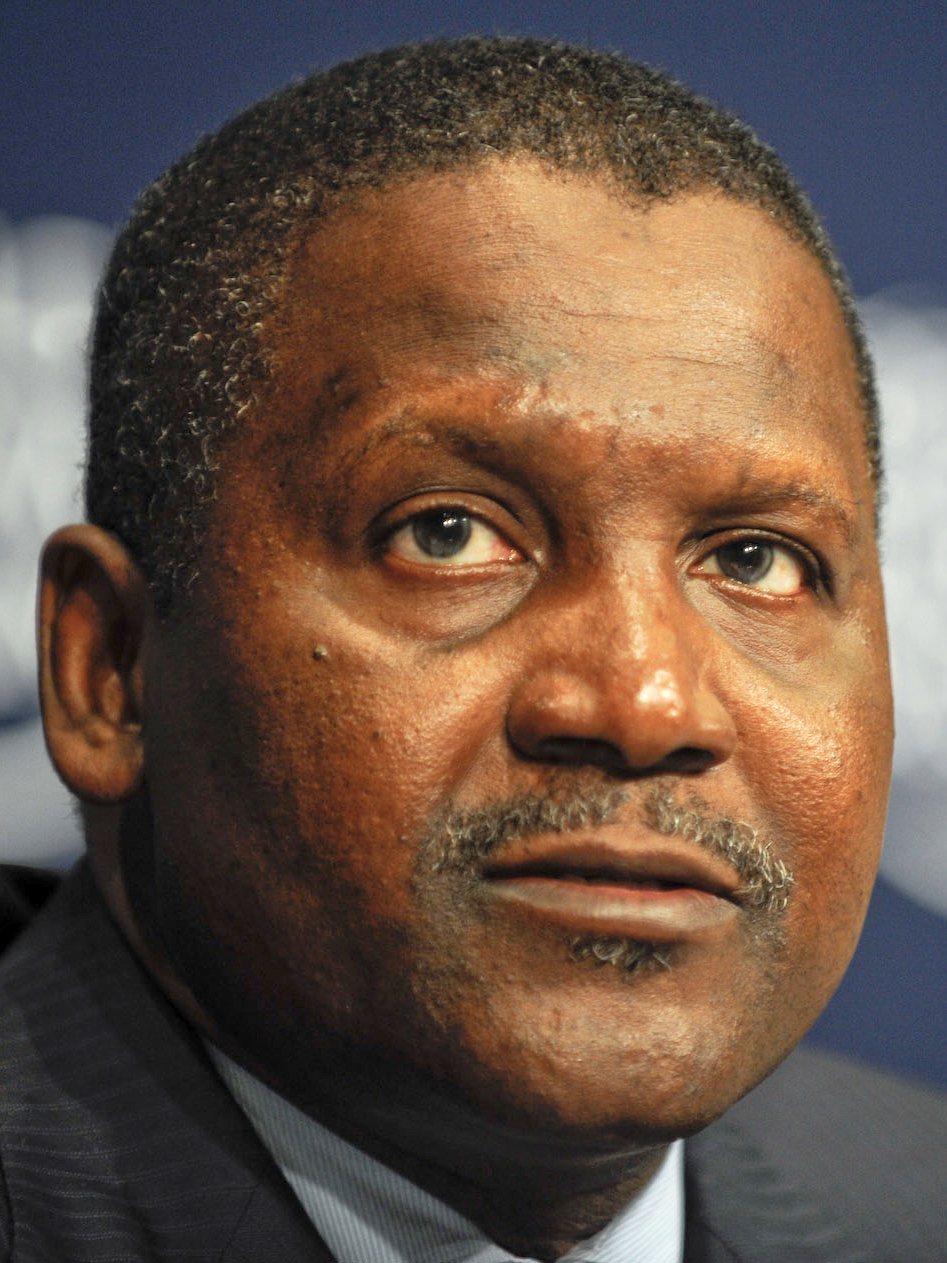
Every founder profile on HustleMemo asks the same two questions: how did they actually do it, and why did it work? Aliko Dangote, the richest person in Africa for more than a decade, offers an answer that resists the usual mythology. He did not start with nothing; he started with one of West Africa's oldest trading fortunes behind him. He did not get rich by inventing something new; he got rich by stopping the import of things Nigeria already consumed and making them at home instead. And he did not build his empire purely on market genius; he built it in close partnership with the Nigerian state, behind walls of policy that protected him from foreign competition. The real story of Dangote is more interesting than the inspirational version, because it is a clear-eyed case study in how industrial fortunes are actually made in a developing economy — with capital, with scale, and with the patient cultivation of power.
The dynasty behind the man
It is impossible to understand Dangote without first dismantling the rags-to-riches frame, because he was never in rags. He was born on 10 April 1957 in Kano, in northern Nigeria, into the Dantata family — a trading dynasty so established that his maternal great-grandfather, Alhassan Dantata, was reckoned the wealthiest man in West Africa at his death in 1955. His grandfather, Sanusi Dantata, was a major commodities trader in his own right. Dangote grew up around groundnut and commodity trading the way other children grow up around a family farm: it was the air he breathed.
This matters not to diminish him but to read him accurately. He inherited two things that money cannot quickly buy: an instinct for trade absorbed in childhood, and access to capital and credit networks at the start. He has said he was a businessman almost from boyhood — reselling sweets at school for a profit. He studied business administration at Al-Azhar University in Cairo. By the time he founded his own venture, he already knew the commodities trade intimately and could borrow against a trusted name. The genius in his story is real, but it is the genius of an heir who multiplied a head start a hundredfold, not a poor boy who conjured a fortune from nothing.
The loan, and the trader's start
In 1977, by his own account, Dangote borrowed roughly five hundred thousand naira — often retold as a sum equivalent to a few thousand dollars — from his uncle, and set up as a commodities trader. He imported and sold the staples that Nigeria consumed but did not produce at scale: cement, sugar, salt, rice. The business model in those years was simple arbitrage — buy abroad, sell at home, manage the logistics and the risk. He repaid the loan within months, the story goes, and reinvested relentlessly.
For a decade and more, this was the shape of the enterprise: importation. Dangote became one of Nigeria's largest traders of the very commodities he would later become famous for manufacturing. That sequence is the whole key to him. He learned, as an importer, exactly how large the domestic demand was, exactly how the supply chains worked, and exactly how much margin was leaking out of the country to foreign producers. He was, in effect, conducting years of market research at a profit before he ever poured a bag of cement.
The pivot that made the fortune: backward integration
The decision that turned a rich trader into Africa's richest man was the move from importing to manufacturing — what economists call backward integration. Instead of buying cement abroad and reselling it, Dangote resolved to make the cement himself, inside Nigeria. Instead of importing refined sugar, he would refine it locally. The logic was airtight: he already controlled the demand and the distribution; if he also controlled production, he would capture the entire chain rather than a sliver of it.
Around the turn of the millennium he began executing. Dangote acquired the Benue Cement Company in the federal privatisation programme, and his sugar refinery in Lagos came on stream as one of the largest in Africa. In 2002 he acquired the Obajana site in Kogi State, and by 2007 the Obajana Cement Plant — then the largest in sub-Saharan Africa — was commissioned. In October 2010, Dangote Cement listed on the Nigerian Stock Exchange and immediately became the exchange's most valuable company, a position it has held for years.
The strategic insight here is worth stating plainly, because it is the transferable lesson. A trader's margin is thin and contestable; anyone with capital and contacts can undercut you. A manufacturer with the largest, lowest-cost plant on the continent has a structural moat: scale lets you produce more cheaply than any importer can land the product, and that cost advantage compounds. Dangote did not just enter manufacturing; he entered at a scale designed to make competition uneconomic. That is why the fortune that trading merely seeded, manufacturing multiplied.
Scale as a weapon
The Obajana decision reveals how Dangote thinks. He did not build a modestly sized cement plant to test the market; he built the biggest one in the region. Scale, for him, is not a consequence of success but a tool to create it. A plant large enough to supply a meaningful fraction of national demand can set the price, absorb shocks, and starve smaller rivals of the volume they need to survive. The same playbook repeated across sugar, salt, and flour: become the dominant domestic producer, then expand the same template across other African markets, so that Dangote Cement now operates in around a dozen-and-a-half countries.
This is the unglamorous heart of industrial empire-building, and it is very different from the software fortunes this site often profiles. There is no viral product, no network effect, no elegant code. There is cement, sugar, and salt — and the relentless, capital-intensive grind of building the largest factories on a continent that desperately needed domestic manufacturing and had almost none. Dangote's bet was that Africa would industrialise and that whoever owned the productive capacity first would own the future. He has been proven substantially right.
The policy tailwind — named honestly
No honest profile of Dangote can skip the role of the Nigerian state, because his manufacturing empire rose precisely as government policy turned to protect it. In 2002 Nigeria adopted a formal "backward integration" policy designed to substitute domestic production for imports — implemented through high tariffs, outright import bans on certain finished goods, levies, and tax breaks for local manufacturers. Dangote's investments aligned with that policy with uncanny precision. As he built local cement and sugar capacity, the importation of those finished goods was restricted or made expensive, channelling demand toward domestic producers — chief among them, him.
It is important to hold two truths at once here. First, this is exactly how many nations have industrialised; import-substitution behind a protective wall built the early manufacturing bases of South Korea, of much of post-war Asia, of America itself in the nineteenth century. There is nothing uniquely improper about it. Second, the policy's beneficiaries were narrow, and Dangote was the largest. The same protection that built a domestic cement industry also handed a near-monopoly to one man, and Nigerian consumers have at times paid more for cement than buyers in countries without such protection. The policy was both a genuine industrial-development success and a mechanism of concentration. Both things are true, and a reader is owed both.
The refinery: the biggest bet of all
The most audacious chapter is the Dangote Refinery, in the Lekki free-trade zone near Lagos. Conceived in 2013, with construction from 2016, it was inaugurated in May 2023 and began producing fuels — diesel and jet fuel first, then petrol in 2024 — reaching toward its full design capacity of 650,000 barrels per day. It is the largest single-train refinery in the world, built on a site of some 2,500 hectares, at a total cost that ballooned from an early estimate of around nine billion dollars to roughly nineteen or twenty billion.
The strategic logic confronts one of Nigeria's deepest absurdities: the country is one of the world's major crude-oil exporters, yet for decades it imported almost all of its refined fuel because its state-run refineries barely functioned. Nigeria exported raw crude cheaply and bought back expensive petrol — exporting jobs and value, importing inflation. Dangote's refinery is a bet to close that loop: refine Nigerian crude in Nigeria, end the import dependency, and capture the refining margin at home. If it works fully, it reshapes the economics of Africa's largest economy.
The execution has been bruising. Costs and timelines overran massively. The project required emergency borrowing. Crude supply has been a persistent problem — at times the refinery has had to import crude, including from the United States, because it could not secure enough Nigerian crude on workable terms. And once it began selling fuel, it collided head-on with the very state apparatus that had enabled Dangote's rise — which brings us to the genuinely contested part of the story.
The criticisms, kept honest: PROVEN vs ALLEGED
A neutral profile must separate what is documented from what is merely alleged, and apply the presumption of innocence. In Dangote's case the line is unusually important, because the most damaging claims are precisely the ones that have never been adjudicated.
What is documented. Dangote's closeness to successive Nigerian governments is a matter of public record — through privatisation purchases, through policy that favoured domestic manufacturing, and through the commercial arrangements around the refinery. His market dominance is real and measurable: in cement and several other staples he is the overwhelming domestic producer. None of this is in dispute, and none of it is, by itself, wrongdoing. Dominance achieved by building the biggest and cheapest plants is a competitive outcome; closeness to a government whose explicit policy was to grow domestic industry is, at minimum, unsurprising.
What is alleged, and unproven. The sharpest critique traces to a 2005 United States diplomatic cable, released by WikiLeaks in 2011, which asserted that Dangote "held exclusive import rights" in key commodities, that tariffs and bans "favor the Group," and that he had been a significant financial contributor to the ruling party and to a president's campaigns. It is essential to read that document for what it is: an embassy's assessment, hedged in its own text with the word "purportedly." It is diplomatic opinion and allegation, not a finding of fact, and Dangote has rejected such characterisations. To present it as proven corruption would be dishonest. To omit it would be incomplete. The fair statement is that questions about whether his government ties crossed from policy alignment into improper favouritism have been raised for two decades and have never been established.
The live refinery dispute. As the refinery began competing with fuel importers, it entered open conflict with the Nigerian National Petroleum Company and with rival importers. In court filings, Dangote's side has challenged import licences granted to competitors, arguing they undercut the legal preference for domestic refining; the NNPC's side has accused Dangote of "seeking a fuel monopoly," warned that handing him the market would threaten supply security and price stability, and argued his fuel has at times been priced high. A competitors' association has gone further, accusing him of trying to monopolise the downstream sector "cloaked in nationalistic language." Every one of these is a pleading or an interested party's claim, not a ruling. The honest frame is the one a court would use: dominance is real and documented; wrongdoing is alleged and unproven; the monopoly question is genuine and unresolved.
There is also a fair, non-legal critique on the merits: that an economy in which one man controls the cement, much of the sugar, and now the refining of fuel is dangerously concentrated, however that concentration was achieved. A single point of failure at Dangote scale is a national-security question. That critique stands regardless of whether anything improper ever occurred, and it deserves to be named.
The scale of it
By any measure, Dangote sits at the summit of African business. He first appeared on the Forbes billionaires list in 2008 at around three billion dollars and has been Africa's richest person, and the world's wealthiest Black person, for most of the time since. His 2026 net worth depends on which tracker you trust: Forbes has placed it around the high-twenties of billions, while Bloomberg's index, valuing the refinery more generously, has put it in the mid-thirties — a roughly twenty-eight-to-thirty-six-billion-dollar range whose width is itself a story about how hard the refinery is to value. The Dangote Group is Africa's largest industrial conglomerate, employing tens of thousands across cement, sugar, salt, flour, fertiliser, and now refining, with operations spanning around seventeen countries.
The pan-African bet, and the philanthropy
Dangote's ambition was never confined to Nigeria, and the continental expansion is part of why he became more than a national tycoon. Having proven the backward-integration playbook at home, he exported it: Dangote Cement built or acquired plants across roughly a dozen-and-a-half African countries, from Ethiopia and Tanzania to Senegal and Cameroon, betting that the same dynamic that made Nigeria a captive market — rising demand, weak local production, expensive imports — held across a continent that was urbanising fast and building furiously. The thesis is sweeping and, in its way, optimistic: that Africa would industrialise in the twenty-first century, that it would need staggering quantities of cement, fuel, fertiliser, and food to do it, and that whoever owned the productive capacity ahead of that wave would own a substantial slice of the continent's future. It is an explicitly pan-African vision — Dangote has spoken often of wanting Africans to make what Africans consume, rather than importing it from abroad — and whatever one makes of the concentration it produces, it is a genuinely different bet from the extractive, export-the-raw-materials model that has dominated African economies for a century.
There is also the philanthropic dimension, which a complete profile should weigh without either cynicism or credulity. The Aliko Dangote Foundation, endowed with a substantial transfer of his own wealth, is among the largest private foundations in Africa, focused on nutrition, health, and education — funding programmes against child malnutrition, contributing to disease-eradication efforts, and responding to humanitarian crises across the continent. Skeptics will note that large-scale philanthropy by a dominant industrialist also buys goodwill and influence, and that the same proximity to power that built the empire shadows the giving; that critique is fair. But the scale of the foundation's commitments is real, and the nutrition work in particular addresses problems that the Nigerian state has manifestly failed to solve. As with so much about Dangote, the honest reading holds two things at once: a substantive contribution to African development, and an instrument that is inseparable from the consolidation of his own standing.
Why it actually worked
Strip away the controversy and the engine is legible. Dangote worked because he understood, earlier and at greater scale than anyone, that the path to industrial wealth in a large, import-dependent economy is to stop importing and start producing — and to do it at a scale that makes competition pointless. He turned years of trading into a precise map of domestic demand, then built the factories to capture it. He matched private capital to public policy, riding an import-substitution agenda that he was uniquely positioned to exploit. And he reinvested with extraordinary discipline, ploughing profits back into ever-larger plants rather than diversifying into distraction.
But there is a second reason, and it is the uncomfortable one: he worked because he mastered the political economy as thoroughly as the industrial one. In many developing markets, the binding constraint on a large enterprise is not technology or capital but the state — its tariffs, its licences, its currency, its ports. Dangote built an organisation that could navigate, and benefit from, that environment better than any rival. Whether one reads that as savvy or as a critique depends on one's politics, but it is inseparable from the achievement. He did not build his empire in a free market; he built it in the real one, and the real one in Nigeria runs through Abuja. This is not a uniquely Nigerian truth, either. In most large emerging economies — India under the licence raj, Russia after privatisation, much of Southeast Asia — the greatest fortunes were assembled by those who could navigate the state, not merely the market. Dangote belongs to that global pattern of the politically-fluent industrialist, and reading him as an aberration rather than an archetype misses the lesson entirely. Where the state is the largest force in the economy, mastering it is not a corruption of business strategy; it is the strategy.
The honest close
Aliko Dangote is the most important industrialist Africa has produced, and his story is more instructive than the inspirational gloss allows. He shows that great fortunes in developing economies are often built not by invention but by integration — by capturing a whole supply chain that was leaking value abroad. He shows that scale, deployed deliberately, is a weapon. And he shows, less comfortably, that in economies where the state shapes every market, the most successful builders are those who can work with the state most effectively — a fact that produces both genuine development and dangerous concentration, frequently at the same time.
The "how did he do it" answer is backward integration at unmatched scale, funded by a trader's fortune and protected by national policy. The "why did it work" answer is that he read the demand, built the capacity, and managed the politics better than anyone else in his market. What his story adds to this site is a corrective to the Silicon Valley template: not every empire is built on a clever product and a free market. Some are built on cement and sugar, on factories and tariffs, on the patient conversion of a head start into a stranglehold. Dangote's refinery will decide the next chapter — whether the man who ended Nigeria's cement imports can end its fuel imports too, or whether the biggest bet in African industrial history finally outruns even him.
Editor's note: HustleMemo profiles real founders and operators. This is a critically-neutral, fact-checked profile. Corrections and disclosures per the record: Dangote was born into the established Dantata trading dynasty (not rags-to-riches); the "few-thousand-dollar" 1977 loan is by his own account; net worth is given as a 2026 range (~$28-36bn) because Forbes and Bloomberg diverge on valuing the refinery; the WikiLeaks cable, the government-favouritism claims, and the NNPC "monopoly" dispute are diplomatic assessments, court pleadings, and interested-party allegations — none adjudicated, and Dangote rejects them. The cover photograph is © World Economic Forum / Matthew Jordaan (World Economic Forum on Africa 2011), licensed CC BY-SA 2.0. Corrections: editorial@hustlememo.com.
Sources
- Biography, the Dantata dynasty (great-grandfather Alhassan Dantata), birth (Kano, 1957), Al-Azhar education, and the 1977 trading start: Wikipedia (Aliko Dangote); Britannica.
- Backward integration and milestones — Benue Cement, the Lagos sugar refinery, Obajana (acquired 2002, commissioned 2007), the 2010 NSE listing, the 2002 national backward-integration policy: Wikipedia (Dangote Group, Dangote Cement); Dangote Cement "Our History"; allAfrica analysis of Nigeria's industrial policy.
- The Dangote Refinery (~650,000 bpd, ~$19-20bn, inaugurated May 2023, fuels from 2024; cost/crude-supply overruns): Wikipedia (Dangote refinery); Reuters/Bloomberg reporting.
- PROVEN vs ALLEGED — the 2005 US diplomatic cable: WikiLeaks 05LAGOS362. The refinery–NNPC monopoly dispute (court pleadings): Premium Times; Vanguard; The Cable; Punch; DAPPMAN's monopoly claim (TV360). All are allegations / court positions, not findings.
- Net worth and scale (Forbes Africa 2026; Bloomberg Billionaires Index; ~30,000+ employees; ~17 countries): Forbes (via Vanguard); Bloomberg Billionaires; Billionaires.Africa.
More from this category

Sir Brian Souter: Stagecoach and the Fortune Built on a Policy
Sir Brian Souter co-founded Stagecoach and turned the deregulation of Britain’s buses into a transport empire. A sourced, critically neutral look at genuine industrial achievement, the proven "predatory" competition findings, the controversial "Keep the Clause" campaign, and the disputed claims about his SNP donations.
Andrew Carnegie: Steel, the Gospel of Wealth, and Homestead
Andrew Carnegie rose from a penniless Scottish immigrant boy to the master of American steel, sold out to J. P. Morgan for $303.45M, and gave away roughly 90% of his fortune. A sourced, critically neutral case study that holds his vast philanthropy and the violent 1892 Homestead Strike together, without resolving the contradiction.

Stef Wertheimer: ISCAR and the Industry-for-Peace Vision
Stef Wertheimer turned a one-man backyard shop in Nahariya into ISCAR, the carbide-tool multinational that became Warren Buffett’s first foreign acquisition. A sourced, critically neutral case study of a near-spotless industrial fortune and the debated efficacy of his "industry for peace" vision.