Hustler profile

Sridhar Vembu

Co-founder of Zoho Corporation — the IIT-and-Princeton engineer who built a profitable, billion-dollar software company with no venture capital, trains his own engineers out of rural India, and moved his own HQ to a village.

Sridhar Vembu (b. 1968, Tamil Nadu) earned a B.Tech from IIT Madras and a PhD in electrical engineering from Princeton, worked at Qualcomm, then co-founded AdventNet in 1996 (renamed Zoho Corporation in 2009). He famously refused venture capital, building Zoho into a private, profitable software company with reported revenue around $1.4B, 1M+ paying organisations, and ~15,000 employees.

  • Co-founder & Chief Scientist, Zoho Corporation
  • India
  • Software, SaaS
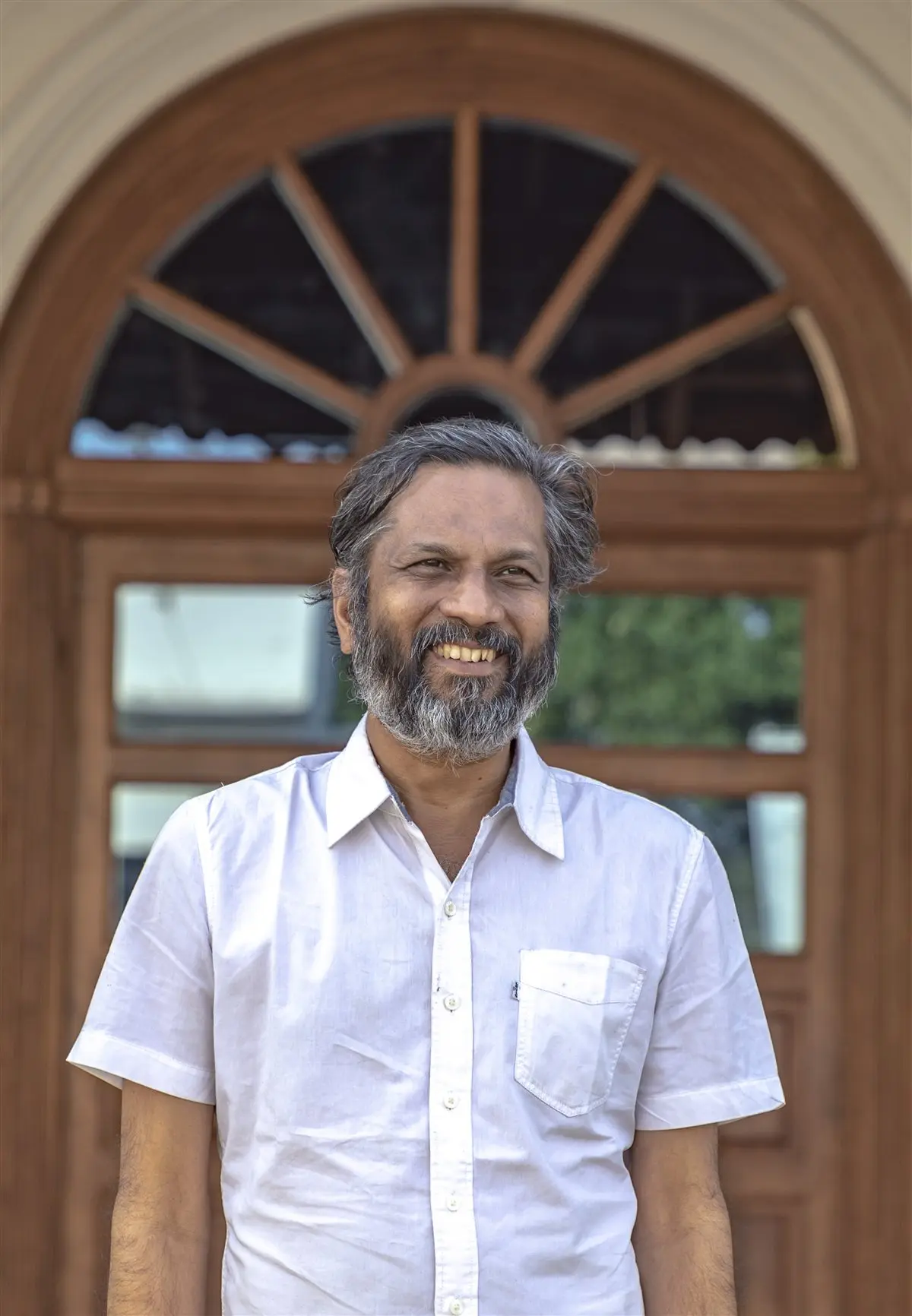
Portrait of Sridhar Vembu, co-founder of Zoho.

At a glance

Zoho Corporation founded
1996
Co-founder & Chief Scientist
Zoho Corporation
Industry
Software, SaaS
Born
1968

The journey

Key milestones in Sridhar Vembu’s life and business journey.

  1. 1968

    Born in Tamil Nadu

  2. B.Tech from IIT Madras; PhD from Princeton

    Then Qualcomm.

  3. 1996

    Co-founds AdventNet

  4. 2009

    Renamed Zoho Corporation

  5. 2021

    Padma Shri

  6. January 2025

    Steps down as CEO to become Chief Scientist

The business story

Sridhar Vembu (b. 1968, Tamil Nadu) earned a B.Tech from IIT Madras and a PhD in electrical engineering from Princeton, worked at Qualcomm, then co-founded AdventNet in 1996 (renamed Zoho Corporation in 2009). He famously refused venture capital, building Zoho into a private, profitable software company with reported revenue around $1.4B, 1M+ paying organisations, and ~15,000 employees. He champions "transnational localism" (building from rural India), runs Zoho Schools of Learning (training engineers without college degrees), received the Padma Shri (2021), and stepped down as CEO to become Chief Scientist in January 2025.

The defining choice came around 2000, when a venture investor offered about $10 million at a valuation near $140 million.

From the HustleMemo profile

Early life and background

Sridhar Vembu was born in 1968 in the Thanjavur district of Tamil Nadu, into a middle-class family; his father worked as a stenographer in the Chennai courts. He followed a familiar high-achiever's path: a B.Tech in electrical engineering from IIT Madras in 1989, then a master's and a PhD in electrical engineering at Princeton, where he worked on information theory under Sergio Verdú.

He joined Qualcomm in San Diego to work on advanced wireless systems. By most standards he had made it, but the work felt narrow and the upside belonged to someone else. In 1996 he left to start a company with his brothers and co-founder Tony Thomas.

Building Zoho

The company began as AdventNet, making network-management software for telecom and networking-equipment firms. It was unglamorous infrastructure, and that turned out to be useful. When the telecom and dot-com bust hit in 2001, AdventNet lost much of its customer base, but it had cash on hand, no investors pressing for an exit and low costs thanks to engineering in India. Rivals with heavy burn rates struggled; AdventNet could choose its next move calmly.

It moved up the stack. ManageEngine, an IT-management suite, launched in 2002, followed by cloud applications for businesses. In 2009 the company took the name Zoho Corporation. Today it offers more than fifty connected applications covering email, office tools, CRM, accounting, HR, support, analytics and project management, and it reports revenue of around $1.4 billion, more than a million paying organisations, over 150 million users and roughly 15,000 employees. Because Zoho is private, these are company-stated or third-party figures rather than audited ones.

How Sridhar operates

  • Vembu said no.

    Zoho has never taken venture capital or institutional equity, though it did have early help from family and friends. His reasoning was about control: outside money brings a clock, a growth target and an expected exit.

  • Turning down that money preserved his options.

    Zoho could fund products that took years to pay off, price well below incumbents such as Salesforce and Microsoft, and serve small and mid-sized businesses that enterprise vendors overlook. It also builds most of its own technology, including its data centres and developer tools, trading short-term efficiency for long-term independence. Critics see that as reinventing the wheel; supporters see cost, privacy and control.

  • Around 2019 Vembu moved to Tenkasi, a rural district in southern Tamil Nadu, and Zoho opened offices in small towns.

    He calls the idea "transnational localism": globally competitive software built from local communities rather than crowded metros. Whether it scales beyond Zoho is still unproven. Alongside it runs Zoho Schools of Learning, started around 2004, which pays school leavers a stipend while training them in software, English and maths, then hires the graduates. The company says they make up roughly fifteen percent of its engineers.

  • He is also an outspoken commentator on economics, education and culture, and his public positions, including a documented 2020 appearance at an RSS event, draw both supporters and critics.

Legacy and lessons

Vembu received the Padma Shri in 2021. In January 2025 he stepped down as CEO to become Chief Scientist, handing the role to co-founder Shailesh Kumar Davey while remaining majority owner, an unusually orderly founder succession. AI's threat to subscription software is the next test of his approach.

  • Capital has a cost beyond dilution. Declining venture money kept every strategic choice in-house.

  • Patience compounds. Profit-funded growth was slower but lasted three decades.

  • Talent exists outside the metros. Training school leavers and hiring locally widened Zoho's talent pool.

  • Plan your own succession. Stepping back while still in control shows a company built to outlast its founder.

More hustlers

Explore more business builders