Sridhar Vembu: The Billion-Dollar Company That Said No to Venture Capital
He turned down the money, built a profitable software giant on his own cash for thirty years, trains his engineers out of villages, and runs it from rural Tamil Nadu — a quiet rebuke to almost everything the startup industry preaches.
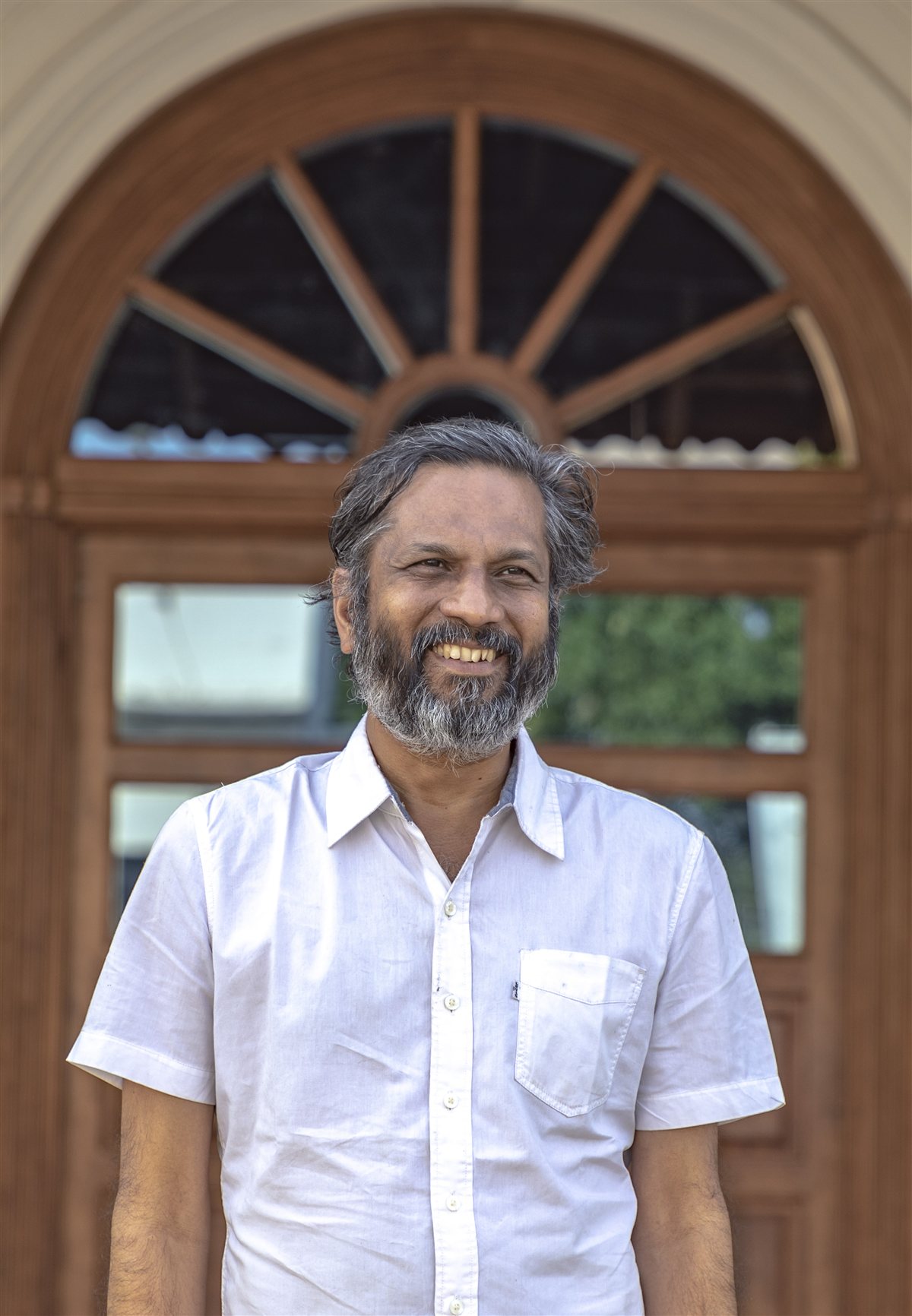
Every founder profile on HustleMemo asks the same two questions: how did they actually do it, and why did it work? Sridhar Vembu's answer is a quiet rebuke to almost everything the startup industry preaches. He built a software company that does well over a billion dollars in revenue, serves more than a million paying businesses, and employs some fifteen thousand people — and he did it without taking venture capital, without going public, and, for the last several years, from a village in rural Tamil Nadu. No blitzscaling, no unicorn theatre. The real version is slower, stranger, and more instructive than the funded-rocket-ship story.
The company that refused the money
Start with the decision that defines him. Around the year 2000, Vembu's company — then called AdventNet — was offered roughly ten million dollars by a venture capitalist at a valuation in the neighbourhood of a hundred and forty million. For a young software business, that is the dream phone call. He turned it down.
To be precise, because precision matters here: Zoho has never taken venture capital or sold institutional equity. It is privately held, bootstrapped, and profitable. That is not the same as "never took a rupee from anyone" — there was some early help from family and friends, the ordinary scaffolding of any beginning. But the structural fact is real and rare: no VC, no board of outside investors, no pressure to sell or list. Vembu has been explicit that this was the point. Outside money comes with outside influence — a clock, a growth mandate, an exit expectation — and he wanted none of it. He wanted to build at his own pace, on his own terms, for as long as he liked.
In an industry that treats raising capital as a milestone to celebrate, refusing it is almost heretical. It is also the single decision that made everything else in this story possible.
Thanjavur to Princeton to Qualcomm
Vembu was born in 1968 in the Thanjavur district of Tamil Nadu, into a middle-class Tamil family — his father a stenographer in the Chennai courts. He took the classic high-achiever's path out: a B.Tech in electrical engineering from IIT Madras in 1989, then a master's and a PhD in electrical engineering from Princeton, where he worked on information theory under the eminent Sergio Verdú. He went to work at Qualcomm in San Diego, building the kind of deep wireless-systems technology that sits at the frontier of the field.
By the conventional measure, he had arrived: an IIT-and-Princeton engineer with a plum Silicon Valley-adjacent job. And it left him restless. The work was narrow; the leverage was someone else's. In 1996 he left to start a company with his brothers and a co-founder, Tony Thomas — a decision that, like Vembu's later choices, traded a sure thing for control over his own work.
Surviving the bust that made the strategy
The first incarnation, AdventNet, was not a glamorous consumer startup. It built network-management software — unsexy infrastructure sold to telecom and networking-equipment companies. That unglamorous focus turned out to be a hidden strength when the world fell apart.
When the dot-com and telecom bubble burst in 2001, it gutted AdventNet's customer base. But Vembu's company emerged with three advantages that, in his own retelling, became the foundation of everything: it had cash in the bank, it had no investors demanding growth or an exit, and it had a low cost base because the engineering was done in India. While funded competitors with high burn rates and nervous boards collapsed or capitulated, AdventNet could simply decide what to do next, calmly, with its own money.
What it decided to do was move up the stack. In 2002 it launched ManageEngine, an IT-management suite, and then began building cloud software for businesses — the office tools, the CRM, the dozens of applications that would become the Zoho suite. In 2009 the company renamed itself Zoho Corporation, putting the SaaS business at the centre of its identity. The crisis that destroyed its first market had handed it the freedom to find a far bigger one.
What "no VC" actually buys
It is worth dwelling on why the bootstrapping mattered, because the lesson is widely misunderstood. The point was never frugality for its own sake. The point was optionality.
A venture-funded company is, by design, on a clock. It raises money at a valuation, which sets an expectation of a much higher valuation later, which demands a growth rate, which dictates spending, hiring, and ultimately a sale or an IPO to return the fund's capital. None of that is sinister — it is simply the physics of the model. But it removes choices. Zoho, funding itself from its own profits, kept all of them. It could build a new product line that wouldn't pay off for years. It could keep prices low and undercut richer rivals. It could refuse to chase a market it didn't believe in. It could move its headquarters to a village. It could take thirty years to compound, because no one was tapping a watch.
Today that compounding has produced a company reporting well over a billion dollars in annual revenue — figures around $1.4 billion have been cited — with more than a million paying customer organisations and over a hundred and fifty million users worldwide, run profitably and entirely privately. (Because Zoho is private, headcount, margins, and any "valuation" you see are company-stated or third-party estimates, not audited public figures; Forbes has placed Vembu and his siblings among India's richest, with wealth in the multiple-billions.) The numbers are large, but the more remarkable fact is the structure underneath them: a software giant with no outside shareholders, answerable to no one but itself.
One suite to run a business
What did Zoho do with all that freedom? It built, slowly and relentlessly, one of the broadest software portfolios in the industry — more than fifty integrated applications spanning email, office productivity, CRM, accounting, HR, customer support, analytics, and project management. The pitch is unusual in an industry of point solutions: instead of stitching together a dozen disconnected tools from a dozen vendors, a business can run almost its entire operation on Zoho, with the pieces designed to work together. It is less a product than an operating system for a company.
The strategy underneath that breadth is price. Zoho consistently undercuts the incumbents — Salesforce, Microsoft, and the rest — often dramatically, offering comparable functionality at a fraction of the cost. That is only possible because of two things the bootstrapping made possible: a low cost base (engineering done in India, increasingly in small towns) and the absence of investors demanding the fat margins that justify a venture return. Zoho can afford to be the affordable option precisely because no one is forcing it to maximise short-term profit. It competes on value in a way funded rivals structurally cannot — and it has used that edge to win the small and medium-sized businesses that the enterprise-focused giants price out.
And it builds almost all of it itself. Zoho is famous — or notorious, depending on your view — for its vertical integration: it runs its own data centres rather than renting cloud capacity from Amazon or Google, and has even built its own low-level developer tools and frameworks. The logic is independence again, carried to its extreme: don't depend on a competitor's infrastructure, don't pay the platform tax, control the whole stack top to bottom. Critics call this inefficient — reinventing wheels that could be bought, effort better spent on products. Defenders call it the only way to control cost, privacy, and destiny across decades. It is, like everything else about Zoho, a long-horizon bet that trades short-term efficiency for long-term control.
Building from the village
The most visibly contrarian chapter came around 2019, when Vembu did something no billion-dollar tech CEO is supposed to do: he moved to a village. He relocated to Tenkasi, a rural district in southern Tamil Nadu, and Zoho began deliberately setting up offices in small towns and rural areas rather than concentrating everything in Chennai or Bangalore.
He calls the underlying idea "transnational localism" — the notion that a company can build globally competitive software while rooting its jobs, its operations, and its prosperity in local communities far from the metros. Instead of pulling talent out of villages into overcrowded cities, bring the high-value work to where people already live. It is part economic argument (metros are expensive and congested; rural India has capable people and lower costs) and part social conviction (technology wealth should not concentrate in a few zip codes).
Whether transnational localism scales into a repeatable model or remains a Vembu-specific experiment is genuinely unproven — it is a thesis being tested in real time, not a settled result. But it is a serious challenge to one of the tech industry's deepest assumptions: that world-class software can only be built in a handful of expensive urban clusters. Zoho is the live experiment in whether that is true.
There is conviction beneath the strategy, not just arithmetic. Vembu talks about rural revival, about reversing the brain drain that pulls every capable young person out of small-town India and into a few overcrowded metros, about the social cost of concentrating opportunity in a handful of postcodes. Setting up an office in a town of a few thousand people is, in his framing, an act of development as much as a business decision — a way of letting people build careers without abandoning the places they come from. It is easy to be cynical about a billionaire's village romance, and a fair reader can hold that skepticism. But the offices are real, the jobs are real, and he moved his own life there, which is more than most who preach decentralisation are willing to do.
Skills over degrees
Tied to the rural strategy is an idea that may outlast everything else Vembu builds: Zoho Schools of Learning, often called Zoho University. Started around 2004, it recruits students straight out of school — many without college degrees, often from modest rural backgrounds — pays them a stipend, trains them for roughly two years in software engineering alongside English and mathematics, and then hires the graduates into Zoho.
By the company's own account, the program has produced thousands of graduates, and a meaningful share of Zoho's engineers — figures around fifteen percent are cited — came through it rather than through traditional colleges. (These are company-reported numbers and deserve independent scrutiny, but the program plainly exists and has run for two decades.) The thesis is direct and falsifiable: that a smart, motivated eighteen-year-old can be taught to build excellent software without a four-year degree and the debt and gatekeeping that come with it. In a country where the college-admissions race is a source of enormous anxiety and expense, that is a quietly radical claim — and Zoho has been betting on it, with its own payroll, for twenty years.
The honours, and the handover
Recognition came. Vembu was named EY Entrepreneur of the Year for India in 2019, received the Padma Shri — one of India's highest civilian honours — in 2021, and was appointed to the country's National Security Advisory Board. Then, in January 2025, he did the thing founders almost never do gracefully: he stepped down as CEO. He took the role of Chief Scientist, handing the chief executive's job to his long-time co-founder Shailesh Kumar Davey while remaining the company's founder and majority owner, free to focus on deep research and his rural-development work.
It was an unusually clean succession — not a forced exit, not a reluctant clinging-on, but a deliberate move from running the company to working on its frontier. For a founder so identified with his company, choosing to step back while still in command of it is itself a statement about ego and institution-building: the company is meant to outlast him, and he was willing to prove it.
The criticisms, kept honest
A profile that only admires is incomplete. Here is the other ledger, with fact separated from opinion.
The public commentary — documented, and divisive. Vembu is a prolific and outspoken presence on social media, offering strong views on economics, education, technology, and culture. He has argued that American "financialism" has corroded its industrial base, and has sharply criticised elite universities as echo chambers that, in his phrasing, rationalise failure. That he holds and voices these views is a documented fact; whether any given one is right is a matter of opinion, and a neutral profile should not pretend otherwise. His willingness to wade into contested public debates earns him admirers and critics in equal measure.
The RSS episode — events documented, meaning contested. In 2018, an employee publicly resigned over a disagreement about Vembu's stance toward the Rashtriya Swayamsevak Sangh, the Hindu-nationalist organisation; in 2020, Vembu attended an RSS event as a guest of honour and defended it as a matter of personal choice. These events are documented. Their political interpretation is genuinely contested and falls outside what a business profile can adjudicate; the fair thing is to record what happened and leave the reader to weigh it, with the presumption of good faith that any subject is owed.
The strategic bets — analysis, not verdicts. Reasonable observers debate Zoho's exposure to a maturing global SaaS market, the threat that AI poses to the entire subscription-software model, and the risk-versus-reward of Zoho's insistence on building almost everything in-house, from its own data centres to its own programming tools. These are live analytical questions, not established failures. Did refusing VC cap Zoho's growth ceiling, or preserve the independence that let it compound for thirty years? Both readings are defensible. The honest answer is that we are watching the experiment continue.
The next test: AI
The same independence that defined Zoho's first three decades now faces its hardest test. Artificial intelligence threatens to upend the entire subscription-software model that Zoho — and every SaaS company — is built on: if AI systems can generate bespoke software on demand, the value of pre-packaged business apps could erode. Vembu has been characteristically unbothered in public, arguing that Zoho's privacy stance, its owned infrastructure, and its long-term orientation position it well, and pushing the company into its own AI work from its rural R&D base — which is, not coincidentally, exactly what a Chief Scientist would do. Whether that confidence is vindicated, or whether AI proves to be the one disruption a patient, independent company cannot simply out-wait, is genuinely unknown. It is the open question on the Chief Scientist's desk. What is not in doubt is that Zoho will meet it the way it has met everything else: on its own terms, with its own money, answerable to no one. Whether that is enough this time is the next chapter of the thirty-year experiment.
Why it actually worked
Strip away the village and the philosophy and the engine of the whole thing is patient capital — specifically, the founder's own. Zoho worked because Vembu removed the one variable that forces most companies into short-term decisions: outside investors with a return to earn on a schedule. Freed from that clock, he could do the unglamorous, compounding things — build a broad product suite, keep prices low, fund the next product from the last one's profits, train his own engineers, and wait. None of those moves is flashy. Together, over three decades, they built a giant.
It is worth naming the trade honestly, because bootstrapping is not free. Saying no to that hundred-and-forty-million-dollar-valuation round in 2000 almost certainly meant slower growth than capital could have bought; there are surely markets Zoho entered late, or never, because it grew only as fast as its own profits allowed. A funded Zoho might have been bigger, sooner. But it would also have been someone else's — beholden to a board, aimed at an exit, unable to move to a village, train engineers for two years, or undercut Salesforce on principle. Vembu made a clear-eyed exchange: a smaller-but-mine company over a bigger-but-shared one. Thirty years on, looking at a private, profitable, billion-dollar business entirely under his own control, it is hard to argue he chose wrong.
There is a deeper lesson in it for anyone building without a war chest. The funded-rocket-ship narrative is so dominant that bootstrapping can feel like the consolation prize — what you do if you can't raise. Vembu's career is the strongest available argument for the opposite: that owning your company outright, growing on your own cash, and answering to no one is not a fallback but a strategy — one that trades speed for control and optionality, and that, given enough patience, can build something most funded companies never will, because they ran out of time or sold too early. He had the rarest luxury in business: he was never in a hurry.
The honest close
Sridhar Vembu is not a saint and not an oracle — he is an opinionated, contrarian engineer who made an early, unfashionable bet on independence and then spent thirty years vindicating it. Zoho is the proof: a profitable, private, globally significant software company that took no venture money, that trains its own engineers out of villages, and that handed off its CEO's chair on its founder's own terms.
The "how did he do it" answer is patience funded by profit. The "why did it work" answer is that refusing the money preserved every choice that mattered. And the part his story adds to this site is the most quietly subversive of all: that the slow, self-funded, build-where-you-want path is not the road you take when you fail to get on the rocket ship. For some founders, it is the better rocket — it just launches on a longer fuse, and goes somewhere the funded ones can't follow.
Editor's note: HustleMemo profiles real founders and operators. This is a critically-neutral, fact-checked profile. The "no venture capital" claim is stated precisely (no VC/institutional equity, with early friends-and-family help and a declined round — not "never any outside money"). Private-company figures (revenue, headcount, ownership, "valuation") are company-stated or third-party estimates, not audited. Vembu's public commentary and the RSS episode are recorded as documented events with their interpretation left as opinion. The cover photograph is a Zoho Corporation press image, used with permission. Corrections: editorial@hustlememo.com.
Sources
- Biography, education (IIT Madras 1989; Princeton PhD in information theory under Sergio Verdú), Qualcomm, the AdventNet→ManageEngine→Zoho timeline, and honours (Padma Shri 2021, EY Entrepreneur 2019, NSAB): Wikipedia, "Sridhar Vembu"; IIT Madras Alumni; YourStory (Zoho at 25).
- The bootstrapping story and the declined ~$10M VC round (~2000): YourStory; Equentis. Stated precisely: no VC/institutional equity, with early friends-and-family support.
- Scale (revenue
$1.4B; >1M paying organisations; >150M users; 30th-anniversary figures, Feb 2026): ManageEngine/Zoho official release; TechAfrica News; secondary analyses. Net worth ($6B with siblings, Forbes Oct 2025): via Wikipedia. All private-company figures treated as company-stated/estimates. - Build-for-India / rural ("transnational localism," Tenkasi/Renigunta): Wikipedia; GlobalIndian cover story.
- Zoho Schools of Learning / "Zoho University" (skills over degrees; stipend; ~2,000+ graduates, ~15% of engineers): Zoho Schools site and FAQ; Wikipedia.
- Stepping down as CEO to Chief Scientist (Jan 2025; Shailesh Kumar Davey as CEO): Outlook Business; Deccan Herald; Indian Startup News.
- Public commentary (financialism; elite universities): Free Press Journal; Business Today. The RSS episode (2018 resignation; 2020 event): Wikipedia — recorded as documented events.
More from this category
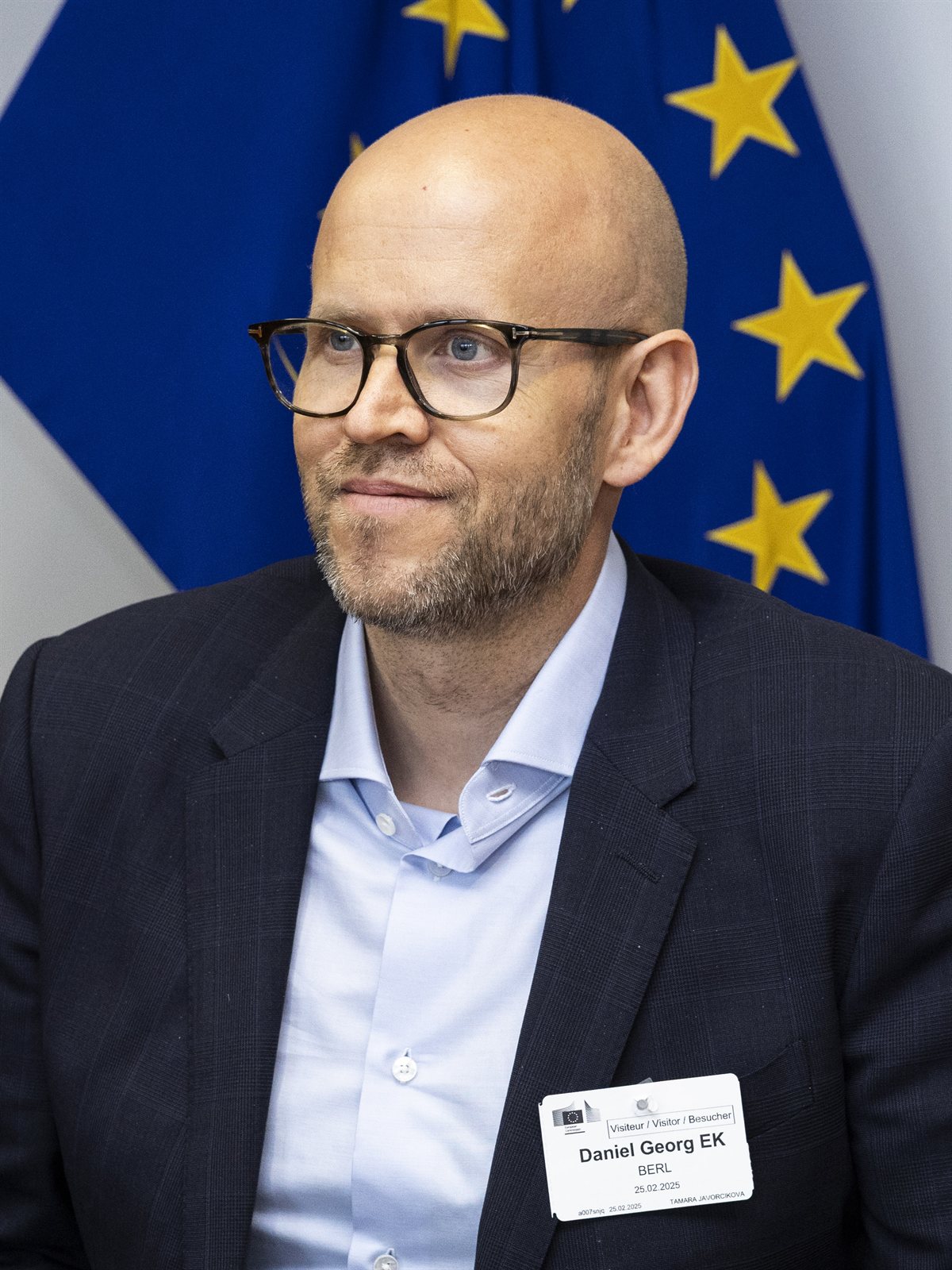
Daniel Ek: The Swede Who Beat Piracy by Building Something Better
A critically-neutral profile of Spotify’s Daniel Ek: how he beat music piracy not with lawsuits but with a freemium product better than free, endured two years of label negotiations and sixteen more before profit, and built a 675M-user streaming giant — alongside the artist-payment, Rogan and defence-tech controversies.

Whitney Wolfe Herd: The Founder Who Turned Being Pushed Out Into Bumble
A critically-neutral profile of Bumble’s Whitney Wolfe Herd: how she converted her ordeal at Tinder into the "women make the first move" thesis, took Bumble public at 31, and now fights to sustain it through a ~94% stock decline — the founding triumph and the hard aftermath, held honestly together.
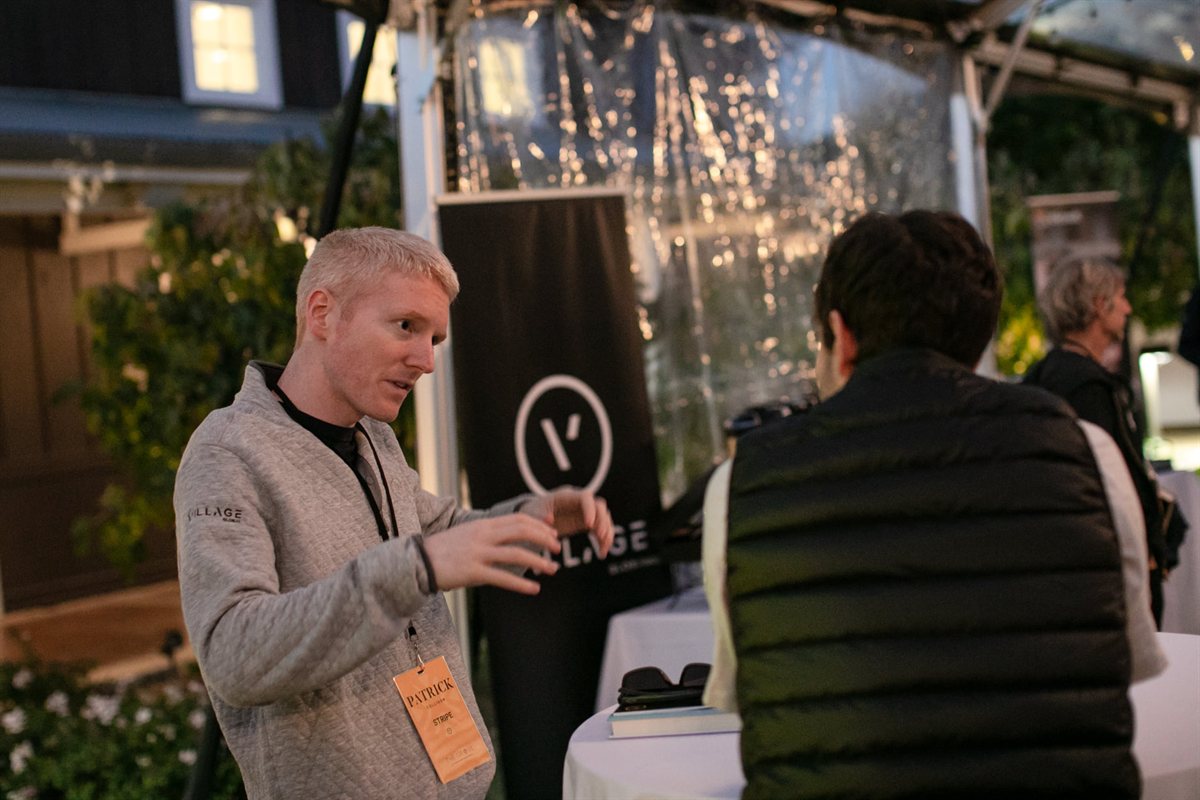
Patrick Collison: The Irish Teenager Who Built the Internet’s Payment Rails
A critically-neutral profile of Stripe’s Patrick Collison: the teenage prodigy who sold his first startup at 19, reduced online payments to a few lines of developer code, and built the financial infrastructure of the internet — through a bubble, a markdown, and a full recovery past its old peak to ~$159B.