
Hustler profile

Jack Ma

Co-founder of Alibaba — the English teacher who built China’s e-commerce giant on trust infrastructure (Alipay), became its richest man, then collided with the Chinese state after the 2020 Ant IPO was suspended.

Jack Ma (Ma Yun, b. 1964, Hangzhou) is a former English teacher who co-founded Alibaba in 1999 with a group of partners in his apartment. Non-technical but relentless, he built China’s dominant e-commerce platforms (Alibaba, Taobao) and, crucially, the Alipay escrow system that solved online trust.

  • Co-founder, Alibaba Group
  • China
  • E-commerce, internet, fintech
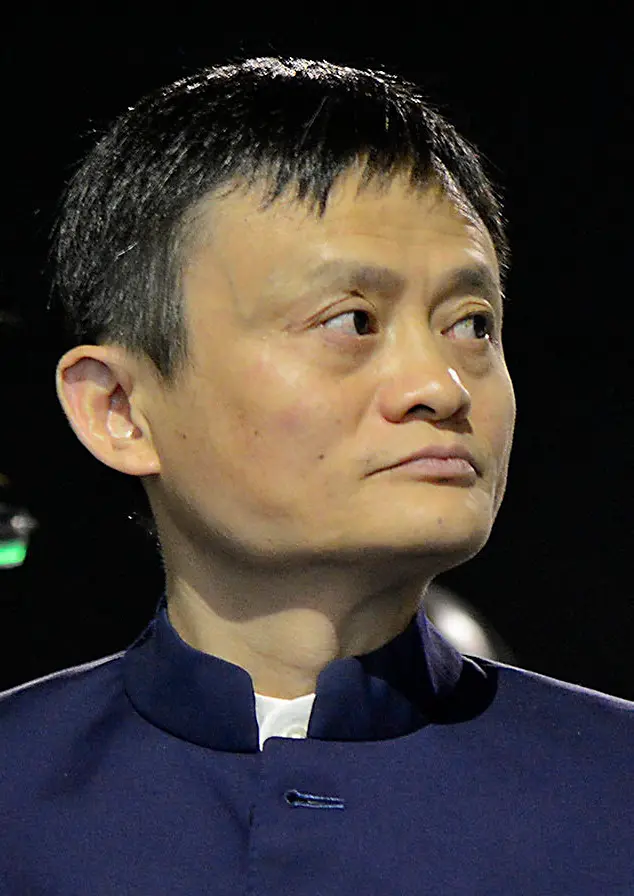
Portrait of Jack Ma, co-founder of Alibaba, photographed in 2015.

At a glance

Alibaba Group founded
1999
Co-founder
Alibaba Group
Industry
E-commerce, internet, fintech
Born
1964

The journey

Key milestones in Jack Ma’s life and business journey.

  1. 1964

    Born in Hangzhou

    A former English teacher.

  2. 1999

    Co-founds Alibaba

    In his apartment, with a group of partners.

  3. 2014

    Alibaba’s NYSE IPO

    Then the world’s largest.

  4. October 2020

    Speech criticising regulators

    Ant Group’s IPO is suspended and Alibaba later fined ~$2.8B.

  5. 2023

    Partial public rehabilitation

The business story

Jack Ma (Ma Yun, b. 1964, Hangzhou) is a former English teacher who co-founded Alibaba in 1999 with a group of partners in his apartment. Non-technical but relentless, he built China’s dominant e-commerce platforms (Alibaba, Taobao) and, crucially, the Alipay escrow system that solved online trust. Alibaba’s 2014 NYSE IPO was then the world’s largest. After Ma criticised regulators in an October 2020 speech, Ant Group’s record IPO was suspended, Alibaba was fined ~$2.8B for antitrust, and Ant was forced to restructure; Ma withdrew from public life before a partial rehabilitation from 2023.

Ma's strengths were persuasion, persistence and a sense for where trust was missing.

From the HustleMemo profile

Early life and background

Jack Ma, born Ma Yun in Hangzhou in 1964, grew up in an ordinary family and has never claimed technical skill. His early edge was language. As a teenager he cycled to a Hangzhou hotel for years to guide foreign visitors for free in return for English practice, and it was one of those visitors who gave him the name "Jack."

School did not come easily. He took China's national university entrance exam, the gaokao, three times, with very low maths scores on the first two attempts, and entered Hangzhou Normal University because its foreign-language department had places to fill. After graduating in English in 1988 he became a teacher, work he has said he enjoyed. His well-known stories of repeated job rejections come from his own speeches, change between tellings and have never been independently checked.

Building Alibaba

A 1995 trip to the United States introduced Ma to the internet, and to how little information about China was online. He started "China Pages," an early directory of Chinese businesses, then spent time in Beijing at an organisation linked to the foreign-trade ministry before leaving to build his own company.

In 1999, in his Hangzhou apartment, he and a group of partners founded Alibaba, pooling a few hundred thousand yuan. The original idea was business-to-business: connect China's small manufacturers with buyers worldwide. The name was chosen because people everywhere already knew the folk tale behind it. Around twenty-five million dollars, led by Goldman Sachs and SoftBank, including a quick decision by Masayoshi Son to invest, carried the company through the dot-com crash. Even so, it had overextended abroad and had to cut back hard, refocus on Chinese small businesses and bring in executives with the financial discipline Ma lacked.

Taobao, a free consumer marketplace launched in 2003, beat eBay in China. The larger breakthrough was Alipay, an escrow service that held a buyer's payment until goods arrived. In a market where neither side trusted the other, it removed the main barrier to online commerce, and it later grew into Ant. Alibaba's 2014 NYSE listing raised about $25 billion, then the largest IPO on record, and made Ma China's richest man.
How Jack operates

  • He sold an oversized mission convincingly, then accepted operational help when the company's survival depended on it.

    Several episodes remain contested. Alipay's 2010–2011 transfer out of Alibaba into an entity he controlled happened without prior board approval; he cited Chinese licensing rules, critics saw value taken from shareholders, and a commercial settlement eventually resolved it. In 2019 he praised China's "996" work schedule, then backed away within days.

  • His October 2020 Shanghai speech criticising financial regulators preceded a sequence of documented events: the suspension of Ant's planned record IPO, a roughly $2.8 billion antitrust fine on Alibaba in 2021, a restructuring that cut his Ant voting rights to about 6% and a further fine on Ant in 2023.

    Many observers link the speech to these actions; the state presented them as regulation, and its actual motives are not publicly known. Ma largely withdrew from public view and later appeared at a February 2025 symposium hosted by Xi Jinping, a sign of partial rehabilitation rather than a return to leadership.

Legacy and lessons

Ma showed that a non-technical founder could build one of the internet era's most important companies by solving a problem of trust. He also showed that founder power has limits set by forces outside the market.

  • In low-trust markets, build the trust layer. Escrow did more to win commerce than the storefront.

  • Survival requires discipline. Charisma raised money; retrenchment kept the company alive.

  • Governance shortcuts leave lasting questions. The Alipay transfer is still debated.

  • Know who sets the ceiling. Under a powerful state, regulators can outweigh markets.

More hustlers

Explore more business builders