
Hustler profile

Jorma Ollila

The CEO and chairman who refocused Nokia onto mobile phones and made it the world’s largest handset maker — and who later presided, in part, over its smartphone-era collapse.

Born in Seinäjoki, Finland, in 1950; educated at the United World College of the Atlantic with master’s degrees in political science (Helsinki), economics (LSE) and engineering physics (Helsinki University of Technology). Joined Nokia from Citibank in 1985; ran the mobile-phones division from 1990; CEO 1992–2006 and chairman 1999–2012.

  • Nokia
  • Finland
  • Mobile phones, telecommunications
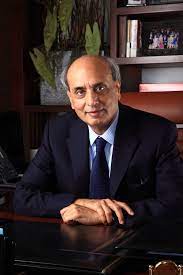
Portrait of Jorma Ollila.

At a glance

Nokia founded
1865
Company
Nokia
Industry
Mobile phones, telecommunications
Born
1950

The journey

Key milestones in Jorma Ollila’s life and business journey.

  1. 1950

    Born in Seinäjoki, Finland

  2. 1985

    Joins Nokia from Citibank

  3. 1990

    Runs the mobile-phones division

  4. 1992–2006

    CEO of Nokia

    Refocuses it onto mobile phones.

  5. 1999–2012

    Chairman of Nokia

  6. 2006–2015

    Chairman of Royal Dutch Shell

The business story

Born in Seinäjoki, Finland, in 1950; educated at the United World College of the Atlantic with master’s degrees in political science (Helsinki), economics (LSE) and engineering physics (Helsinki University of Technology). Joined Nokia from Citibank in 1985; ran the mobile-phones division from 1990; CEO 1992–2006 and chairman 1999–2012. Refocused Nokia from a diversified conglomerate onto mobile phones, making it the global market leader before its post-2007 decline. Chairman of Royal Dutch Shell 2006–2015.

Before Nokia

Jorma Ollila was born on 15 August 1950 in Seinäjoki, Finland. His schooling was unusually international for a Finn of his generation: as a teenager he attended the United World College of the Atlantic in Wales. He then earned three master's degrees, in political science at the University of Helsinki, in economics at the London School of Economics, and in engineering physics at Helsinki University of Technology.

That spread of disciplines (policy, finance and hard science) mapped closely onto what a telecoms leader would later need: fluency with balance sheets, with the engineering of the product, and with the governments and standards bodies that shape the industry. He started out in international banking at Citibank before moving to Nokia in 1985.

Building Nokia into a mobile company

The Nokia Ollila joined was a nineteenth-century industrial group that at different times made paper, rubber goods including boots and tyres, cables, televisions and a still-secondary line of telecoms equipment. He became head of finance in 1986 and took over the mobile-phones division in 1990, as cellular service was beginning its shift from an executive niche to a mass market.

Named chief executive in 1992, he committed the entire company to mobile telephony and its networks. The legacy businesses (rubber, cables, paper, consumer electronics) were sold off, and capital and talent were redirected to phones. Through the 1990s and 2000s Nokia overtook much larger American, Japanese and European electronics rivals to become the world's biggest handset maker, at one point selling roughly one phone in three worldwide. In Finland it became a central pillar of exports, research spending and stock-market value.

Ollila was chairman from 1999 and stepped down as CEO in 2006, staying on as chairman until 2012. The iPhone arrived in 2007, Android soon after, and Nokia's hardware-led strengths counted for less in a software-and-apps contest. The handset business was sold to Microsoft across 2013 and 2014; Nokia continued as a network-equipment company.

How Jorma operates

  • Ollila's career is defined by a few deliberate choices:

  • Radical focus.

    He chose to abandon diversified, profitable lines and stake the company on a young industry, a move that was neither obvious nor safe at the time.

  • Execution at scale.

    The strategy only worked because Nokia was quicker to read consumer taste and stronger in manufacturing and logistics than more distracted competitors.

  • Operating across borders.

    His international education and banking start prepared him for a company that sold into nearly every country.

  • A long reign in governance.

    As chairman he oversaw the board and the CEO rather than daily operations, a distinction at the heart of debates over his legacy.

  • That legacy is contested.

    Risto Siilasmaa, his successor as chairman, described in a 2018 book a leadership culture that many readers took as implicating the Ollila years; Ollila has called such accounts exaggerated. Separately, as chairman of Royal Dutch Shell from 2006 to 2015 and its first chairman from outside the Netherlands and Britain, he presided over Shell winding down its wind-power development, a decision climate critics cite. In 2014 he was fined 3,000 euros for not disclosing a Luxembourg investment company, Kestrel SA.

Legacy and lessons

Ollila built one of Europe's most successful technology companies and lifted the economic outlook of a small country. His record also shows how the conditions for decline can form during a company's strongest years.

  • Narrowing a company's focus can take more nerve than diversifying.

  • Strategy creates the opening, but years of disciplined execution turn it into dominance.

  • Organisations optimised for one way of competing struggle to reinvent themselves for the next.

  • A firm that becomes a national champion concentrates both pride and risk.

More hustlers

Explore more business builders