Historical profile

Dhirubhai Ambani

Founder of Reliance Industries. A schoolteacher’s son who built India’s largest private company — and mastered the politics of the License Raj as completely as the business itself.

Born in Chorwad, Gujarat, in 1932 into a modest but literate trading-caste family. Worked for the trading firm A. Besse & Co. in Aden as a teenager, then returned to India in 1958 to found Reliance Commercial Corporation.

  • Founder, Reliance Industries
  • India
  • Textiles, petrochemicals, refining
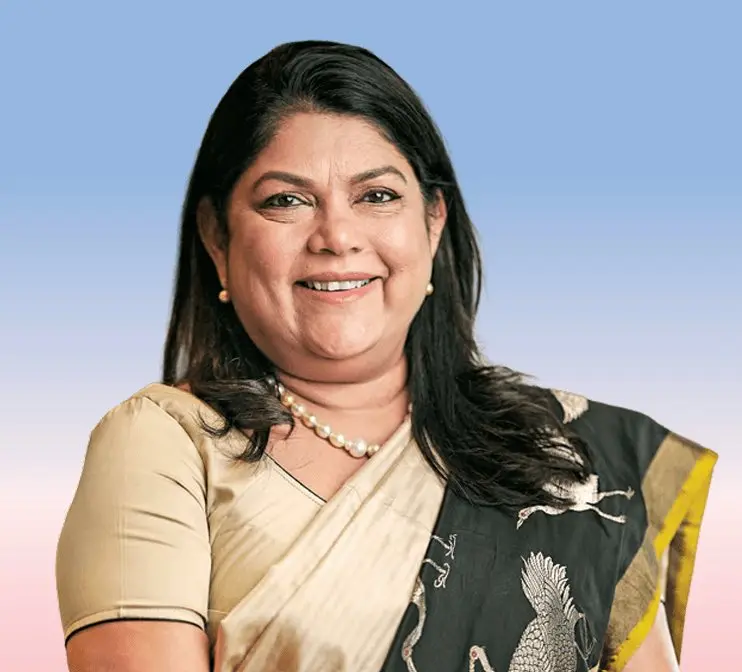
Dhirubhai Ambani on a 2002 commemorative postage stamp of India.

At a glance

Reliance Industries founded
1958
Founder
Reliance Industries
Industry
Textiles, petrochemicals, refining
Lived
1932–2002

The journey

Key milestones in Dhirubhai Ambani’s life and business journey.

  1. 1932

    Born in Chorwad, Gujarat

  2. Works for A. Besse & Co. in Aden

  3. 1958

    Founds Reliance Commercial Corporation

    Returning to India to start from a one-room Bombay office.

  4. Moves from yarn trading into textiles

    The Vimal brand.

  5. 1977

    Takes Reliance public

    Building India’s first mass retail-shareholder base.

  6. Integrates backwards into polyester, petrochemicals and refining

  7. 2002

    Dies

  8. 2016

    Awarded the Padma Vibhushan posthumously

The business story

Born in Chorwad, Gujarat, in 1932 into a modest but literate trading-caste family. Worked for the trading firm A. Besse & Co. in Aden as a teenager, then returned to India in 1958 to found Reliance Commercial Corporation. Moved from yarn trading into textiles (the Vimal brand), took Reliance public in 1977, and pioneered India’s retail equity culture via mass shareholding and convertible debentures. Built Reliance into India’s largest private enterprise, integrated backwards into polyester, petrochemicals, and refining. Died in 2002; awarded the Padma Vibhushan posthumously in 2016.

Early life and background

Dhirajlal Hirachand Ambani, known as Dhirubhai, was born in December 1932 in Chorwad, a village in the Junagadh region of what is now Gujarat. His father was a village schoolteacher. The household had little money and many mouths, and Dhirubhai left school early, but it was also a literate Modh Bania family rooted in a trading culture. He grew up comfortable with numbers and negotiation, and as a boy he sold fritters to pilgrims near the Girnar hills.

Around 1949, still a teenager, he followed an elder brother to Aden, then a British colony and a major port for oil bunkering and trade. He joined A. Besse & Co., a large trading house that distributed Shell products in the region, starting in junior roles and rising into trading work. Those years taught him how commodities, currencies, shipping and fuel moved across borders, knowledge that was hard to acquire inside India's closed economy. A popular story says he profited by melting down Yemeni coins for their silver; it fits his instincts but has never been verified.

Building Reliance

Dhirubhai returned to India in 1958 and set up Reliance Commercial Corporation with his cousin Champaklal Damani, working from a small office near Masjid Bunder in Bombay while the family lived in a modest Bhuleshwar apartment. Starting capital is usually put at around ₹15,000. The firm exported spices and other goods to Aden and imported yarn.

The partnership ended in the mid-1960s, reportedly because the two men had very different tolerances for risk. Dhirubhai kept Reliance, opened a textile mill at Naroda near Ahmedabad in 1966 and made Vimal a well-known brand. From there the company pushed backwards into its own inputs: polyester, petrochemicals and eventually refining at Jamnagar, becoming India's largest private-sector enterprise.

Reliance listed in 1977, and this is where his most widely recognised contribution lies. He persuaded ordinary middle-class Indians, most of whom had never held a share, to invest. He used convertible debentures to raise large sums without giving up control or relying only on banks and state lenders, and held shareholder meetings in football stadiums to fit the crowds. The retail investor base he built helped shape India's modern equity culture.
How Dhirubhai operates

  • His approach rested on a few consistent ideas: build at scale, integrate toward your own raw materials and treat the regulatory system as terrain to navigate rather than a ceiling.

    Under the License Raj, capacity, imports and foreign exchange were rationed by the state, and access often counted as much as efficiency.

  • He worked that system with unusual skill.

    Reliance used export-linked replenishment licences to earn the right to import scarce polyester filament yarn, then dominated the domestic market. Critics and a large body of journalism, including the Indian Express investigations of 1986 and 1987, alleged that policy shifts on duties, feedstocks and capacity repeatedly favoured Reliance. Reliance disputed that framing, and many specific charges never became conclusive legal findings against him. His long contest with Nusli Wadia of Bombay Dyeing became the centre of Hamish McDonald's book The Polyester Prince, whose Indian publication was effectively blocked under legal threat.

Legacy and lessons

Dhirubhai died in Mumbai in July 2002 and was awarded the Padma Vibhushan posthumously in 2016. He left no will, and the division of the group between his sons Mukesh and Anil was settled in 2005 through their mother, Kokilaben. His career shows that genuine commercial talent and skill at working a distorted system can be impossible to separate.

  • Real advantages can be modest. Literacy, a trading community and a foothold abroad mattered even without inherited wealth.

  • Financial innovation can be a moat. Broad retail ownership gave Reliance capital and public support.

  • Backward integration compounds. Owning inputs turned a textile brand into an industrial group.

  • Plan for succession. Leaving no will produced a public family dispute.

More hustlers

Explore more business builders