Dhirubhai Ambani: The Struggle, the Privilege, and the License Raj
Neither the pure self-made hero nor the cartoon crony. A fact-checked, critically neutral case study of how India’s most contested business legend was actually built.

Dhirubhai Ambani is India's most contested business legend. To his admirers he is the schoolteacher's son who built the country's largest private company from a one-room flat — proof that ambition beats pedigree. To his critics he is the man who understood, better than any rival, that in licence-era India the most valuable raw material was not polyester or petroleum but proximity to power.
Both pictures are partly true. The honest story is that Dhirubhai had a genuinely thin start, a real and rare set of commercial instincts, and a willingness to bend — critics say break — the rules of a system that was already rigged in favour of the connected. Untangling which of his advantages were earned and which were engineered is the whole point of taking him seriously.
The struggle was real — but it was not the bottom
Dhirajlal Hirachand Ambani was born on 28 December 1932 in Chorwad, a village in the Junagadh region of present-day Gujarat. His father, Hirachand Govardhandas Ambani, was a village schoolteacher. This matters in both directions. A schoolteacher's household in 1930s rural Kathiawar was poor by any modern measure — money was tight, the family was large, and Dhirubhai left formal schooling early. But it was a literate, respectable, trading-caste (Modh Bania) household, not the landless destitution that the bottom of Indian society actually looked like. He grew up able to read, count, and bargain, in a community whose entire culture was commerce.
As a teenager he sold bhajias (fritters) to pilgrims near the Girnar hills on weekends and ran small ventures. The story usually stops at "fritter seller," because it flatters the arc. The more accurate reading: he was a sharp, restless boy from a modest-but-mercantile background who was never going to stay in the village.
Aden: the education that money can't buy and class partly bought
At around 16 or 17 — roughly 1949 — Dhirubhai left for Aden, then a British colony and one of the busiest ports in the world, a hub for oil bunkering and global trade. He went because his elder brother was already there; a foothold abroad was itself a form of access that most Indian villagers did not have.
In Aden he worked for A. Besse & Co., a major trading firm that was, among other things, the regional distributor for Shell products. He started low — filling-station and clerical work is the usual description — and worked up to more responsible trading roles. This was the real education: at Besse he watched how commodities, currencies, shipping, and oil moved across borders, and he absorbed the mechanics of arbitrage and trade finance in a way no Indian classroom of the period could have taught.
One famous anecdote belongs here, with a warning attached. It is said that Dhirubhai noticed the silver content of the Yemeni rial was worth more than the coin's face value, so he bought, melted, and sold the silver to bullion dealers in London — a textbook arbitrage. The story is repeated everywhere and is genuinely in character. It is also unverified, frequently embellished, and impossible to confirm; treat it as legend that illustrates his instinct rather than as documented fact.
Coming home with a thesis, not just savings
Dhirubhai returned to India in 1958 and founded Reliance Commercial Corporation, a small trading outfit, initially in partnership with his cousin Champaklal Damani. They worked out of a tiny office near Masjid Bunder in Bombay; the family lived in a modest chawl apartment in Bhuleshwar. The starting capital was small — figures around ₹15,000 are commonly cited and should be read as approximate.
He began by exporting spices and other commodities to Aden and importing yarn into India. The partnership with Damani dissolved in the mid-1960s, reportedly over a difference in appetite for risk — Damani cautious, Dhirubhai aggressive. Dhirubhai kept Reliance and moved decisively into textiles, opening a mill at Naroda, near Ahmedabad, in 1966 and building the Vimal brand into a household name. The thesis he came home with was simple and, for India, radical: build scale, integrate backwards toward your own raw materials, and never let a government rulebook be the thing that stops you.
The privilege ledger: what he actually started with
To his great credit, Dhirubhai did not inherit a business, capital, or a famous name. But "self-made" flattens a real set of structural advantages that are worth naming honestly:
- Literacy and a trading-caste milieu. He grew up inside a commercial community, numerate and able to negotiate — a head start most of rural India did not have.
- A foothold abroad. A brother already in Aden turned "emigrate and find work" from a gamble into a plan.
- Frontline exposure to global trade. The Besse years handed him a working education in commodities, oil, shipping, and finance that was effectively unavailable inside India's closed economy.
- Timing. He returned just as a newly independent, import-substituting India was erecting the elaborate licensing system he would spend three decades out-manoeuvring.
None of these is a fortune. All of them lowered the activation energy for everything that followed.
The real genius: the equity cult
Here is the achievement that even his harshest critics concede, and it deserves full credit. Reliance went public in 1977, and Dhirubhai did something almost no Indian promoter had done: he sold the idea of share ownership to ordinary, middle-class Indians who had never owned equity in their lives.
He pioneered the use of convertible debentures to raise vast sums without surrendering control or depending solely on banks and state financial institutions. He held shareholder meetings in football stadiums because the auditorium couldn't hold the crowd. By the 1980s and 1990s, Reliance had millions of small shareholders — a genuine retail-investor base that turned the company into a popular movement as much as a corporation. Dhirubhai effectively created India's modern equity culture. That is real, durable financial innovation, not a trick of policy.
The political setting: the part the legend skips
Reliance's rise cannot be honestly told without the License Raj — the dense system of industrial licences, import quotas, and price controls that governed Indian business from the 1950s to the early 1990s. In that world, capacity, imports, and foreign exchange were rationed by the state. The decisive competitive edge was not always efficiency; it was frequently access — knowing which official to see, which licence to win, which duty would be raised or lowered, and when.
Dhirubhai played this game with unmatched skill. The clearest documented example is the export-import replenishment ("rep") licence mechanism for synthetic fibres. Exporters of certain goods earned entitlements to import otherwise-restricted materials. Reliance became expert at exporting to earn the right to import cheap polyester filament yarn, then dominating the domestic market — turning a bureaucratic rule into a moat. Whether this was brilliant compliance or systematic gaming of a loophole depends on where you stand; that he did it better than anyone is not in dispute.
His proximity to power spanned governments and parties, and was widely reported throughout his life. Critics, and a substantial body of journalism, allege that tariff and policy changes on polyester feedstocks (the PTA versus DMT routes), on import duties, and on industrial capacity repeatedly moved in ways that favoured Reliance's specific position over its rivals'. Reliance has long disputed the characterisation that these outcomes were bought rather than earned. The truthful summary is that the correlation between policy shifts and Reliance's advantage is heavily documented; the causation — explicit favours for explicit consideration — was alleged extensively but rarely proven in court.
The Polyester Prince wars
The contest with Nusli Wadia of Bombay Dyeing, fought through the early-to-mid 1980s, is the set-piece of this story. The two giants backed rival chemical routes to polyester and lobbied opposing positions on duties and licences; the fight spilled into boardrooms, the press, and the corridors of Delhi.
That war is the spine of journalist Hamish McDonald's book The Polyester Prince: The Rise of Dhirubhai Ambani (1998) — a work whose publication in India was effectively blocked under the threat of legal action, and which circulated for years in photocopy before a revised edition, Ambani & Sons, appeared in 2010. The book's suppression is itself part of the record: it shows the reach a private company could exert over what the Indian public was allowed to read about it.
The Indian Express investigations
The most serious public reckoning came in 1986–87, when The Indian Express, under proprietor Ramnath Goenka with writers Arun Shourie and S. Gurumurthy, ran a sustained investigative campaign against Reliance. The allegations included importing more textile machinery capacity than licensed (the "excess capacity" charge at the Patalganga plant), manipulating import entitlements, and irregularities in debenture and loan dealings. The campaign coincided with V. P. Singh's tenure as a reform-minded finance minister who tightened scrutiny on the company — before he was moved out of the finance ministry, a shuffle critics read as telling.
What came of it all is genuinely mixed, and honesty requires saying so: the investigations triggered inquiries and enormous controversy, but many of the specific charges were never converted into conclusive legal findings against Dhirubhai personally. He was, by the standard of his accusers, a master of operating in the grey zone the License Raj created — neither cleanly exonerated nor definitively convicted in the court of law, however damning the court of journalism. Read the Express campaign as the most thorough public allegation of cronyism levelled at him, not as a settled verdict.
What he built, and what he left
By the time Dhirubhai suffered the stroke that would eventually kill him — he died on 6 July 2002 in Mumbai, having survived an earlier stroke in 1986 that partially paralysed his right hand — Reliance had grown from a yarn-trading desk into India's largest private-sector enterprise, integrated backwards from textiles into polyester, petrochemicals, and ultimately one of the world's largest refineries at Jamnagar. In 2016, the government awarded him the Padma Vibhushan, India's second-highest civilian honour, posthumously.
He left the empire to his sons Mukesh and Anil, without a will — an omission that produced a bitter, public succession feud, brokered in 2005 by their mother Kokilaben into a split of the group. That coda is its own comment on a man who engineered everything except his own succession.
The honest verdict
Dhirubhai Ambani is neither the pure self-made hero of the airport-bookshop biographies nor the cartoon crony of his detractors. He started genuinely modestly, learned global trade the hard way in Aden, and had real, rare commercial gifts — the equity cult he built was a true innovation that democratised share ownership for a generation of Indians.
He also operated inside a corrupt, distorting licence system, and he mastered its politics so completely that "mastering the politics" became indistinguishable, in his case, from the business itself. The uncomfortable conclusion is that both things are load-bearing: remove the talent and there is no Reliance; remove the willingness to work the system and there is, very probably, also no Reliance. India's most celebrated rags-to-riches story is also its most instructive case study in how, in a rigged economy, the rules are not an obstacle to the ambitious — they are the opportunity.
Editor's note: HustleMemo writes founder-led case studies grounded in public reporting. Where a claim is disputed — the Aden coin-melting anecdote, the cronyism allegations, the outcome of the Indian Express investigations — we say so explicitly rather than pick the version that flatters our angle. We do not interview subjects on a paid basis and disclose conflicts in-line. Corrections: editorial@hustlememo.com.
Sources
- "Dhirubhai Ambani," Wikipedia (birth/death dates, Reliance founding 1958, IPO 1977, Padma Vibhushan 2016).
- Hamish McDonald, The Polyester Prince: The Rise of Dhirubhai Ambani (1998); revised as Ambani & Sons (2010).
- The Indian Express investigative campaign on Reliance (1986–87), Ramnath Goenka / Arun Shourie / S. Gurumurthy.
- Contemporary reporting on the export-import replenishment licence scheme and the PTA-vs-DMT polyester-feedstock policy debates.
- Reporting on the Reliance equity-issue history, convertible debentures, and stadium shareholder meetings.
- Reporting on the 2005 Ambani succession dispute and the Mukesh/Anil split brokered by Kokilaben Ambani.
- Note: the Yemeni-rial coin-melting story and the ~₹15,000 starting-capital figure are widely cited but unverified/approximate.
More from this category
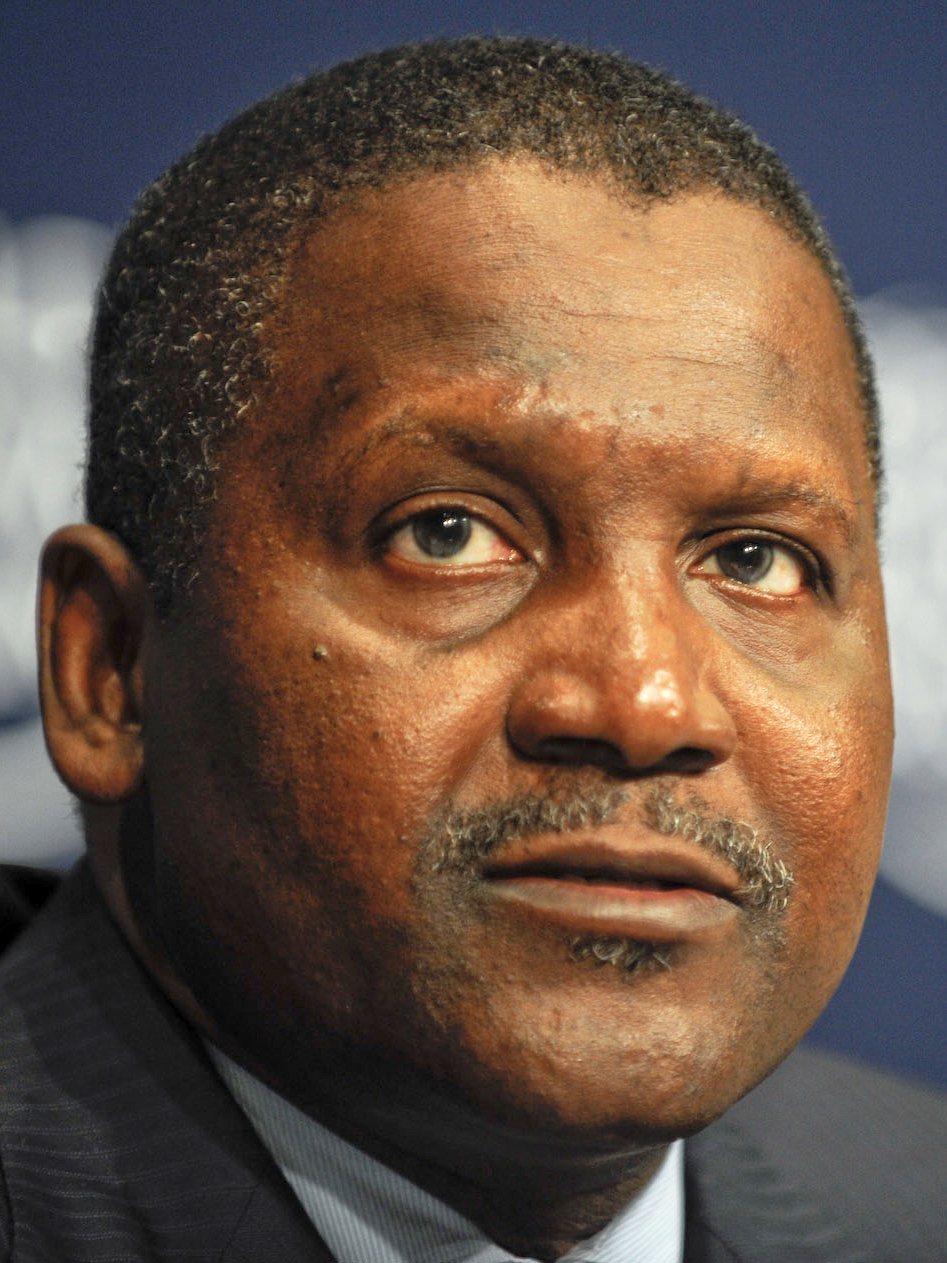
Aliko Dangote: The Trader Who Built Africa’s Biggest Industrial Empire
A critically-neutral profile of Aliko Dangote: heir to a trading dynasty who built Africa’s biggest industrial empire through backward integration and scale, rode Nigeria’s protectionist policy, bet ~$20bn on a giant refinery — and faces genuine, unresolved questions about market concentration and government ties.

Sir Brian Souter: Stagecoach and the Fortune Built on a Policy
Sir Brian Souter co-founded Stagecoach and turned the deregulation of Britain’s buses into a transport empire. A sourced, critically neutral look at genuine industrial achievement, the proven "predatory" competition findings, the controversial "Keep the Clause" campaign, and the disputed claims about his SNP donations.
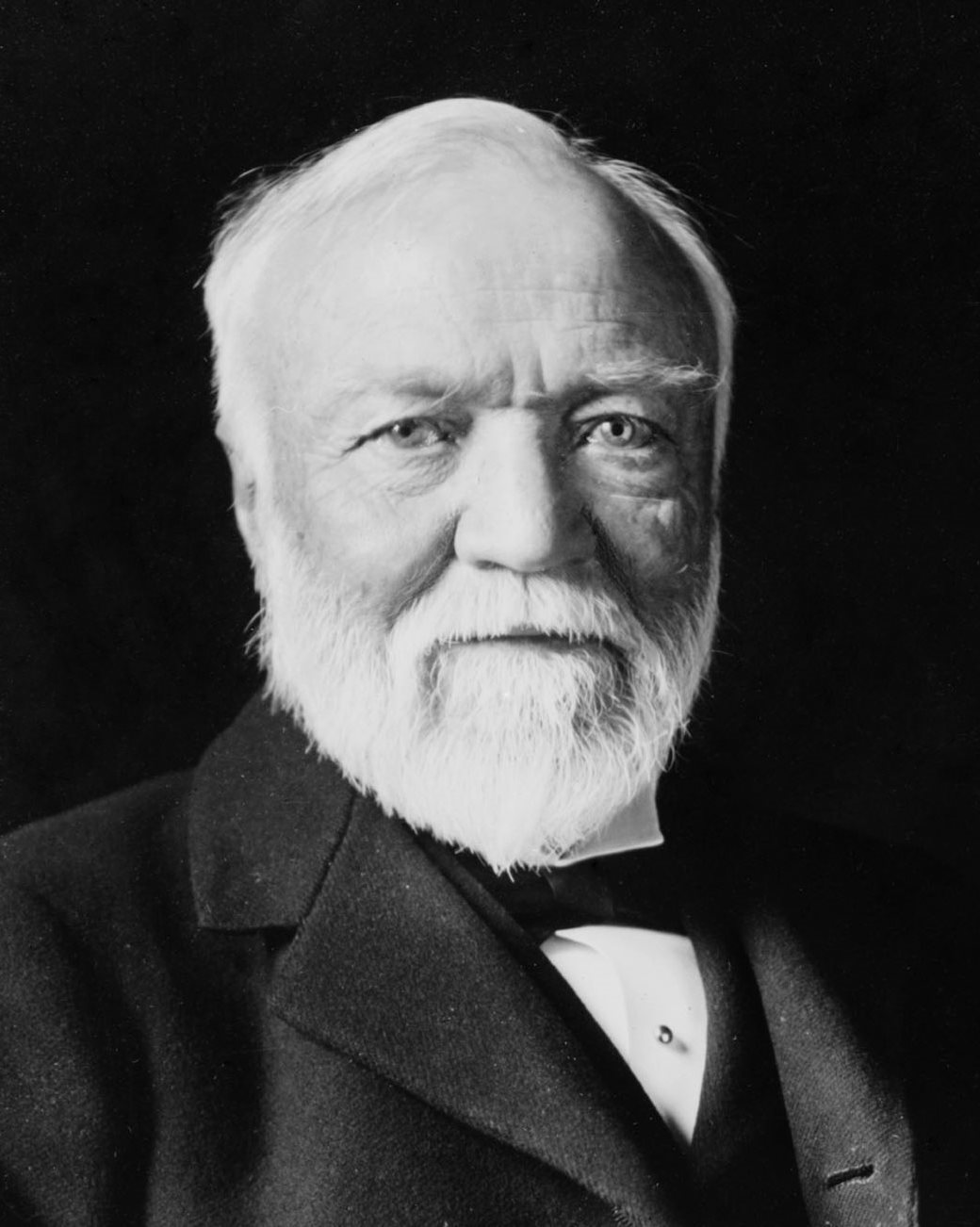
Andrew Carnegie: Steel, the Gospel of Wealth, and Homestead
Andrew Carnegie rose from a penniless Scottish immigrant boy to the master of American steel, sold out to J. P. Morgan for $303.45M, and gave away roughly 90% of his fortune. A sourced, critically neutral case study that holds his vast philanthropy and the violent 1892 Homestead Strike together, without resolving the contradiction.