Hustler profile

David Vélez

Co-founder and CEO of Nubank — the branchless digital bank that attacked Brazil’s banking oligopoly and grew to 100M+ customers across Latin America, listing on the NYSE in 2021.

David Vélez (born 1981, Medellín, Colombia) is the co-founder and CEO of Nubank. A Stanford-educated former Sequoia Capital partner, he was sent to Brazil to build a venture practice, ran into the dysfunction of the country’s banking oligopoly, and in 2013 founded Nubank with Cristina Junqueira and Edward Wible to attack it.

  • Co-founder & CEO, Nubank (Nu Holdings)
  • Colombia
  • Fintech / digital banking
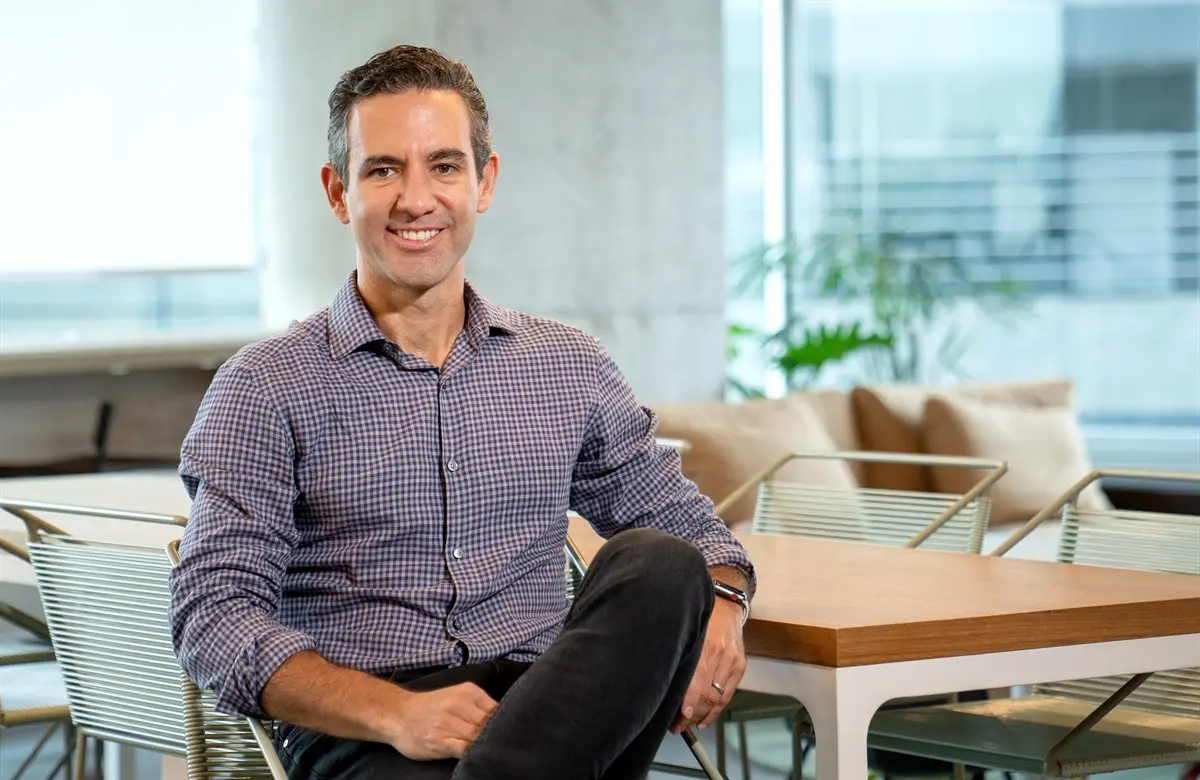
Portrait of David Vélez, co-founder and CEO of Nubank.

At a glance

Nubank (Nu Holdings) founded
2013
Co-founder & CEO
Nubank (Nu Holdings)
Industry
Fintech / digital banking
Born
1981

The journey

Key milestones in David Vélez’s life and business journey.

  1. 1981

    Born in Medellín, Colombia

  2. Sent to Brazil by Sequoia to build a venture practice

  3. 2013

    Founds Nubank

    With Cristina Junqueira and Edward Wible.

  4. 2021

    Nubank lists on the NYSE (~$41bn)

    Including a $500M Berkshire Hathaway investment.

  5. 2023

    First full-year profit

  6. 2024

    ~$2bn net income

The business story

David Vélez (born 1981, Medellín, Colombia) is the co-founder and CEO of Nubank. A Stanford-educated former Sequoia Capital partner, he was sent to Brazil to build a venture practice, ran into the dysfunction of the country’s banking oligopoly, and in 2013 founded Nubank with Cristina Junqueira and Edward Wible to attack it. Its no-fee, phone-first purple credit card grew into a full digital bank serving more than 100 million customers across Brazil, Mexico and Colombia. Nubank listed on the NYSE in 2021 (~$41bn), drew a $500M Berkshire Hathaway investment, and reached its first full-year profit in 2023. Vélez is the richest person in Colombia and a Giving Pledge signatory.

Before Nubank

David Vélez was born in Medellín, Colombia, in 1981, and spent part of his childhood in Costa Rica during the cartel-era violence; his family had its own entrepreneurial streak. He went on to Stanford, where he studied management science and engineering as an undergraduate and later returned for an MBA at the Graduate School of Business.

His early career followed a familiar finance path: Morgan Stanley, Goldman Sachs, the growth-equity investor General Atlantic, and then a partnership at Sequoia Capital. Sequoia sent him to Brazil around 2011 to build a Latin American investing practice. That project was eventually shelved, partly because the firm judged the local technical talent too thin to back. He found no company worth backing, but he saw a market that frustrated nearly everyone who used it.

Building Nubank

The frustration was personal. By his own account, opening an ordinary bank account in São Paulo took repeated branch visits over several months, security checkpoints, heavy paperwork, a steep monthly fee and an offer of credit at rates above 400% a year. He read that experience as evidence of a concentrated industry, with a handful of large banks holding most of the market, earning high margins and facing little pressure to improve.

In 2013 he founded Nubank in São Paulo with two partners who covered his blind spots. Cristina Junqueira brought credit-card and banking experience from Itaú, along with the regulatory knowledge an outsider lacked. Edward Wible, an American engineer, built the technology. The first product, released in 2014, was intentionally narrow: a purple Mastercard credit card with no annual fee, run entirely from a phone app.

From that starting point the company widened into accounts, debit, lending, investments and insurance, expanded into Mexico and Colombia, and passed 100 million customers by 2024. Investors included Sequoia, Tencent, DST Global and Tiger Global, and Berkshire Hathaway put in $500 million before the December 2021 NYSE listing, which valued Nubank at roughly $41 billion. The company lost money in 2020 and 2021, then recorded its first full-year profit in 2023 and about $2 billion of net income in 2024.

How David operates

  • Without branches, Nubank's cost to serve each customer sat far below that of incumbents carrying large physical networks, which allowed it to drop fees while still building a viable business.

    The banks it challenged could not easily copy the model without undermining the branch systems their own economics rested on.

  • He also treated his outsider status as useful but incomplete.

    Arriving fresh let him see as unacceptable what locals had learned to tolerate; hiring Junqueira gave him the local and regulatory depth to act on it. And his years in venture capital mattered. A bank needs substantial capital to fund lending before it earns anything, and Vélez knew how to raise it from top-tier investors and use it to fund years of growth ahead of profit.

  • The record also carries open questions.

    Nubank's share of seriously overdue loans has at times run above the Brazilian sector average, a structural risk of lending quickly to customers with thin credit histories.

Legacy and lessons

Vélez showed that a protected, profitable industry can be opened up when technology removes the costs that justified its prices. Nubank brought tens of millions of previously underserved Latin Americans into formal banking, and its later profits answered years of doubt about whether the model could work. In 2021 he and his wife, Mariel Reyes, signed the Giving Pledge, and they have since directed philanthropy toward education and entrepreneurship in the region. Forbes ranks him as Colombia's richest person.

  • Treat widespread customer resentment as a market signal. Expensive, poor service that everyone tolerates is often an opening.

  • Find a cost structure rivals cannot copy. Being both better and cheaper is strongest when matching you would hurt the incumbent.

  • Hire the insiders you lack. An outsider's clarity needs local expertise to turn into a working company.

  • Watch the risks that scale with growth. For a lender, loan quality matters more than customer counts.

More hustlers

Explore more business builders