The business story
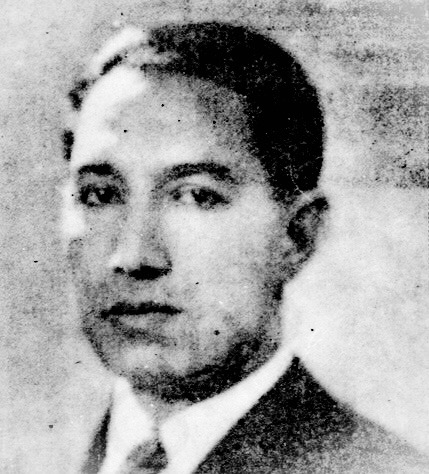
Abdul Majid Zabuli is remembered less for what he owned than for what he set up. He gave Afghanistan its first bank, and with it the beginnings of a national financial system, at a time when the country had no formal credit, no commercial banks and no central monetary authority. His life runs from 1896 to 1998, which means it covers nearly the whole modern history of the country he tried to modernise.
His method was transplantation.
Early life and background
Zabuli was born in Ghazni province in 1896, into a landlocked, mostly agrarian kingdom sitting between the British and Russian empires. What separated him from most Afghans of his generation was where he studied: Tashkent, in Russian Central Asia, and Berlin. Those two cities exposed him to working commercial economies and to the way finance held them together.
Education alone did not make him a banker. Trade did. Zabuli built his capital in the cotton business with Russia, a cross-border trade that forced him to handle foreign currency, exchange and credit as everyday problems. By the time he turned to finance, he had practical experience of the very gaps a bank exists to fill, and the standing of a serious merchant rather than a courtier.
Building Bank-e-Milli Afghan
In 1931 to 1932 Zabuli formed the Ashami company, a joint-stock venture that gathered private Afghan capital. That company grew into Bank-e-Milli Afghan, the first bank the country had ever had. It was created by a private entrepreneur with private money, not by the government.
The unusual part was the mandate. Although privately owned, the bank was given de-facto powers to regulate the currency, a job normally reserved for a public central bank. For a state with little administrative depth, handing that role to a capable private institution was a fast way to get a working monetary function. It also placed commercial ownership and national monetary authority under one roof, an arrangement the HustleMemo article treats as structurally risky, though no misconduct is documented.
Zabuli's standing carried him into government as Minister of National Economy in 1948. In that role he went to Washington to seek American aid and arms, and the request was refused. Later in life he guided the bank from Nahant, Massachusetts, far from Kabul. In 1975 President Daoud, who had taken power in a 1973 coup, nationalised the bank. Zabuli died in 1998 at 102.