Overview
Most drivers have never heard of Flex-N-Gate, yet there is a fair chance one of its parts is on the car in their driveway. The Urbana, Illinois company makes bumpers, fascias, lamps, metal stampings, plastic panels and mechanical assemblies for carmakers including General Motors, Ford, Stellantis, Toyota, Nissan and Subaru. It says it employs more than 28,000 people at about 80 production and research sites in 11 countries, according to its own key figures.
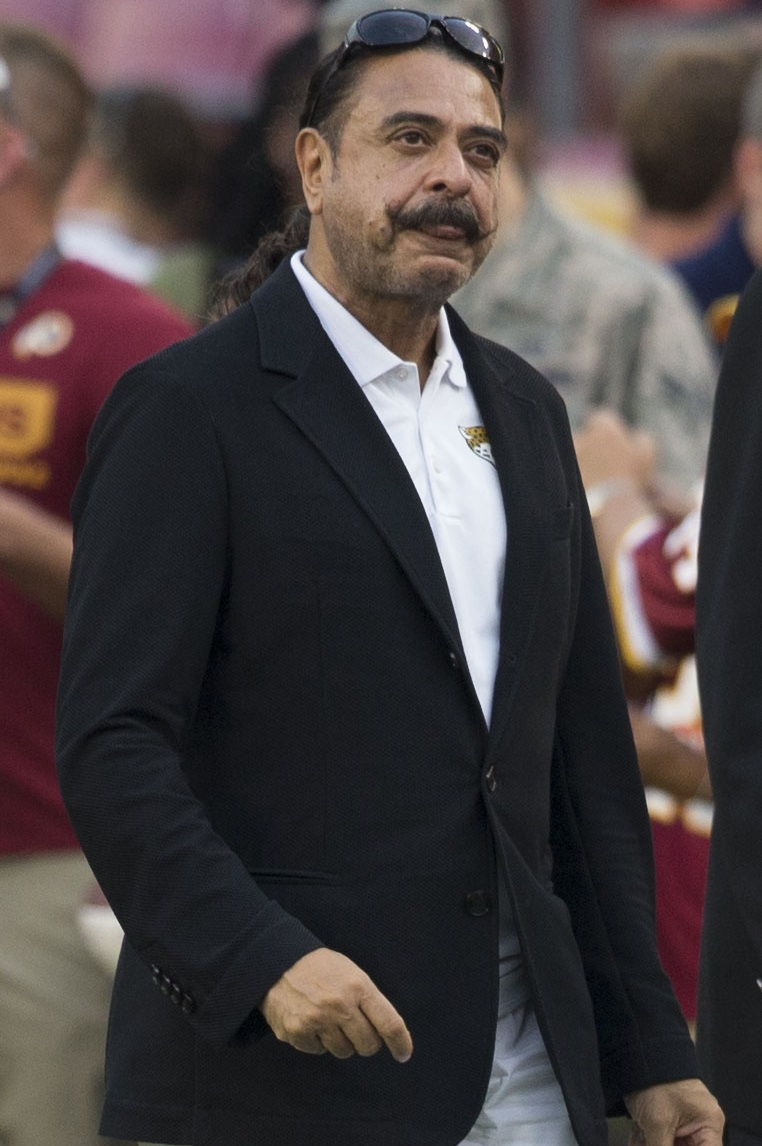
It is also the source of one of America's larger industrial fortunes. Its owner, Shahid Khan, used the profits to buy the Jacksonville Jaguars and Fulham FC. The sports teams get the headlines; the bumper business pays for them.
History
Flex-N-Gate began in 1956 as a small manufacturing shop in Illinois. Khan arrived in the United States from Lahore in 1967 to study engineering at the University of Illinois and went to work at the company while still a student. In the 1970s he designed a bumper pressed from a single sheet of steel, replacing assemblies bolted together from many pieces. It was cheaper to make, lighter and more resistant to corrosion.
In 1978 Khan left to start his own company, Bumper Works, using his savings and a small-business loan. Two years later, in 1980, he bought his former employer and folded Bumper Works into it. (The company's own website dates his ownership to 1978, counting from the start of Bumper Works.)
The decisive customer was Toyota. In the 1980s Bumper Works won the right to supply the Japanese carmaker, whose suppliers had to meet exacting standards on defects, inventory and continuous improvement. Learning the Toyota Production System gave Khan a manufacturing discipline that the Detroit companies later wanted too, and Ford, GM and Chrysler followed as customers. The timing was fortunate. Pickups and SUVs, which carry large and expensive bumpers, came to dominate US sales just as Flex-N-Gate became one of their main suppliers.
Since then the company has grown largely by adding product lines and plants. It now operates under the Flex-N-Gate, Ventra and VariForm brands. In 2018 it opened a $160 million plant in Detroit, which the city described at the time as the largest investment there by an auto supplier in more than twenty years.
How the business works
Flex-N-Gate is a classic tier-one supplier. Carmakers award it contracts to design and build specific parts for specific vehicle programmes, typically several years before a model launches. Once a programme is won, the revenue tends to last for the life of that model, often five to seven years, but the prices are tight and carmakers push for annual cost reductions.
That structure rewards two things: engineering that wins the contract in the first place, and relentless efficiency on the factory floor afterwards. The company holds more than 850 patents, and it collects supplier-quality awards from its customers, including GM Supplier of the Year awards from 2020 to 2022 and a Stellantis Supplier of the Year award in 2026. Its plants are clustered close to assembly lines in the United States, Canada and Mexico, with a second base in Spain and France, because bulky parts like bumpers are expensive to ship far.
The next test is electrification. Electric vehicles still need bumpers and lights, but not the exhaust and engine parts that many suppliers depend on. Flex-N-Gate has set up a unit called FLEX-ION to develop battery cells, modules and packs, a bet that it can win business in the parts of the car that are growing.
Ownership and leadership
Flex-N-Gate is private and wholly owned by Shahid Khan, who also runs it as chief executive. It does not publish revenue or profit, and outside estimates differ widely, so HustleMemo does not quote one. Khan's sporting interests, including the Jaguars, Fulham and the wrestling promotion All Elite Wrestling run by his son Tony Khan, are held separately from the parts business.
Controversies
Workplace safety (PROVEN citations). Federal safety inspectors cited Flex-N-Gate's Guardian West plant in Urbana several times between 2010 and 2012, including citations in October 2012 over combustible metal dust and inadequately guarded machinery, as reported by The Daily Illini and safety trade press. Citations are findings by the regulator; the outcome of any contest by the company was not reported in the sources HustleMemo reviewed.
Biometric privacy (ALLEGED, settled). Illinois workers sued under the state's Biometric Information Privacy Act, alleging that the company collected and stored employees' fingerprints for timekeeping without proper consent. In 2023 Flex-N-Gate agreed to pay about $3.6 million to settle the class action, Haywood v. Flex-N-Gate LLC, according to Law360. A settlement is not an admission of wrongdoing.
Why it matters
Flex-N-Gate is a reminder that large fortunes can still be built from manufactured things rather than software or finance. Its edge came from engineering an ordinary part better and from learning, early, from the most demanding customer in the industry. Whether that edge survives the shift to electric vehicles, and the tariff and supply-chain shocks now hitting North American carmakers, will decide whether the company is a lasting industrial champion or a product of the SUV era.
For the full story of its owner, read Shahid Khan: The Bumper, the Bootstraps, and the Billions.