Overview
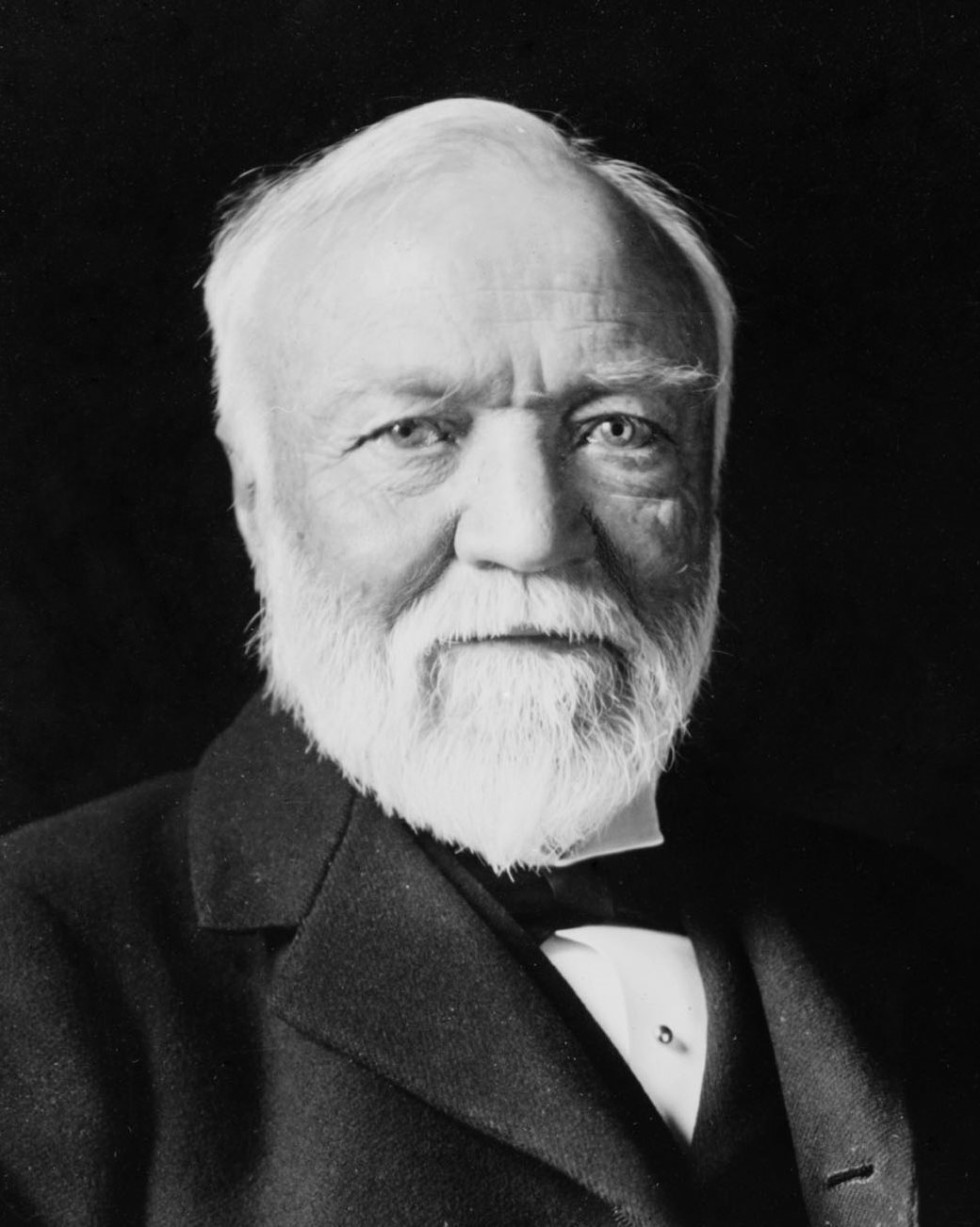
The Carnegie Steel Company existed under that name for less than a decade, from 1892 to 1901, but in that time it became the most profitable steelmaker in the world and the template for the American industrial corporation. It was the creation of Andrew Carnegie, a Scottish immigrant who arrived in Pittsburgh as a poor twelve-year-old, and it ended when he sold it to a syndicate led by J. P. Morgan. The company he sold became the core of U.S. Steel.
Its record has two halves that do not fit comfortably together. One is a model of cost discipline and vertical integration still taught in business schools. The other is the Homestead Strike of 1892, when a lockout ordered by Carnegie's partner ended in gunfire.
History
Carnegie came to steel through the railroads. As a young manager at the Pennsylvania Railroad he learned how large, capital-hungry enterprises were run and invested in the bridge and iron companies that supplied them. He did not invent cheap steel. He saw the Bessemer process in Britain and committed to it early. Construction of his Edgar Thomson Steel Works at Braddock, outside Pittsburgh, began in 1872, and it was soon rolling steel rails for the expanding railway network. His partnerships bought the Homestead Works in 1883 and later the Duquesne works.
The pieces were scattered across several partnerships until 1 July 1892, when Carnegie accepted a plan from Henry Clay Frick, the coke magnate who had become his partner and manager, to merge them into the Carnegie Steel Company. Frick became chairman. Within days the new company was at war with its workers. With Carnegie in Scotland, Frick locked out the union at Homestead, fortified the plant and hired Pinkerton agents to retake it. On 6 July the agents arrived by barge and a day-long battle followed. About ten people died, seven workers and three Pinkertons by the usual count. The state militia occupied the town, the plant reopened with non-union labour and the Amalgamated Association of Iron and Steel Workers was broken in Pittsburgh's mills.
The partnership between Carnegie and Frick did not survive the decade. They fell out over coke prices and the value of Frick's stake, and in 1899 and 1900 Carnegie forced him out; the settlement reorganised the business as the Carnegie Company in 1900. Profits were soaring, from about $21 million in 1899 to about $40 million in 1900. In early 1901 Carnegie's president, Charles Schwab, carried his asking price to Morgan, who accepted it. The story of Carnegie's life is told in full in Andrew Carnegie: Steel, the Gospel of Wealth, and Homestead.
How the business works
Carnegie Steel won on cost. Carnegie insisted on tracking the cost of every step in the mills, a habit he brought from railroad accounting, and he reinvested profits in newer plant instead of paying them out. He believed that a mill should run at full capacity even in a slump, and he expanded in downturns, when equipment and rivals were cheap.
The second advantage was integration. Through Frick's company the business had its own supply of coke, the fuel for its blast furnaces, and over time it secured iron-ore fields around Lake Superior, ore ships and a railroad to carry raw materials to the mills. Owning the supply chain meant no one else took a margin on the inputs, and it let Carnegie undercut rivals on price. The same logic applied to labour. Costs were cut wherever they could be cut, and at Homestead that meant wages and the union.
Ownership and leadership
Carnegie Steel was never a public company. It was organised as a limited partnership in which Carnegie held a controlling majority and dozens of junior partners, mostly managers promoted from the mills, held small stakes that could be bought back on his terms. Frick was chairman from 1892 until he was ousted in 1899. Schwab, who had started as a labourer at the Edgar Thomson works, was president from 1897 and went on to become the first president of U.S. Steel.
The sale price is reported in more than one way. Most histories give about $480 million, paid largely in bonds and stock; other accounts of the settlement give $303.45 million or about $492 million, depending on what is counted. Carnegie's personal share is consistently put at about $225 million, much of it in 5% gold bonds. U.S. Steel, built around Carnegie Steel and Morgan's Federal Steel, was formed in 1901 as the first company capitalised at more than $1 billion.
Controversies
Homestead (PROVEN). The lockout, the use of armed private agents and the deaths of 6 July 1892 are a matter of record. Carnegie was abroad and left the decisions to Frick, but he approved the aim of breaking the union and later wrote of his regret at the outcome. Historians still argue over how much personal blame he bears; that he owned and profited from the result is not in dispute.
Working conditions (documented). Steelworkers in Carnegie's mills commonly worked twelve-hour shifts, often seven days a week, in dangerous conditions. That was normal for the industry at the time, and it is part of why the company's costs were so low.
Why it matters
Carnegie Steel showed that in a commodity industry the lowest-cost producer wins, and that owning the supply chain is a powerful way to become that producer. It also produced the fortune behind one of the most influential philanthropic programmes in history: Carnegie argued in his 1889 essay on wealth that the rich should give their surplus away while alive, and he did, funding public libraries, universities and the foundations that still carry his name. The company is a reminder that the same discipline can build the libraries and break the strike.