Sam Altman: The Operator of Trust
His own board fired him for not being "consistently candid." His own company reinstated him in five days. A fact-checked, critically neutral look at the most powerful — and most contested — figure in AI.

Sam Altman is the most powerful person in artificial intelligence, and the case for distrusting him was made most forcefully not by a rival or a journalist but by his own board of directors — the people who knew him best, on the way to firing him. The case for trusting him was made, five days later, by almost the entire company threatening to quit if he didn't come back. Both things happened. Holding them in the same frame is the only honest way to understand him.
Altman's gift has never been a single product. It is something rarer and harder to audit: an extraordinary ability to accumulate trust, capital, and leverage faster than almost anyone alive — and the recurring question, raised by serious people, of whether the trust is always fully earned.
The fast start
Sam Altman was born in 1985 and raised in St. Louis, Missouri. He went to Stanford to study computer science and dropped out after two years, in 2005, to start a company — the now-canonical Silicon Valley move, available mostly to people who can afford for it not to work out.
That company was Loopt, a location-sharing app, part of the very first batch of Y Combinator in 2005. Loopt never became a hit. It raised substantial venture money and ultimately sold to Green Dot Corporation in March 2012 for about $43.4 million — a modest outcome that returned investors' money without setting the world alight. The more important thing Loopt did was embed Altman inside Y Combinator's orbit.
The real skill: becoming the center of the network
Altman's ascent is a study in positioning. He joined YC as a partner in 2011 and became its president in February 2014. Running YC made him the single best-connected node in the startup ecosystem — the person who saw the most founders, vouched for the most companies, and could pick up the phone to the most investors. He did not need to build the biggest company; he became the person every company wanted to know.
His 2019 departure from YC is itself instructive about how he is perceived. By several accounts — including pointed later comments from YC co-founder Paul Graham — the transition was not the smooth, voluntary "stepping up to chairman" it was initially framed as; Graham was unambiguous that the relationship ended over a loss of trust among YC partners. It is a small episode that rhymes with a larger pattern: Altman moves fast, accumulates power, and the people he leaves behind are sometimes less sanguine than the press release.
OpenAI: the bet that became the throne
Altman co-founded OpenAI in 2015 as a nonprofit AI lab, alongside Elon Musk and others, with a stated mission to ensure artificial general intelligence benefits humanity. He became CEO in 2019 and engineered the structure that defines the modern company: a capped-profit subsidiary nested under the nonprofit, which let OpenAI raise the billions that frontier AI demands — most consequentially from Microsoft — while claiming the mission still governed.
When ChatGPT launched in November 2022, OpenAI went from respected lab to defining company of the era, and Altman became the public face of AI itself. The capped-profit structure he built was either a pragmatic genius move that funded the mission, or a slow conversion of a charity into a commercial juggernaut with Altman at the controls. As with most things about him, the answer is contested and probably both.
The five days that exposed everything
On 17 November 2023, OpenAI's nonprofit board abruptly fired Altman, stating he had "not been consistently candid in his communications" with the board. It was the highest-profile firing in tech, and the board never produced a detailed public bill of particulars — a vagueness that hurt their case enormously.
What followed is the most revealing event of his career. Within days, Microsoft offered to absorb Altman and any staff who followed; more than 700 of OpenAI's roughly 770 employees signed an open letter threatening to resign unless he was reinstated and the board resigned. By 21 November, Altman was back and the board that fired him was gone.
Read it one way, it is vindication: the people who actually worked with him chose him overwhelmingly. Read it another, it is the problem in miniature: a mission-driven nonprofit board, created specifically as a check on the CEO, tried to exercise that check and was steamrolled within a week — partly by employee loyalty, partly by the financial gravity of Microsoft and the staff's own equity. The governance designed to restrain him proved unable to. Former board member Helen Toner later said the board felt Altman had withheld information, and cited concerns including his not disclosing his ownership of the OpenAI Startup Fund.
The conflict-of-interest pattern
That last detail points at the most substantive ongoing critique. Altman has repeatedly said he holds no equity in OpenAI — presented as evidence he is not in it for the money. Critics note the picture is more complicated: he controlled the OpenAI Startup Fund in a way that was not fully disclosed, and his wealth and influence are braided through a web of adjacent bets that benefit from OpenAI's direction.
He co-founded Worldcoin (2019, via Tools for Humanity), a project that scans people's irises with a metal orb to create a global identity-and-crypto network; regulators in France, Bavaria, the UK, Spain, Portugal, South Korea, Hong Kong and elsewhere have investigated, restricted, or suspended it over biometric-privacy and consent concerns. He has invested in energy companies (nuclear fission and fusion ventures) positioned to power the very AI boom he is driving. None of this is illegal, and visionary investors do place adjacent bets. But the sheer density of "Sam Altman benefits if Sam Altman's predictions come true" is the structural reason careful observers keep one eyebrow raised.
The allegation he denies
Any honest profile must note, carefully, the most serious accusation against him — and treat it as exactly what it is: unproven. In January 2025 his sister, Ann (Annie) Altman, filed a lawsuit alleging childhood sexual abuse. Sam Altman, together with his mother and brothers, issued a joint statement calling the allegations "utterly untrue." The matter is a contested legal claim, not an established fact; it has not been adjudicated, and it would be wrong to present it as anything more than an allegation that he categorically denies. We note it because it is part of the public record, and we decline to weigh it because that is a court's job, not an editor's.
The honest verdict
Sam Altman is neither the serene steward of his own telling nor the cartoon villain of the comment sections. He is the most effective trust-and-capital operator of his generation: a man who can walk into a room with no equity, no finished product, and no obvious leverage, and walk out with the room. That skill built OpenAI's funding structure, survived a board coup in five days, and made him the central figure of the most important technology of the decade.
The recurring caveat — voiced by his board, his old YC partners, and several former colleagues — is that the trust he commands and the candour he offers do not always travel together. That is not a verdict of dishonesty; it is a pattern worth watching, precisely because the person it describes now sits closer than anyone to deciding how a civilization-scale technology gets built. With Altman, the right posture is neither the fan's nor the cynic's. It is the board member's: trust, but verify — and notice when verification keeps turning out to be harder than it should be.
Editor's note: HustleMemo writes founder-led case studies grounded in public reporting. The serious personal allegation against the subject is reported strictly as an unproven, denied claim, without detail or judgement. We do not interview subjects on a paid basis and disclose conflicts in-line. Corrections: editorial@hustlememo.com.
Sources
- "Sam Altman," Wikipedia (birth 1985; Stanford, dropped out 2005; Loopt founded 2005, sold to Green Dot for ~$43.4M in 2012; YC partner 2011, president Feb 2014–Mar 2019; OpenAI co-founded 2015, CEO since 2019; ChatGPT Nov 2022).
- The November 2023 OpenAI board removal (17 Nov, "not consistently candid") and reinstatement (21 Nov), with 700+/770 employees threatening to resign; Microsoft's offer.
- Helen Toner's public comments on the board's concerns, including undisclosed ownership of the OpenAI Startup Fund.
- Paul Graham's later comments on Altman's 2019 YC departure.
- Worldcoin / Tools for Humanity (2019) and the multi-jurisdiction regulatory actions over biometric data.
- Ann (Annie) Altman's January 2025 lawsuit and the Altman family's joint statement calling the allegations "utterly untrue" (reported as an unproven, denied allegation).
More from this category
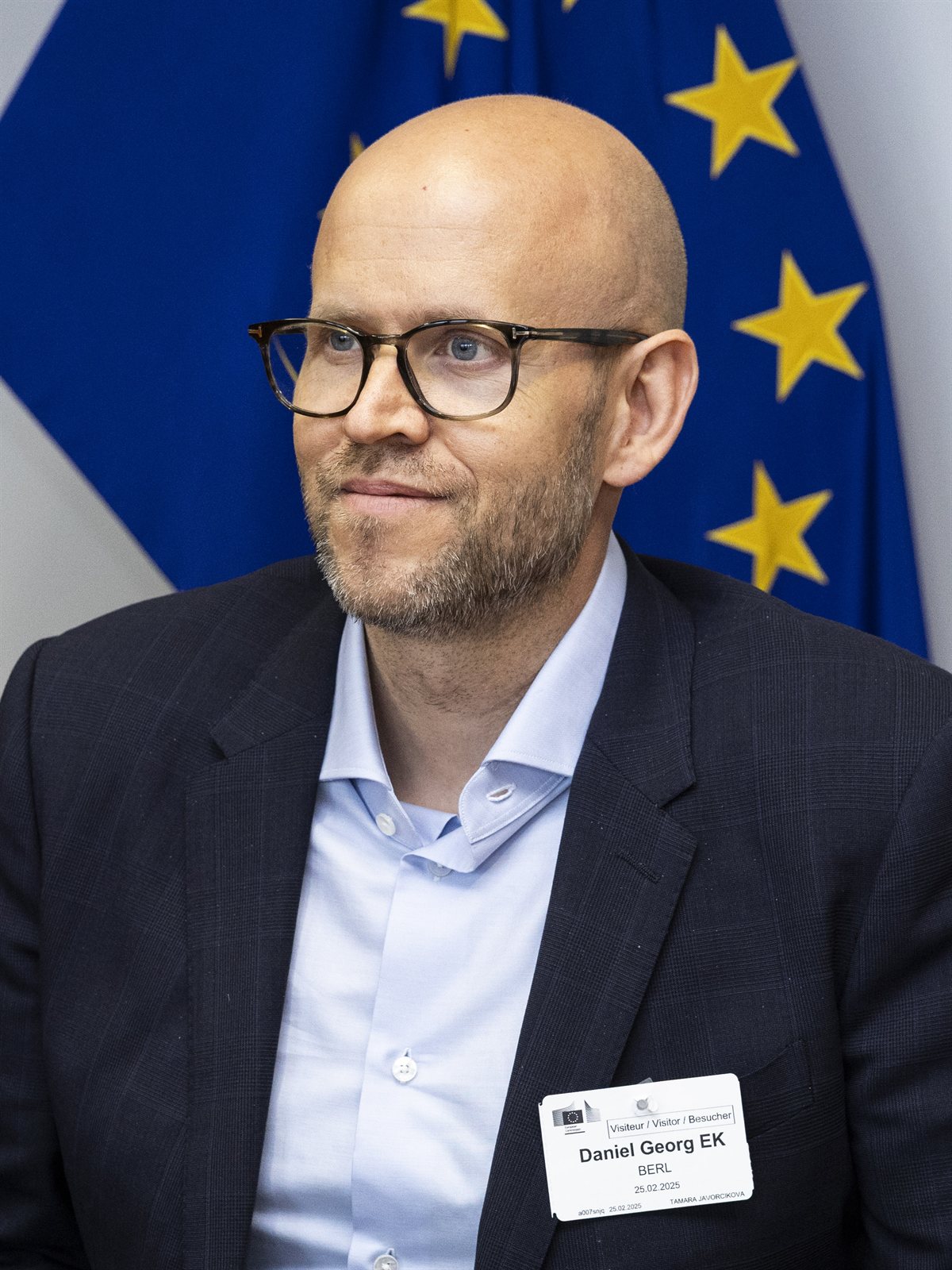
Daniel Ek: The Swede Who Beat Piracy by Building Something Better
A critically-neutral profile of Spotify’s Daniel Ek: how he beat music piracy not with lawsuits but with a freemium product better than free, endured two years of label negotiations and sixteen more before profit, and built a 675M-user streaming giant — alongside the artist-payment, Rogan and defence-tech controversies.
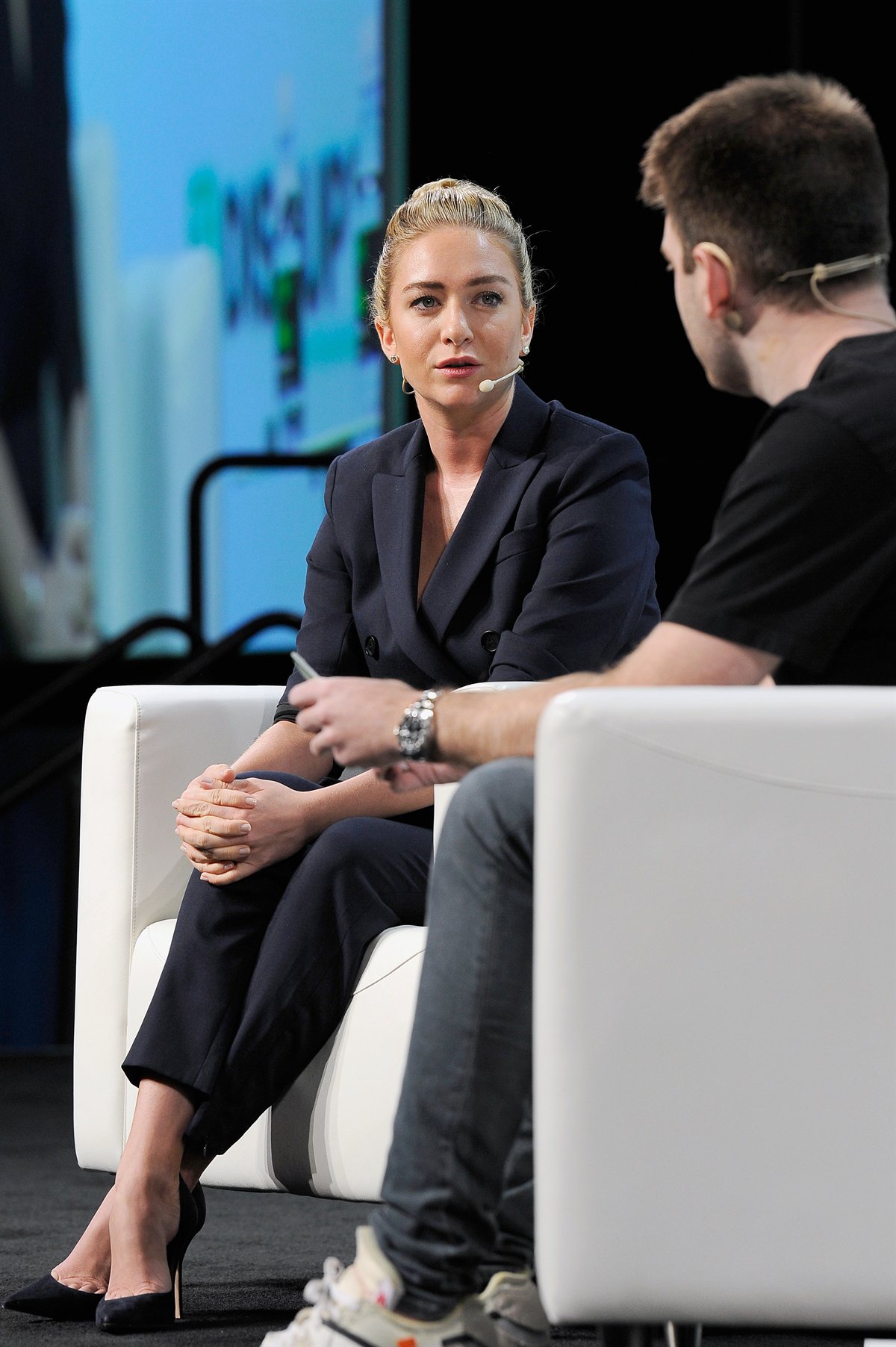
Whitney Wolfe Herd: The Founder Who Turned Being Pushed Out Into Bumble
A critically-neutral profile of Bumble’s Whitney Wolfe Herd: how she converted her ordeal at Tinder into the "women make the first move" thesis, took Bumble public at 31, and now fights to sustain it through a ~94% stock decline — the founding triumph and the hard aftermath, held honestly together.
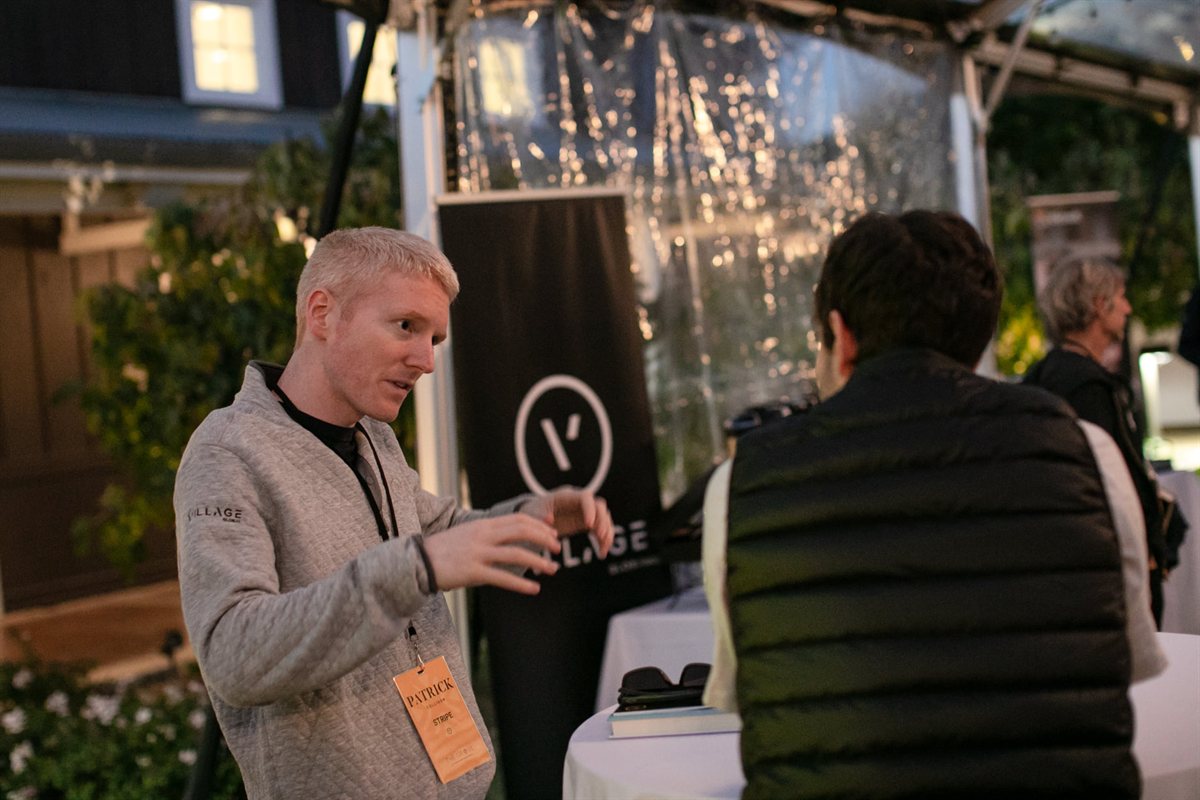
Patrick Collison: The Irish Teenager Who Built the Internet’s Payment Rails
A critically-neutral profile of Stripe’s Patrick Collison: the teenage prodigy who sold his first startup at 19, reduced online payments to a few lines of developer code, and built the financial infrastructure of the internet — through a bubble, a markdown, and a full recovery past its old peak to ~$159B.