Jensen Huang: The Thirty-Year Overnight Success
He looks like the luckiest man in tech — the founder who happened to own the only company that could supply the AI boom. The truth is a thirty-year arc of expensive, unpopular bets, held long enough that the world finally caught up.
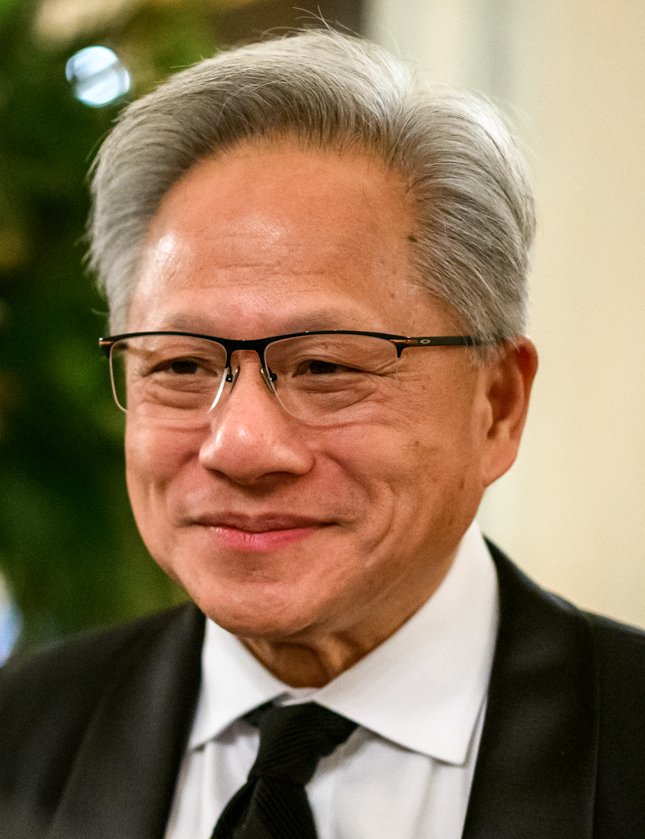
Every founder profile on HustleMemo asks the same two questions: how did they actually do it, and why did it work? With Jensen Huang the trap is the timing. He looks, from 2023 onward, like the luckiest man in technology — the founder who happened to own the only company that could supply the artificial-intelligence boom. The real story is the opposite of luck. It is a thirty-year arc of expensive, unpopular bets, most of which looked wrong for most of the time, by a founder who has run the same company since he was thirty years old. No myth-making. The real version.
The thirty-year overnight success
In the summer of 2023, Nvidia crossed a trillion-dollar market capitalization. By July 2025 it had crossed four trillion; by late October 2025, five — the first company in history to do so. (Market values are volatile; the point is the order of magnitude, not the closing price on any given day.) To a casual observer, this was a company that came from nowhere on the back of ChatGPT.
It came, in fact, from 1993. Nvidia is older than Google, older than Amazon's profitability, older than the smartphone. Jensen Huang has been its chief executive for its entire existence — more than three decades, an almost unheard-of tenure for a founder-CEO of a company this size. The AI windfall is not a lottery ticket. It is the payoff of a bet placed in 2006 and doubted by the market for the better part of a decade. To understand why it worked, you have to start long before the gold rush, with a kid who was put on a plane to America and dropped at the wrong school.
Taiwan to Thailand to Kentucky
Jensen Huang was born in 1963 in Taipei, Taiwan, and spent part of his childhood in the southern city of Tainan and several years in Thailand, where his father — a chemical engineer — was posted. (The popular telling that he was simply "born in Tainan" is a small but common simplification; the documented record is Taipei, with roots in Tainan.) When regional instability made Thailand feel unsafe, his parents made the wrenching immigrant's calculation that so many families make: they sent their two young sons to relatives in the United States, alone, for a better future.
What happened next is the most mythologized chapter of his life, and it is worth telling accurately rather than dramatically. An aunt and uncle — themselves recent immigrants with little money — enrolled the boys at Oneida Baptist Institute in rural Kentucky, under the impression it was a prestigious boarding school. It was, in reality, a religious academy that also took in troubled teenagers. The internet shorthand — "Jensen Huang went to a reform school for delinquents" — is a distortion. The accurate version: Jensen, too young for the academy's grades, attended the local public elementary school by day and lived in the Institute's dormitory; his roommate was a heavily tattooed seventeen-year-old who could not read. Jensen, an undersized immigrant kid with accented English, cleaned toilets every day, got picked on, taught his roommate to read in exchange for weight-lifting lessons, and joined the swim team. After about two years his parents managed to immigrate, and the family reunited in Oregon.
He has consistently framed those years not as trauma but as formative — and put money behind the sentiment, helping fund a dormitory at the school decades later. It is a useful corrective to the way founder origin stories get sanded into either tragedy or triumph. The truth is more ordinary and more interesting: a displaced kid learned early how to be the smallest, strangest person in a hard room and survive it. He would spend his career being underestimated.
He studied electrical engineering at Oregon State University, where he met Lori, his future wife, graduating in 1984, and earned a master's in electrical engineering from Stanford in 1992, taking classes part-time while he worked. He cut his teeth as a chip designer at AMD and then at LSI Logic, where, working on a graphics project for Sun Microsystems, he met the two engineers who would become his co-founders.
A diner, a thesis, and almost dying
In 1993 — Huang was thirty — he, Chris Malachowsky, and Curtis Priem founded Nvidia. The origin meetings happened, by every account including theirs, at a Denny's in East San Jose, the kind of all-night diner where you can nurse bottomless coffee and sketch a company on napkins. They put in a few hundred dollars each. The thesis was specific and, at the time, speculative: that personal computers would need a dedicated chip for 3D graphics, and that gaming and multimedia would drive the demand for it. Huang, the youngest of the three, was made chief executive on day one. As Priem later put it, they deferred to him from the start.
The company nearly died almost immediately. Its first product, the NV1, used an idiosyncratic graphics technique that collided with the standard Microsoft was establishing with DirectX. It flopped. By 1996 Nvidia was close to bankruptcy; it cut staff dramatically. Out of this came the line that Huang turned into the company's permanent motto — "Our company is thirty days from going out of business." He has opened internal talks with versions of it for years, long after the danger passed, as a deliberate antidote to complacency. (The exact figure drifts in the retellings — thirty days, six weeks — but the phrase, and the brush with death, are real.)
The lifeline was a humbling trip. Huang flew to Sega in Japan, which had contracted Nvidia for a graphics chip, and admitted that the technical path they were on was a dead end — that Sega should find another partner, but that Nvidia needed Sega to honor a payment to survive. Sega did. That cash bought enough runway to build the RIVA 128, launched in 1997 with roughly a month of payroll left in the bank. It worked. The company lived. The lesson Huang took from it — tell the hard truth early, kill your own failing idea before the market kills your company — became part of the operating religion.
Defining a category, then betting the company on it
In 1999, Nvidia did two things that shaped the next quarter-century. It went public in January at twelve dollars a share. And in October it launched the GeForce 256, which it marketed as "the world's first GPU" — graphics processing unit. Whether it was literally the first such chip is a matter of definitions (the "first GPU" claim is Nvidia's own marketing framing, and historians can argue it), but the marketing did something more important than win a footnote: it named a category, and Nvidia owned the name.
For years, the GPU was understood as a gaming part — the thing that made video games look good. The bet that made Huang one of the most important industrialists alive was the recognition that it was something more general: a massively parallel processor that could crunch not just pixels but any problem that could be broken into thousands of simultaneous small calculations.
In 2006 Nvidia launched CUDA, a software platform that let programmers use the GPU for general-purpose computing — physics, simulation, math — not just graphics. This is the decision the whole story turns on, and it is essential to understand how unpopular it was. CUDA cost Nvidia enormous sums — by various accounts well over a billion dollars across years — and for most of that time the market hated it. Wall Street wanted a graphics-chip company to act like a graphics-chip company and return cash, not pour it into a software ecosystem for a use case that barely existed. Huang built it anyway, embedding CUDA support across Nvidia's entire product line, year after year, with no proof it would pay off.
The proof arrived in 2012. A neural network called AlexNet crushed an image-recognition contest — trained on Nvidia GPUs using CUDA. It was the spark of the modern deep-learning era, and it vindicated the bet completely: the parallel-computing engine Huang had spent six years and a fortune building turned out to be exactly the machine artificial intelligence needed. From 2016 on, as deep learning exploded, Nvidia's data-center business went from a side project to the center of gravity of the entire technology industry.
The scale of that reversal is hard to overstate. A company that had spent two decades selling graphics cards to gamers became, in the span of a few years, the supplier every cloud provider, every AI lab, and every government racing for computational power had to buy from. Its most advanced AI processors turned into among the most sought-after manufactured goods on the planet — allocated rather than simply sold, with buyers reportedly waiting months and lobbying for their place in line. Quarterly data-center revenue that had once been a rounding error grew into tens of billions of dollars. For a founder who had spent the 1990s a month away from missing payroll, the inversion was complete: from begging Sega for a lifeline to deciding which of the world's largest companies got their chips first.
The decade of doubt is the whole point
It is tempting to compress that paragraph into "and then he got rich," but the compression hides the lesson. CUDA was a roughly six-year bet before AlexNet and a roughly decade-long bet before it became obviously, world-changingly right. For most of that decade, Huang was spending shareholder money on a conviction the market did not share. That is the actual skill on display — not foresight in the mystical sense, but the willingness to fund a thesis through years of being told it was a waste, because he understood the architecture deeply enough to believe the use cases would come.
There is a fair counterpoint, and a neutral profile should make it: Huang did not know the AI wave was coming on the timeline it did. He built a general-purpose parallel-computing platform because he believed parallel computing was broadly useful; the specific, staggering form the payoff took — generative AI — was not something anyone foresaw in 2006. So the honest framing is not "he predicted AI." It is "he built the most flexible possible bet on parallel computing and held it long enough that when the wave came, he owned the only mature platform to ride it." Conviction plus patience plus being right about the direction if not the date.
Not every big swing landed. In 2020 Nvidia agreed to buy the chip-design firm Arm from SoftBank for some forty billion dollars — what would have been the largest semiconductor deal ever. Regulators in the US, UK, and EU lined up against it; the US Federal Trade Commission sued to block it; and in early 2022 Nvidia and SoftBank abandoned the deal. It was a real, expensive defeat, and it belongs in the story alongside the wins.
The way he runs it
Huang's management style is as unusual as his record, and it is part of why the company moved so fast. He has, by Nvidia's own accounts, around sixty direct reports — a span of control that would horrify most management orthodoxy, which favors a tidy handful. He does not keep a fixed office; he roams the building and works from wherever. He has said he avoids one-on-one meetings in favor of group settings where, in his framing, no one can hide and everyone has the same context. He has been the founder-CEO for more than thirty years. And he wears the same black leather jacket so consistently that it has become a kind of corporate flag. He has described keeping his finger on the company by reading short status notes from employees — quick lists of the most important things on their minds — so he can sample the organization's reality directly, rather than through the filter of the hierarchy.
A flat org with sixty reports is not a quirk; it is a philosophy. It compresses the distance between Huang and the actual work, kills the layers of middle management where information goes to die, and forces a culture where being well-informed matters more than being protected by hierarchy. It also concentrates an enormous amount on one person, which is the obvious risk: a company this central to the world economy is unusually dependent on the energy and judgment of a single founder in his sixties. The model's strength and its fragility are the same fact.
The criticisms, labelled honestly
A profile that only celebrates is propaganda. Here is the other ledger, with the distinction between proven fact and opinion kept sharp.
The SEC settlement — proven. In May 2022, Nvidia settled with the US Securities and Exchange Commission for a $5.5 million penalty over its disclosures during the 2017–18 crypto-mining boom. The SEC found that Nvidia had failed to adequately disclose how much of its gaming-segment revenue growth was being driven by cryptocurrency mining rather than gaming — depriving investors, in the regulator's words, of information they needed to assess the business. Nvidia settled without admitting or denying the findings. This is a documented regulatory fact, not an allegation. (A separate private investor lawsuit over the same issue has wound through the courts on its own track.)
China and export controls — policy, not scandal. Since 2022, US export rules have restricted the sale of Nvidia's most powerful AI chips to China, and Nvidia has responded by designing compliant, cut-down variants (the A800, H800, and later the H20), some of which were themselves subsequently restricted. This is a fast-moving area of government policy and corporate response; it should be read as the geopolitics of the chip industry, not as wrongdoing by the company. The status of any specific chip changes frequently.
"CUDA lock-in" and market power — analysis, not a verdict. Nvidia's dominance of AI computing rests heavily on CUDA, and critics argue the ecosystem creates lock-in that entrenches its position and pricing power, and that its control over scarce GPU allocation gives it outsized leverage over customers. These are serious analytical critiques. They are not, to date, adjudicated antitrust findings. The clearest documented antitrust outcome in Nvidia's history is, ironically, a loss: the regulators who killed the Arm deal.
The "AI bubble" question — opinion. Whether Nvidia's valuation reflects a durable transformation or a speculative bubble is a matter of forecasting and judgment, not fact, and reasonable, informed people disagree. A neutral profile notes the debate without resolving it: the same concentration that makes Nvidia extraordinarily valuable also makes it extraordinarily exposed if AI demand cools, if customers succeed in designing their own chips, or if the geopolitics turn against it.
Why it actually worked
Strip away the leather jacket and the market-cap headlines and the engine of the whole thing is a single strategic insight: Nvidia did not win because it makes the fastest chips. It makes excellent chips, but raw silicon can be matched. It won because it built a full stack — hardware, plus the CUDA software layer, plus a sprawling ecosystem of developers, libraries, and tools that have spent fifteen years learning to build on Nvidia and only Nvidia. The moat is not the transistor; it is the software and the habit. A competitor can copy a chip far more easily than it can copy a decade of every AI researcher in the world being trained on your platform.
There is a second layer the chip-versus-software framing misses: the network. As AI models grew too large to fit on any single chip, the bottleneck shifted to how fast thousands of GPUs could talk to one another. Huang saw it coming and, in 2019, agreed to buy the Israeli networking company Mellanox for roughly seven billion dollars, acquiring the high-speed interconnect technology that stitches many GPUs into one giant computer. That purchase enabled a quiet but decisive shift in what Nvidia even sells: not chips, but systems — integrated racks of GPUs, networking, and software meant to be bought as a single unit. When a customer buys at the system level, switching to a rival's chip means re-architecting everything around it, which deepens the moat by another order of magnitude. The full stack is not just silicon plus software; it is the chip, the network, and the system, sold as one.
That is the answer to "why did it work," and it is also why the position is more defensible than the skeptics assume and more fragile than the bulls admit. The ecosystem moat is real and deep. But it was built on a bet — CUDA — that took a decade to pay off, and the next decade will test whether a company that became the arms dealer of the AI age can hold a position that every one of its giant customers now has every incentive to escape.
The honest close
Jensen Huang is not the overnight genius the 2023 headlines implied, and he is not the infallible oracle his fans describe. He is something rarer and more instructive: a founder who has run one company for thirty-plus years, nearly went bankrupt early, learned to tell the truth about his own failures fast enough to survive them, named a category, and then bet that category's future on a software platform the market mocked for the better part of a decade — and held the bet until the world caught up to it.
The fortune is real, the dominance is real, and so is the exposure. What happens next — whether Nvidia stays the indispensable layer of the AI era or whether its own customers and rivals erode the CUDA moat — is genuinely unsettled. But the thing worth taking from the story is not the market cap. It is the thirty years of conviction and patience underneath it, most of which happened while almost no one was watching. The overnight success took three decades. That is the part the headlines keep leaving out.
Editor's note: HustleMemo profiles real founders and operators. This is a critically-neutral, fact-checked profile. Documented facts (the company timeline, the SEC settlement, the abandoned Arm deal, market-cap milestones) are stated as such; contested or forecasting claims (CUDA "lock-in", antitrust criticism, the "AI bubble" debate) are labelled as analysis or opinion; and the mythologised "reform school" story is given its accurate version. Market values are written as point-in-time crossings, not standing facts. Corrections: editorial@hustlememo.com.
Sources
- Biography, education, founding, and timeline: Wikipedia, "Jensen Huang" and "Nvidia"; Computer History Museum profile; Britannica Money. The Oneida Baptist Institute detail and the school's later Huang-named dormitory: Wikipedia and Oneida Baptist Institute.
- Founding and near-death history (the Denny's origin, NV1 failure, the "thirty days from going out of business" motto, the Sega lifeline, RIVA 128): Quartr; CNBC; long-form retellings (figures are directionally accurate, drawn from reputable secondary sources rather than primary filings).
- GeForce 256 / "first GPU" and the 1999 IPO: Wikipedia, "GeForce 256"; contemporaneous coverage.
- CUDA (2006), the multi-year investment, and the AlexNet (2012) vindication: InfoWorld; Wikipedia, "Nvidia" and "AlexNet".
- The abandoned Arm acquisition (2020–2022): Wikipedia, "Nvidia"; US FTC statement on termination (Feb 2022).
- Market-cap milestones ($1T 2023; $4T July 2025; $5T Oct 2025): Al Jazeera; Fast Company.
- The SEC crypto-disclosure settlement ($5.5M, May 2022): CNN; JURIST; Dechert analysis (primary: SEC press release 2022-79).
- Leadership style (~60 direct reports, no fixed office, no regular one-on-ones, the leather jacket): Wikipedia; long-form profiles.
More from this category

Daniel Ek: The Swede Who Beat Piracy by Building Something Better
A critically-neutral profile of Spotify’s Daniel Ek: how he beat music piracy not with lawsuits but with a freemium product better than free, endured two years of label negotiations and sixteen more before profit, and built a 675M-user streaming giant — alongside the artist-payment, Rogan and defence-tech controversies.
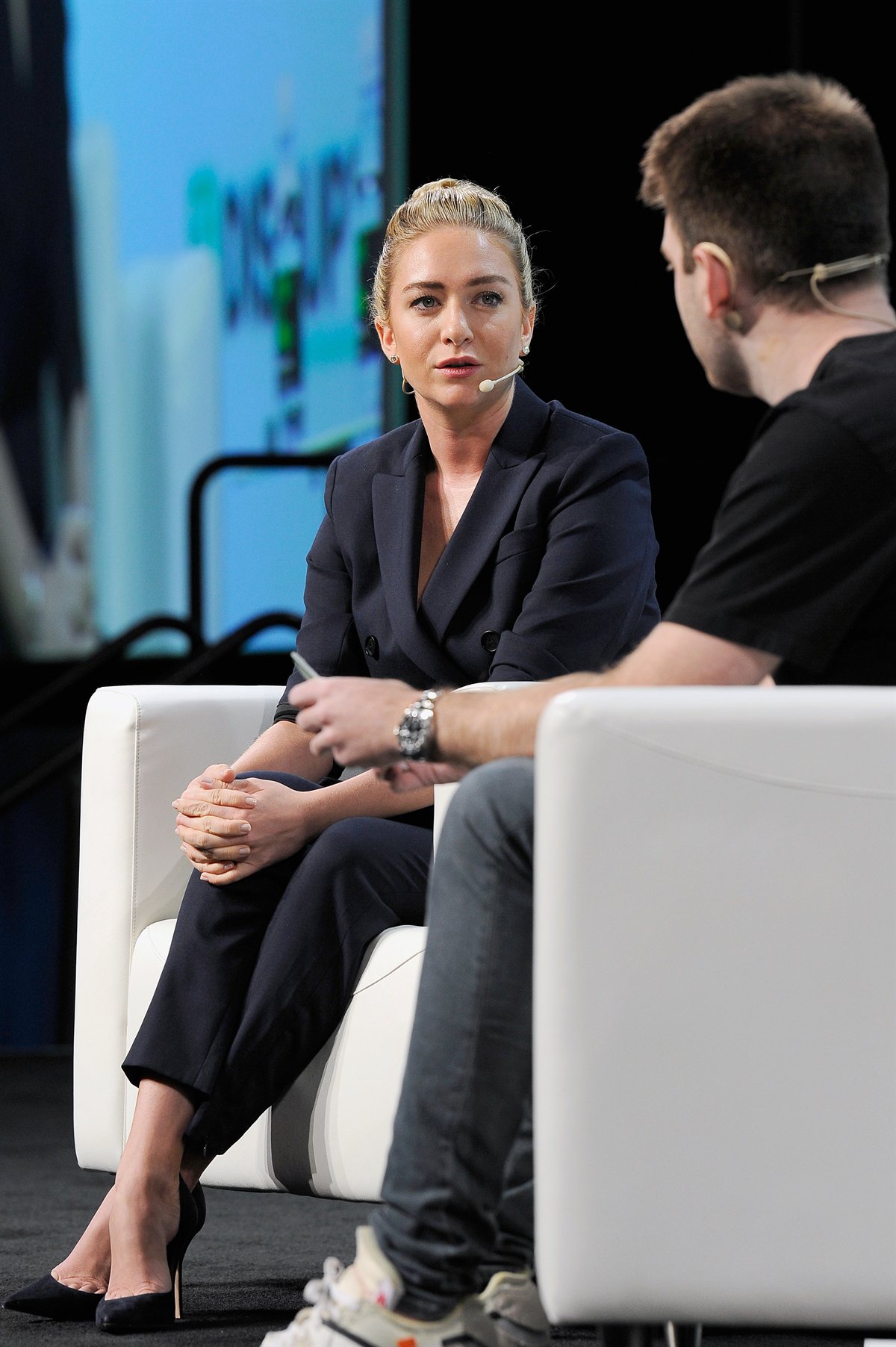
Whitney Wolfe Herd: The Founder Who Turned Being Pushed Out Into Bumble
A critically-neutral profile of Bumble’s Whitney Wolfe Herd: how she converted her ordeal at Tinder into the "women make the first move" thesis, took Bumble public at 31, and now fights to sustain it through a ~94% stock decline — the founding triumph and the hard aftermath, held honestly together.

Patrick Collison: The Irish Teenager Who Built the Internet’s Payment Rails
A critically-neutral profile of Stripe’s Patrick Collison: the teenage prodigy who sold his first startup at 19, reduced online payments to a few lines of developer code, and built the financial infrastructure of the internet — through a bubble, a markdown, and a full recovery past its old peak to ~$159B.