The business story
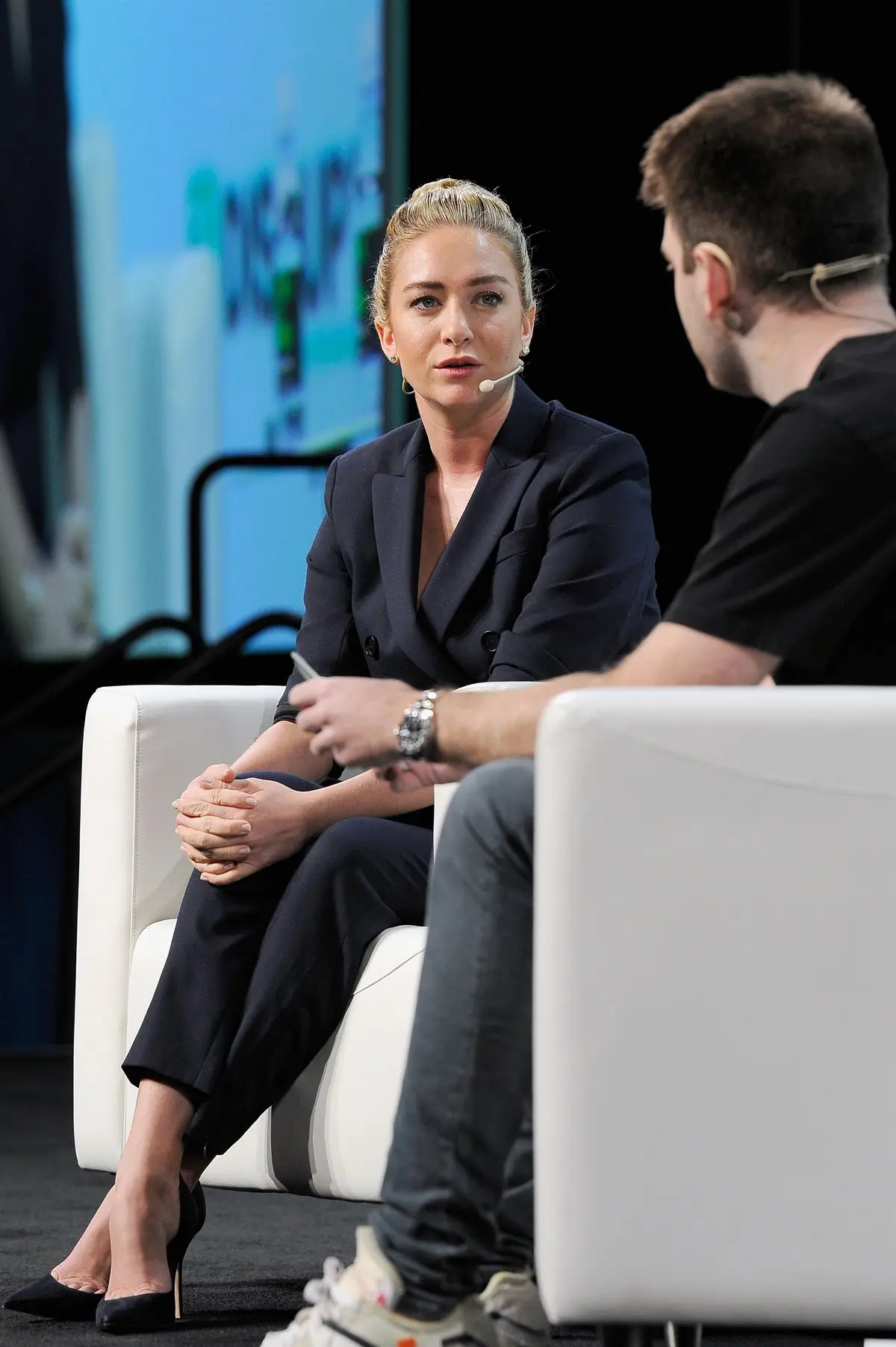
Whitney Wolfe Herd (born 1989, Salt Lake City) is the founder and CEO of Bumble. An early Tinder marketer credited with naming the app and driving its campus growth, she left in 2014 amid a harassment lawsuit (settled with no admission of wrongdoing) and turned that experience into Bumble — where, in heterosexual matches, women message first. Launched in December 2014 with backing from Badoo’s Andrey Andreev, Bumble grew into a global brand; its February 2021 IPO made Wolfe Herd, at 31, the youngest woman to take a US company public. The stock has since fallen sharply; she stepped back as CEO in 2024 and returned in March 2025 to lead a turnaround.
Her central move was turning a personal ordeal into a product thesis.
Before Bumble
Whitney Wolfe was born in 1989 in Salt Lake City, Utah, the daughter of a property developer, and spent a year of her childhood in Paris. She studied international studies at Southern Methodist University in Dallas. Around the age of twenty, still a student, she co-founded a small venture selling bamboo tote bags to raise money for areas affected by the 2010 Deepwater Horizon oil spill. It was a modest project, but it showed an early talent for linking a product to a cause.
In 2012 she joined an incubator led by Sean Rad and became part of the team building a dating app then called MatchBox. She is widely credited with proposing the name Tinder and, as marketing lead, with driving its early growth by seeding it in college sororities and fraternities. She rose to vice-president of marketing.
She left Tinder in April 2014 and that June sued Tinder and its parent, IAC, for sexual harassment and discrimination. The case was settled in September 2014 with no admission of wrongdoing; the allegations were never tested in court. Unable to speak freely about it, she faced a wave of online abuse that she has said led to panic attacks and depression.
Building Bumble
From that low point came a new company. Andrey Andreev, the entrepreneur behind the dating app Badoo, offered backing. Wolfe Herd first wanted a women-only social network built around kindness; Andreev pushed her toward dating, where her experience lay. His company took a majority stake of around 79 percent for roughly $10 million, and she became chief executive with about a fifth.
Bumble launched in December 2014 with one defining rule: in heterosexual matches, only the woman can send the first message, and she has twenty-four hours to do so. The brand extended into Bumble BFF for friendships and Bumble Bizz for networking. In 2019 Andreev sold his controlling stake to Blackstone, and Wolfe Herd became CEO of the whole group. Forbes reporting that year about Badoo's culture concerned Andreev and Badoo, not her or Bumble's Austin operation.
On 11 February 2021 Bumble listed on Nasdaq. Priced at $43 a share, it rose more than 60 percent on its first day. At 31, Wolfe Herd became the youngest woman to take a US company public, and she rang the bell holding her young son.