
Historical profile

Stef Wertheimer

Self-taught machinist who turned a one-man backyard shop into ISCAR — the carbide-tool multinational Warren Buffett valued above $10 billion — and an apostle of "industry for peace."

Born in Kippenheim, Germany, in 1926; his family fled Nazi Germany for Mandatory Palestine in 1937. Largely self-taught, with no university degree; an RAF technical contractor in WWII and a Palmach member.

  • Founder, ISCAR / IMC Group
  • Israel
  • Industrial manufacturing, metal-cutting tools
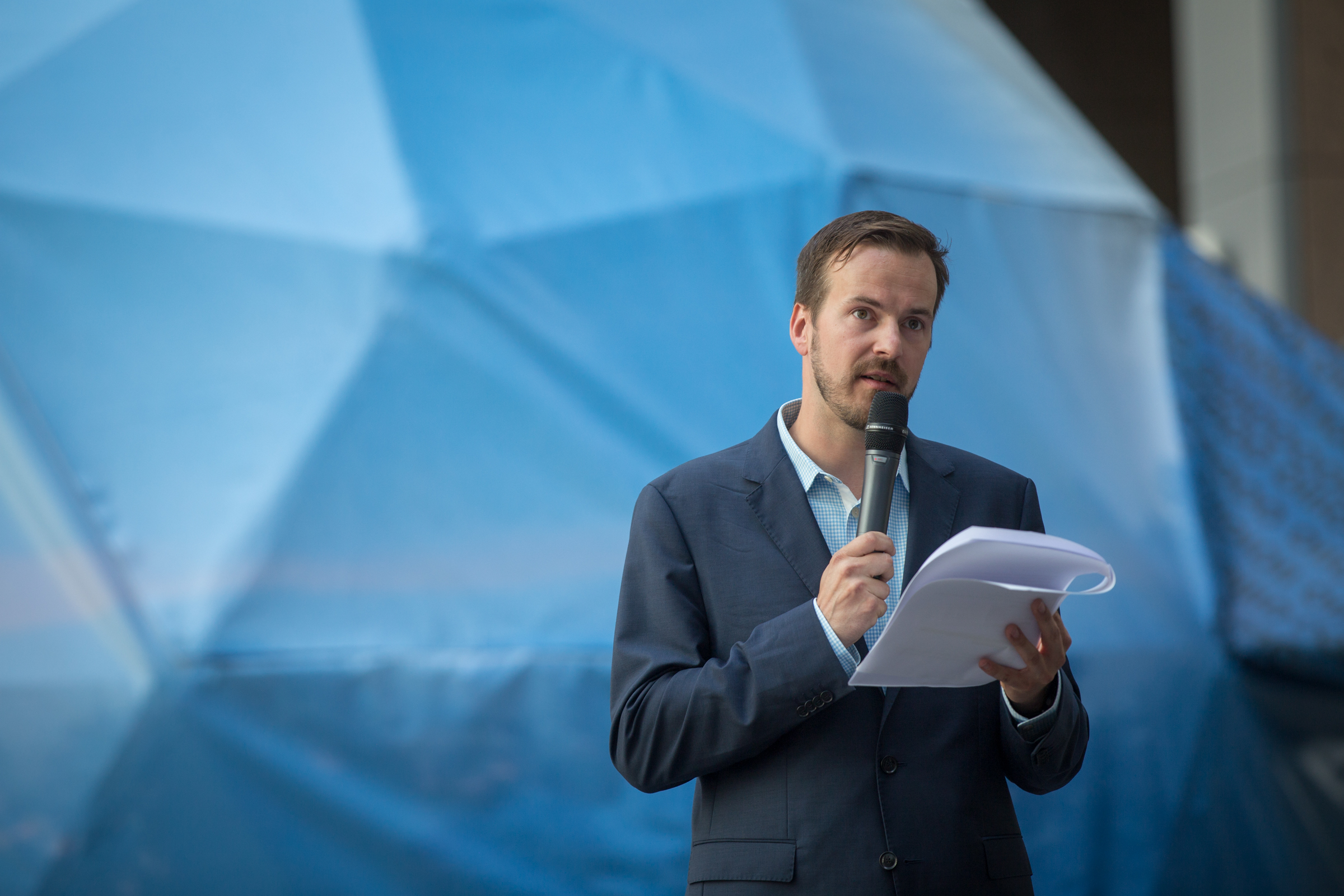
Portrait of Stef Wertheimer.

At a glance

ISCAR / IMC Group founded
1952
Founder
ISCAR / IMC Group
Industry
Industrial manufacturing, metal-cutting tools
Lived
1926–2025

The journey

Key milestones in Stef Wertheimer’s life and business journey.

  1. 1926

    Born in Kippenheim, Germany

  2. 1937

    Family flees to Mandatory Palestine

  3. 1952

    Founds ISCAR

    A backyard metal shop in Nahariya.

  4. 1968

    Founds ISCAR Blades

  5. 1977–1981

    Knesset member

  6. 1982

    Builds the Tefen Industrial Park

  7. 2006

    Berkshire Hathaway buys 80% of IMC (~$4B)

  8. 2013

    Berkshire buys the rest (~$2.05B)

  9. 26 March 2025

    Dies

    Aged 98.

The business story

Born in Kippenheim, Germany, in 1926; his family fled Nazi Germany for Mandatory Palestine in 1937. Largely self-taught, with no university degree; an RAF technical contractor in WWII and a Palmach member. Founded ISCAR in 1952 as a backyard metal shop in Nahariya and built it into the IMC Group, a multinational maker of carbide cutting tools. Built the Tefen Industrial Park (1982). Berkshire Hathaway bought 80% of IMC in 2006 (~$4B) and the rest in 2013 (~$2.05B). A Knesset member 1977–1981. Died 26 March 2025, aged 98.

Wertheimer's approach was a builder's theory applied consistently: make real things, create skilled jobs, and the wider benefits will follow.

From the HustleMemo profile

Early life and background

Stef Wertheimer was born on 16 July 1926 in Kippenheim, a small town in Baden, Germany, into a Jewish family. In 1937, as Nazi persecution intensified, the family left for Mandatory Palestine. He was around eleven, and the move almost certainly saved their lives.

He never earned a university degree. His education was practical and mostly self-directed: he learned how machines worked by building and repairing them. During the Second World War he worked as a technical contractor for Britain's Royal Air Force, and he served in the Palmach, the elite strike force of the pre-state Jewish underground. Both experiences grounded him in precision mechanics and in the stakes of the national project around him.

Building ISCAR

In 1952, when Israel was four years old and short of nearly everything, Wertheimer set up a metalworking shop behind his home in Nahariya, a northern coastal town near the Lebanese border. He called it ISCAR. At first it was just him, making carbide cutting tools: the inserts and tooling machine shops use to cut, mill and shape metal.

It is an unglamorous product sold to demanding industrial buyers, with no brand halo or network effects to lean on. A tool either holds its tolerance and outlasts the alternatives or it loses the order. Competing from Nahariya meant beating established manufacturers in Europe, the United States and Japan on engineering and quality, and over decades ISCAR did. It became known for new insert designs, geometries and coatings, and grew into the Iscar Metalworking Companies, later the IMC Group.

In 1968 he founded ISCAR Blades, later Blades Technology, which makes jet-engine components, some of the most exacting precision work in manufacturing.

Outside confirmation came in 2006, when Berkshire Hathaway bought 80 percent of IMC for about $4 billion. It was Warren Buffett's first acquisition of a company based outside the US. In 2013 Berkshire bought the remaining stake for roughly $2.05 billion, a deal that valued the business above $10 billion. Wertheimer's net worth was estimated at around $7.6 billion.

How Stef operates

  • He kept moving toward harder engineering problems rather than easier markets.

  • He extended that idea beyond his company.

    In 1982 he built the Tefen Industrial Park in the Galilee, combining factories with a technical school and a museum so that work, learning and culture sat side by side. Some described the model as a "capitalistic kibbutz." He deliberately placed parks in the country's periphery, betting that productive jobs would lift a region more effectively than transfer payments.

  • He then pushed further, arguing for a "Marshall Plan for the Middle East" and testifying before the US Congress that shared industry could ease regional conflict.

    In the 1990s he planned an industrial park in Rafah, in Gaza, but the project was shelved when the Second Intifada began. That outcome is the main critique of his vision: political conflict may need resolving before prosperity can take hold.

  • His time in politics was brief.

    He sat in the Knesset from 1977 to 1981 as a founding member of the Democratic Movement for Change and was later associated with Shinui. There is no record of fraud, corruption or misuse of office attached to him.

Legacy and lessons

Wertheimer died on 26 March 2025, aged 98. His career is a reminder that Israel's technical strength was built in metal as well as software, and that a clean fortune is possible when the product itself must win on merit.

  • Hard products can build durable businesses. Engineering quality in an unglamorous niche created lasting value.

  • Credentials are not the only path. A self-taught machinist built a world-class manufacturer.

  • Tie jobs to education and community. Tefen paired industry with training and culture.

  • Know the limits of economics. Industry can support peace, but it may not be able to produce it.

More hustlers

Explore more business builders