
Hustler profile

Sir James Dyson

The art-school engineer who built a global brand on a bagless vacuum after ~5,127 prototypes — and a British manufacturing icon whose Singapore HQ move and pandemic dealings drew scrutiny.

Born in Cromer, Norfolk in 1947; trained in industrial design at the Royal College of Art (1966–70). Developed ~5,127 prototypes of a bagless cyclonic vacuum, launched the G-Force in Japan in 1983, opened a UK factory at Malmesbury in 1993, and won a 1999 patent case against Hoover.

  • Founder, Dyson
  • United Kingdom
  • Engineering, consumer technology
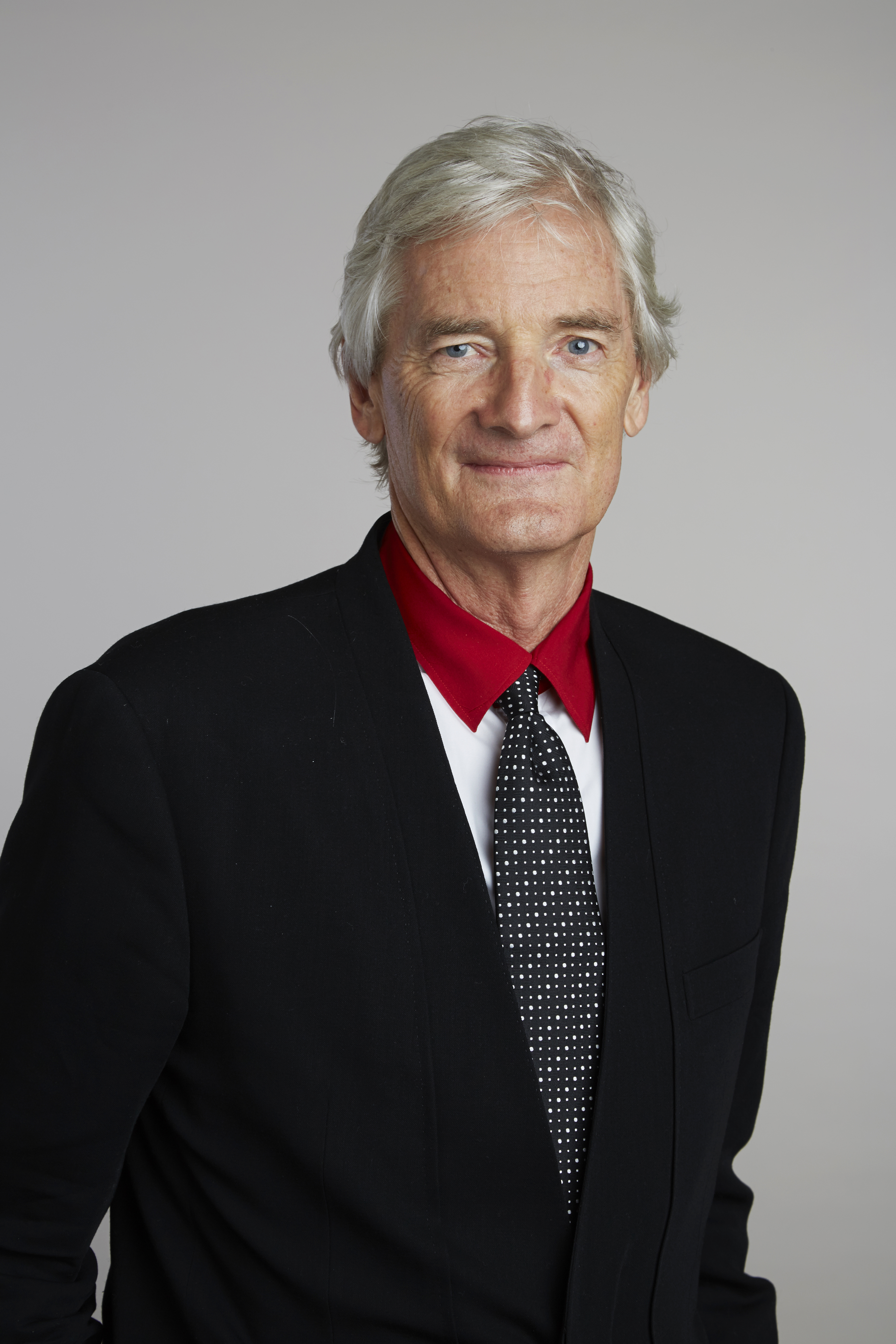
Portrait of Sir James Dyson.

At a glance

Dyson founded
1991
Founder
Dyson
Industry
Engineering, consumer technology
Born
1947

The journey

Key milestones in Sir James Dyson’s life and business journey.

  1. 1947

    Born in Cromer, Norfolk

  2. 1966–70

    Studies industrial design at the Royal College of Art

  3. About 5,127 prototypes of a bagless cyclonic vacuum

  4. 1983

    Launches the G-Force in Japan

  5. 1993

    Opens a UK factory at Malmesbury

  6. 1999

    Wins a patent case against Hoover

  7. January 2019

    Relocates the global HQ to Singapore

The business story

Born in Cromer, Norfolk in 1947; trained in industrial design at the Royal College of Art (1966–70). Developed ~5,127 prototypes of a bagless cyclonic vacuum, launched the G-Force in Japan in 1983, opened a UK factory at Malmesbury in 1993, and won a 1999 patent case against Hoover. Moved manufacturing to Malaysia/Singapore ~2002 and relocated the global HQ to Singapore in January 2019. Net worth ~13bn USD; the company is privately held by the Dyson family.

Dyson's defining trait is disciplined iteration: steady, incremental testing rather than a single moment of inspiration.

From the HustleMemo profile

Early life and background

James Dyson was born on 2 May 1947 in Cromer, on the Norfolk coast. He attended Gresham's School, studied at the Byam Shaw School of Art in London and then trained in industrial design at the Royal College of Art from 1966 to 1970. That route made him an unusual kind of engineer: a designer who learned engineering by building things, with strong instincts for how a product should look and feel as well as how it should work.

His early working years were spent bringing physical products to market, including industrial and marine equipment. By the time he turned to the problem that defined his career, he already understood how products are manufactured, priced and sold, not only how they are drawn.

Building Dyson

The problem was the household vacuum cleaner. Bagged machines lost suction as the bag's pores clogged, well before the bag was full. Dyson adapted the cyclone separators used to extract dust in sawmills and factories, shrinking the principle into a domestic machine that needed no bag and kept its suction. Getting it right took him, by his own count, about 5,127 prototypes, built over years and paid for largely by himself.

Established appliance makers in Britain and the United States declined the design, partly because replacement bags were a profitable business for them. Dyson instead launched the G-Force in Japan in 1983 as a premium design product, and licensing income from it sustained further development. In 1993 he opened a factory and research base at Malmesbury in Wiltshire, and his first own-brand machine, the DC01, became Britain's best-selling vacuum cleaner. In 1999 he won a patent-infringement case against Hoover, with damages reported at about £4 million.

The company later expanded into hand dryers, fans and hair care. Around 2002 it moved manufacturing to Malaysia and Singapore, and in January 2019 it moved its global headquarters to Singapore. Dyson remains privately held by the family, and his net worth is estimated at about $13 billion.
How James operates

  • Just as telling is his readiness to stop.

    From 2017 he committed a reported £2.5 billion to developing an electric car, then ended the project in October 2019 because he judged it could not be sold at a profit. Some of the battery and motor research carried over into other products.

  • His public reputation is more contested than his engineering.

    He backed Brexit and later moved the headquarters to Singapore, which critics called hypocritical; Dyson says the move followed Asian markets and manufacturing, and in 2023 he won a libel claim against the Daily Mirror over one portrayal of it. During the 2020 ventilator effort, Boris Johnson texted him promising to resolve a tax issue for staff coming from Singapore, the rule changed, and no Dyson ventilator was ultimately used. Forced-labour allegations at former Malaysian supplier ATA IMS led Dyson to end the contract in 2021; it denied the claims, and workers' litigation was reportedly settled in 2026 without a finding of liability.

Legacy and lessons

Dyson turned an ordinary household appliance into a global engineering brand by refusing to accept a flaw everyone else treated as permanent. His story also shows how the gap between a public image and a global operating model can come to define a founder's reputation.

  • Persistence is a process. Thousands of small, tested changes produced the breakthrough.

  • Look elsewhere when incumbents refuse. Japanese licensing kept the idea alive.

  • Know when to stop. Ending the car project limited a costly mistake.

  • Image creates obligations. A patriotic brand invites scrutiny of global decisions.

More hustlers

Explore more business builders